
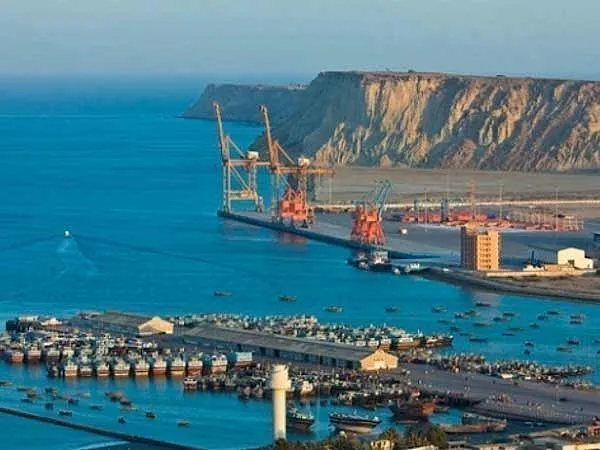

With its “New Silk Road” infrastructure projects in Southeast Asia, China is trying to replicate old traditions where once there was an obsession with Chinese goods. However, Europe and Pacific powers are now competing with Beijing head on to offer their Asian trade partners an alternative.
According to Nikkei Asia, US, Europe and India have upped the ante to join the battle to build regional supply chains from Thailand to Vietnam and provide a tough competition to the Chinese.
Silk Road, a network of trade routes connecting China and the Far East with the Middle East and Europe once cropped up obsession of Chinese blue-and-white porcelain which became popular with British consumers. The obsession was so much so that by the late 1800s, the phenomenon spawned a nickname: “Chinamania.”
However, now the road to China’s Asian silk road is slippery as other major powers have moved in and offering alternatives in the region and with this, the China obsession has taken a darker shade.
The battle is intense on China’s doorstep in Southeast Asia. Bridges and ports have sprung up to meet the infrastructure needs of some of the world’s fastest-growing economies and key supply chain hubs.
Tokyo has long been the main donor behind the region’s truck and train routes but Beijing changed the game when it struck out on the Belt and Road Initiative (BRI) nearly a decade ago to build its own trade networks.
Now the puzzle pieces are shifting again as Beijing’s billions trigger a response from democratic adversaries.
Democratic allies have announced a string of ambitious and overlapping hybrid state and commercial projects. Australia’s new government is expected to increase development aid, the European Union wants to sign an infrastructure deal with Southeast Asia, and the U.S. has led a Group of Seven riposte / in retaliation to the BRI — a USD 600 billion infrastructure aid fund launched in June.
Some suggest unleashing Indian conglomerates as well, as per the media portal.
“Chinamania is leading our political actors to make rash decisions,” said Terence Wood, a research fellow at the Development Policy Center, an Australian think tank, and a former New Zealand aid official. He argues that rich countries are financing some projects based on a perceived China threat, rather than recipient nations’ needs.
Pavida Pananond at Thailand’s Thammasat University welcomed the G-7 funds but asked how much would materialize and how projects among “countries with diverse interests” would be chosen.
“These issues could reduce the real impacts of the G-7 plan and raise doubts whether the attempt is more to counteract China’s growing geopolitical and geoeconomic power,” the professor of the international business told Nikkei Asia.
She added, “It remains to be seen if the scheme could catch up with China’s BRI.”
Democratic allies treat the BRI as a foil to what they claim is their own “value-driven, high-quality and transparent” infrastructure partnerships, in the words of European Parliament researcher Gisela Grieger.
Japan has recently provided aid ranging from a 0.1 pc interest loan for Indonesia’s Patimban Port to subways in that country, Vietnam and the Philippines. The U.S., the world’s top foreign aid donor overall, announced in May a transportation partnership with the Association of Southeast Asian Nations and clean-energy funding for ASEAN infrastructure.
The funds, disclosed at a summit of ASEAN leaders at the White House, were part of a USD 150 million package. It swiftly drew unflattering contrasts to China, which, for example, spent USD 14 million on one multiroad project in Cambodia alone.
The most-blunt reincarnation of China’s Silk Road in Southeast Asia is perhaps the plan for a high-speed train network zipping through five countries. China has laid down the track for a “Silk Rail” to reach Singapore by way of Laos, Thailand and Malaysia.
Thai bridges were funded with Australian dollars, the French will help build an Indonesian airport and U.S. taxpayers financed a study to upgrade Vietnam’s busiest container port.