

China’s growing activities in the Arctic could lead to competition over resources and influence, and potentially challenge the established power dynamics in the region.
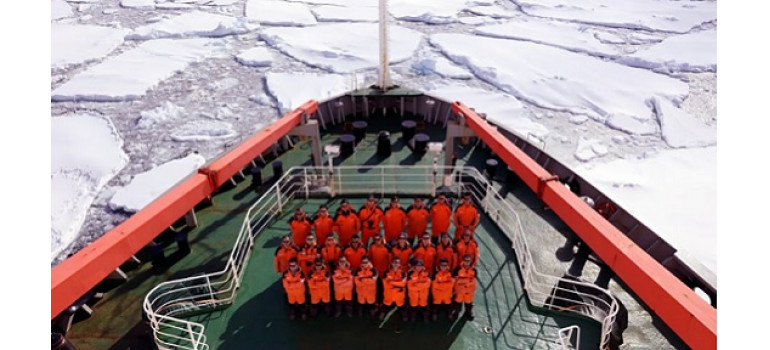
China commenced construction of its third icebreaker vessel at Guangzhou Shipyard on 25 June 2023. According to regional media reports, the 103-meter-long vessel with a displacement of 9200 tons is expected to be delivered by 2025. Scientists anticipate that the icebreaker will enable researchers to explore and study the previously inaccessible polar seabeds. This ship will also have the ability to focus on both crewed and uncrewed deep-sea scientific research with submersible platforms, making China the second country after Russia to have the ability to deploy manned submersibles into the Arctic seafloor. The Chinese currently have two icebreakers, Xuelong 1 and Xuelong 2, operational, which they use to replenish the seven ‘research stations’ they have at both the North and South Poles. However, unlike the Russian icebreakers, the new Chinese icebreaker will not be nuclear-powered.
Backbone of China’s Arctic Policy
China’s interest in the Arctic is driven mainly by its potential economic benefits. In January 2018, China released its new Arctic Policy where it claimed to be a ‘Near-Arctic State’ with plans to develop infrastructure, conduct research, extract resources, and extend its military capabilities in the Arctic. China’s expansion of its icebreaker fleets is the first step in accessing areas of the Arctic and other deep-sea regions that would have been initially inaccessible. Chinese state media has said that the inclusion of a third icebreaker vessel would facilitate deep-sea research, encompassing sample collection, environmental data analysis, geological and life science investigations, and testing and utilisation of deep-sea technology and equipment.
Xuelong Icebreaker Source – Xinhua
Assessing the ship’s capability as per Chinese state media claims, the new icebreaker vessel, along with its manned and unmanned deep-sea submarines, can collect samples of sediment and rocks from the seafloor. The ship will also likely have the ability to conduct detailed mapping and surveying to identify geological formations, potential mineral deposits and hydrocarbon reservoirs. The Arctic is not only a large reservoir of oil and gas resources but also of rare earth metals like neodymium, praseodymium, terbium and dysprosium, which are key elements for the world’s electric vehicles and the renewable energy revolution taking place currently. It is also important to mention that substantial amounts of iron, nickel, lead, zinc, silver, coal, gold and mica, as well as construction minerals like sand, gravel, and crushed rock, are thought to exist in the Arctic.
Chinese experts have indicated that when the vessel is launched, it will spend four months in the polar regions and dedicate the remainder of the year to scientific research in the South China Sea. In addition to its vast reserves of oil, natural gas and methane hydrates, the South China Sea is home to abundant deposits of manganese nodules, rich in valuable metals utilised in the production of steel, stainless steel, batteries, electronics, and other advanced applications. Furthermore, the region contains phosphorite rock, which holds valuable phosphate minerals crucial for promoting plant growth and agricultural productivity. The precise distribution and extent of these resources in both the Arctic and the South China Sea are currently being investigated. The vessel is expected to play a role in the Chinese efforts to access these resources and determine their potential location and extent.
The new icebreaker ship will also serve as a platform for deploying and testing the specialised equipment and technology required for resource extraction in challenging Arctic conditions. They additionally support the development and implementation of innovative techniques, such as remotely operated vehicles (ROVs), manned submersibles and autonomous underwater vehicles (AUVs) for efficient resource exploration and extraction. The Chinese currently produce 65 per cent and process about 85 per cent of the world’s rare earth metals. China is expected to strive to retain its dominant position in the global rare earth minerals market by exploring means to extract these resources.
Conclusion
China’s investment in the construction of a third icebreaker vessel demonstrates its commitment to expanding its presence in the Arctic region. With the completion of this new vessel, China aims to enhance its capabilities for scientific research, resource exploration and military operations in the Arctic. The increased Chinese presence raises geopolitical concerns among other nations, particularly those with Arctic territories like the United States, Canada and Russia. Its growing activities in the Arctic could lead to competition over resources and influence, and potentially challenge the established power dynamics in the region. The proposed presence of the Chinese vessels in South China Sea can also add to the existing complexities there particularly if they engage in scientific data collection and minerals exploration in areas claimed by other littoral states.
(Author is a postgraduate student. Views expressed in the article are personal to the author, and do not necessarily reflect the views of AICIS.)
aicis.org.in/