

A new report into China’s dominance in the green-energy market has identified more than a hundred allegations of environmental and human rights violations linked to its overseas transition mineral investments over the past two years.
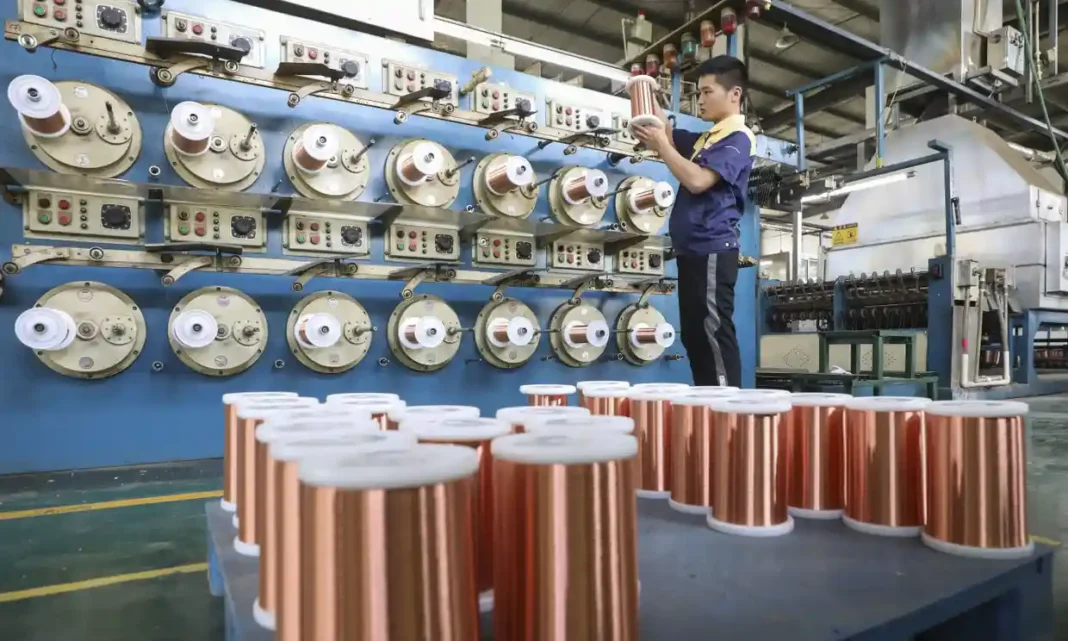
China dominates the processing and refining of lithium, cobalt, copper, manganese, nickel, zinc, chromium, aluminium and rare-earth elements – and the manufacturing of technologies like solar panels, wind turbines and batteries for electric vehicles (EV), which require so-called transition minerals.
The Business & Human Rights Resource Centre (BHRRC), a corporate watchdog that tracks the local impact of thousands of global businesses, identified 102 alleged abuses in 2021 and 2022 linked to Chinese mining interests spanning 18 countries.
Copper is the mineral most frequently associated with allegations of harm, followed by nickel. The abuses include Indigenous rights violations, attacks against grassroots leaders, water pollution, ecosystem destruction and unsafe working conditions.
The highest number of alleged abuses – 27 – were recorded in Indonesia, which has the world’s largest nickel reserve, followed by Peru, the Democratic Republic of the Congo, Myanmar and Zimbabwe. More than 70% of the alleged violations were documented in these five countries where weak governance and human rights abuses have been widely reported, and where China is a major economic partner.
The findings underline growing concerns that the transition to renewable energy is repeating unjust business practices that have long dominated fossil-fuel and mineral extractions, with Indigenous people, and marginalised rural and communities of colour most likely to bear the brunt of violations and least likely to benefit from the extracted natural resources.
China is not alone. Allegations of human rights violations, environmental harms and labour abuses are rife in mining operations linked to Canadian, US, UK, Australian and European companies and investors – which has long been taking place alongside the extraction of fossil fuels, according to data collated by the watchdog and multiple other human rights and environmental groups.
But experts have warned that the global dash for transition minerals needed for green-energy technologies threatens to provoke a new wave of land-grabs, water shortages, environmental damage and community conflicts as countries rush to meet their climate-action goals with little thought about the collateral damage.
“The energy and land needed for exploration, extraction and processing of transition minerals leaves behind a significant carbon footprint, characterised by human rights abuses and puts more strain on scarce surface and ground water resources,” said Eric Ngang from Global Witness, which documented more than 300 assassinations of anti-mining activists between 2012 and 2021, the worst violence linked to any environmentally harmful industry.
“While mining is needed for green transition, it will ramp up the [negative] impacts if appropriate regulations are not developed and implemented … as transnational companies and business enterprises seem to take advantage of weak governance,” Ngang added.
China has been buying up overseas mines and investing heavily in mineral-rich countries like Indonesia and Zimbabwe, and is set to dominate the supply chain for years to come despite US and European efforts to diversify the market.
Mining for transition minerals is often “the defining project for China’s relationship with these countries,” said Antonia Timmerman, an editor for the China Global South Project, a website, who has investigated Chinese involvement in Indonesia’s nickel mines. That means that abuses can be exacerbated by a lack of accountability from local partners and governments, who are keen to court investment from Chinese companies.
“This is a dirty business,” Timmerman said. In Indonesia, for example, the government “can be very brutal when it comes to defending and protecting these companies, especially the large ones. This happened long before the EV phenomenon.”
The report only includes alleged harms published by the media, academics and nonprofits related to the transition mineral supply chain, so the true number could be higher.
It also suggests Chinese companies are failing to comply with Beijing’s commitments on transparency and human rights policies, with less than one in five of the Chinese firms responding to the allegations when approached by the Centre – compared to 56% of mining companies globally.
In May, China’s mining industry business association launched a pilot mediation scheme for communities, workers and other stakeholders to file complaints against companies involved in any part of the minerals supply chain. It is the first grievance mechanism established by a Chinese industry association.
But participation is voluntary and the scheme has no enforcement powers. “The core function of this mechanism is to promote and facilitate the parties to a dispute to have open communication channels … and facilitate problem resolution by providing professional advice and services,” said Li Yanling, one of the scheme’s principal researchers.
But Chinese companies do not work in a vacuum, according to Betty Yolanda, director of regional programmes at BHRRC. “Many are suppliers to western buyers like Tesla, Ford and BMW … [who] need to be examined to check whether they have fulfilled their own due diligence responsibility across their supply chains.”