
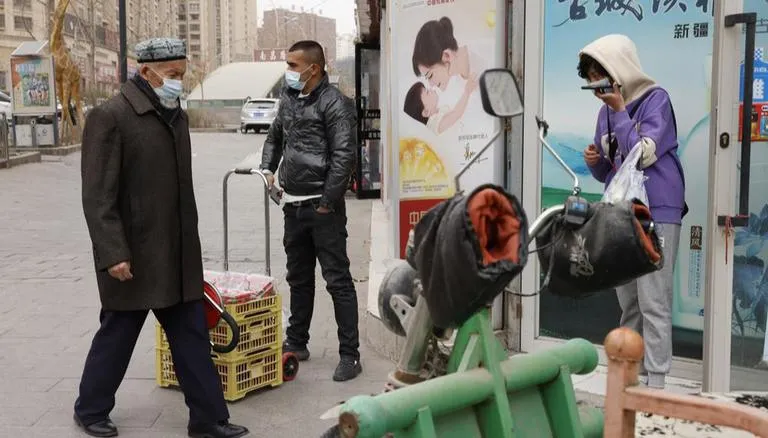
Under COVID Lockdown, Xinjiang Residents Complain Of Hunger

Περισσότερα Νέα

- Advertisement -

Residents of a city in China’s far west Xinjiang region say they are experiencing hunger, forced quarantines and dwindling supplies of medicine and daily necessities after more than 40 days in a virus lockdown.

Hundreds of posts from Ghulja riveted users of Chinese social media last week, with residents sharing videos of empty fridges, feverish children, and people screaming from their windows.

The dire conditions and food shortages are reminiscent of a harsh lockdown in Shanghai this spring, when thousands of residents posted online, complaining they were delivered rotting vegetables or denied critical medical care.

But unlike in Shanghai, a glittering, cosmopolitan metropolis of 20 million people and home to many foreigners, the harsh lockdowns in smaller cities such as Ghulja have received less attention.

As more infectious variants of the coronavirus creep into China, flare-ups have become increasingly common. Under China’s “zero-COVID” strategy, tens of millions or people are experiencing rolling lockdowns, paralyzing the economy and making travel uncertain.

- Advertisement -

The lockdown in Ghulja is also evoking fears of police brutality among the Uyghurs, the Turkic ethnic group native to Xinjiang. For years, the region has been the target of a sweeping security crackdown, ensnaring huge numbers of Uyghurs and other largely Muslim minorities in a vast network of camps and prisons. An earlier lockdown in Xinjiang was particularly tough, with forced medication, arrests, and residents being hosed down with disi

- Advertisement -

ΑΠΑΝΤΗΣΤΕ

εισάγετε το σχόλιό σας!
παρακαλώ εισάγετε το όνομά σας εδώ

The reCAPTCHA verification period has expired. Please reload the page.

Ροή ειδήσεων

ΣΧΕΤΙΚΑ ΑΡΘΡΑ

From Trade Preferences to Human Rights: The JAAC Case and Pakistan’s GSP+ Commitments

For years, the European Union has presented its GSP+ scheme as more than a trade preference. In exchange for duty-free or reduced-tariff access to...

Broken Unity in Islamic homeland? Minority Muslim communities remain unsafe in Pakistan

Pakistan came to a violent birth as a homeland for Muslims in the Indian Subcontinent and became home to the second-largest Muslim population in...

Defence Ties with Turkey: A new opportunity or a costly risk for Bangladesh?

The plan to enhance cooperation in the defense industry with Bangladesh, outlined by Turkish Foreign Minister Hakan Fidan during his visit to Dhaka, is sparking various...

US lists China’s BYD, Alibaba, Baidu as ‘Chinese military companies’

The United States has designated Chinese corporate giants Alibaba, BYD and Baidu as companies that support China’s military, expanding its blacklist to some of...

ΔΗΜΟΦΙΛΗ ΑΡΘΡΑ

Σεχταριστική βία και κρατική αποτυχία στο Πακιστάν – κληρονομιά μιας διχασμένης πολιτικής

Το Πακιστάν γεννήθηκε μέσα από βίαιες ανακατατάξεις ως πατρίδα των μουσουλμάνων της Ινδικής Υποηπείρου και εξελίχθηκε στη χώρα με τον δεύτερο μεγαλύτερο μουσουλμανικό πληθυσμό...

Πακιστάν, JAAC και GSP+: Μια κρίσιμη δοκιμασία για την αξιοπιστία της ΕΕ

Για χρόνια, η Ευρωπαϊκή Ένωση παρουσίαζε το καθεστώς GSP+ ως κάτι περισσότερο από μια εμπορική προτίμηση. Σε αντάλλαγμα για αδασμολόγητη ή μειωμένου δασμού πρόσβαση...

From Trade Preferences to Human Rights: The JAAC Case and Pakistan’s GSP+ Commitments

For years, the European Union has presented its GSP+ scheme as more than a trade preference. In exchange for duty-free or reduced-tariff access to...

Broken Unity in Islamic homeland? Minority Muslim communities remain unsafe in Pakistan

Pakistan came to a violent birth as a homeland for Muslims in the Indian Subcontinent and became home to the second-largest Muslim population in...