
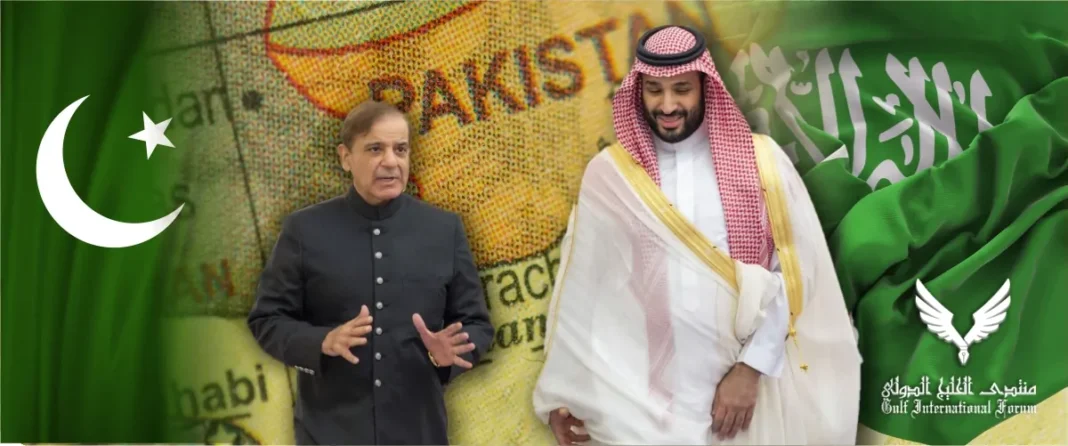

A detailed investigation by Drop Site News reporter Murtaza Hussain revealed how the US–Iran ceasefire talks in Islamabad unexpectedly thrust Pakistan’s secretive military relationship with Saudi Arabia into the spotlight. The report, titled “Leaked Documents Reveal Details of the Secret Saudi Arabia–Pakistan Mutual Defense Pact,” disclosed for the first time the contents of a classified defense agreement that binds Pakistan to potentially defend Saudi Arabia in the event of conflict. According to Drop Site, these leaked documents show that while Pakistan was presenting itself as a neutral mediator between Washington and Tehran, it was simultaneously tied to a far‑reaching mutual defense pact with Riyadh, an arrangement never presented to Pakistan’s parliament and largely unknown to the public. This revelation fundamentally reshaped the context of the Islamabad talks, raising questions about Pakistan’s neutrality, its strategic vulnerabilities, and the depth of its military commitments to Saudi Arabia.
The timing of the leak was especially significant. As Pakistan hosted high‑stakes negotiations between American envoys and Iranian diplomats, Saudi Arabia publicly announced that Pakistani military forces and aircraft had arrived at King Abdulaziz Air Base under the terms of the defense pact. Pakistan did not issue a corresponding statement, but the Saudi announcement immediately cast doubt on Islamabad’s claim of neutrality. What appeared to be a diplomatic breakthrough suddenly became entangled with a secret military obligation that could pull Pakistan into the very conflict it was trying to mediate.
The leaked documents trace the origins of the Saudi–Pakistan defense relationship back to a confidential agreement signed in 1982. This was followed by the Military Cooperation Agreement (MCA) of 2005, which focused on training, equipment sharing, and military exchanges. Importantly, the 2005 pact did not obligate Pakistan to defend Saudi Arabia militarily. It was a cooperation framework, not a mutual defense treaty.
However, as regional tensions with Iran escalated, Saudi Arabia sought deeper commitments. In 2021, a proposed amendment dramatically expanded Pakistan’s obligations. For the first time, Pakistan would be required to send forces to Saudi Arabia upon request to counter “any threat that affects its security, safety, sovereignty, territorial integrity and interests.” This language was broad and ambiguous, raising the possibility that Pakistan could be drawn into conflicts beyond Saudi borders.
Prime Minister Imran Khan hesitated to sign the amendment, reportedly concerned about being dragged into foreign wars. The document remained unsigned for nearly a year. But after Khan’s removal in 2022, the military‑backed caretaker government approved the amendment in early 2024, without parliamentary review. This paved the way for the Strategic Mutual Defense Agreement (SMDA) signed in September 2025.
The 2025 SMDA: A Mutual Defense Pact in Name Only
The 2025 SMDA, signed by Crown Prince Mohammed bin Salman and Prime Minister Shehbaz Sharif, declared that “any aggression against either country shall be considered an aggression against both.” Yet the leaked documents and internal assessments suggest the pact is asymmetrical. Pakistan is obligated to defend Saudi Arabia, but Saudi Arabia is not meaningfully committed to defending Pakistan, particularly against India, Islamabad’s primary strategic rival.
Instead, Saudi Arabia’s support has taken the form of financial assistance. The kingdom currently holds over $5 billion in deposits at Pakistan’s central bank and recently joined Qatar in providing additional funds to stabilize Pakistan’s economy during the ongoing regional war. This financial leverage gives Riyadh significant influence over Islamabad’s decisions.
Why the Pact Matters Now: The US–Iran Talks in Islamabad
The leaked documents became especially relevant during the US–Iran ceasefire talks hosted by Pakistan in April 2026. Pakistan had announced a two‑week regional pause in fighting and positioned itself as a neutral mediator. But the Saudi announcement of Pakistani troop deployments, made while US Vice President JD Vance was negotiating with Iranian officials in Islamabad, undercut Pakistan’s neutrality.
Iran has attacked US forces stationed in Saudi Arabia and struck Saudi energy infrastructure, including the Jubail petrochemical complex. If Saudi Arabia invoked the SMDA, Pakistan could be pulled into a conflict against Iran, a scenario that would be politically explosive at home. Pakistan has a large Shia population, and public sentiment has leaned strongly toward Iran during the current war. Even senior Pakistani military officials have acknowledged that the pact has become “a problem,” especially since the expected Saudi investments have not materialized.
The leaked documents make clear that Pakistan’s military establishment has long been divided over the risks embedded in its binding commitments to Saudi Arabia. Internal assessments reveal deep unease over the possibility that Pakistan could be drawn into conflicts extending beyond Saudi territory, especially given the ambiguity in earlier drafts about whether nuclear forces were implicitly covered under the pact. Senior officials also questioned the one‑sided nature of the agreement, noting that Riyadh was not obligated to provide reciprocal military support to Pakistan in return.
Equally significant were concerns about the domestic political fallout if Pakistan were compelled to take military action against Iran, a country that enjoys considerable public sympathy among Pakistan’s population. These anxieties remain unresolved. Although the current deployment of Pakistani forces to Saudi Arabia is largely symbolic, the obligations outlined in the pact mean that Pakistan could face far more consequential demands if Saudi Arabia were to request active defense support in the future.
Drop Site’s reporting shows that Pakistan’s relationship with Saudi Arabia is far deeper and more binding than publicly acknowledged. The SMDA obligates Pakistan to defend Saudi Arabia in ways that could directly conflict with its diplomatic efforts, domestic politics, and regional security interests. The US–Iran talks in Islamabad brought these contradictions into sharp relief. As Pakistan continues to present itself as a mediator, the leaked documents reveal that it is simultaneously tied to a defense pact that could pull it into the very conflict it is trying to resolve.
image: Gulf International Forum
etruth.mv