
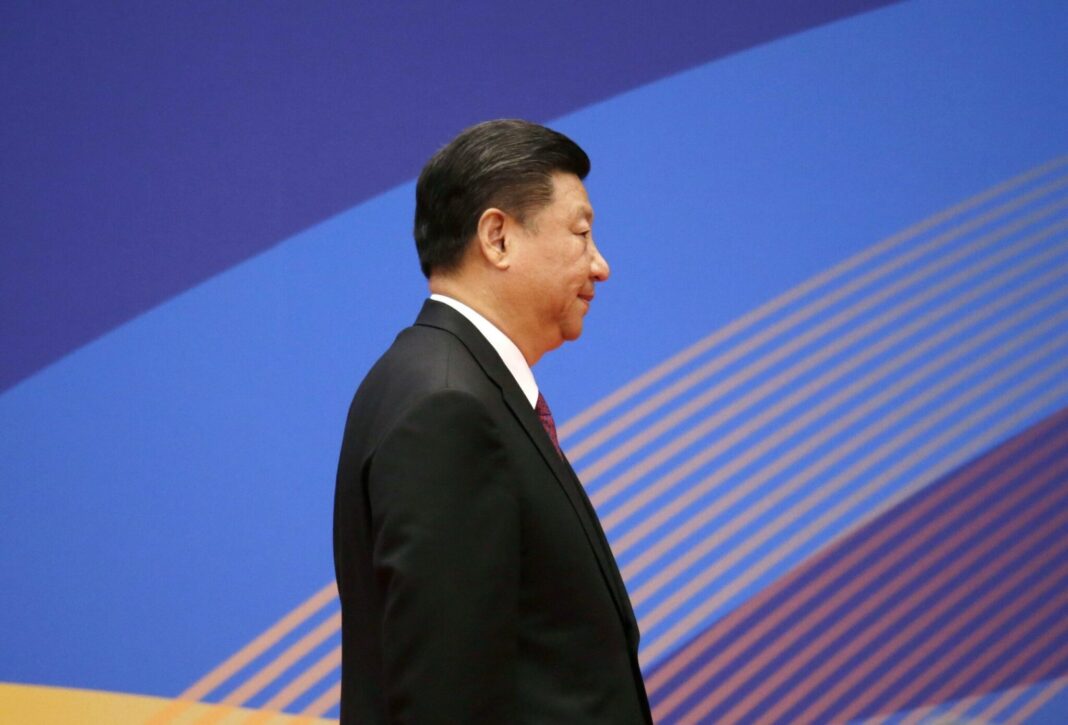

The official announcement by China’s Ministry of Foreign Affairs ends speculation whether Chinese President Xi Jinping will attend the G-20 Summit in New Delhi on September 8-9, 2023. It is certainly not a snub to India’s Prime Minister Narendra Modi as some commentators have surmised, since he has backed out of other foreign commitments too. But given that he signalled on the opening day of the 20th Party Congress in October last year that relations with India will not improve, and his unwillingness to have a substantive discussion on resolving the border issue with Prime Minister Modi on the sidelines of the BRICS Summit recently, Xi Jinping not attending the G-20 Summit and avoiding an opportunity to discuss the situation on the China-India border implies that India must prepare for a period of tension possibly punctuated with occasional clashes.
On balance though, it is China that will lose. India will proceed with the summit as planned and, dictated by protocol, Chinese Premier Li Qiang who will deputise for Xi Jinping will perhaps not find as prominent a place. With an obstructive China’s pre-eminent leader absent, New Delhi should find it easier to conduct the summit and finalise the concluding document despite Russia’s opposition to the inclusion of any reference to the war in Ukraine.
China, however, will lose an opportunity to slow down the speed at which it is being isolated internationally, it will lose the opportunity to revive its sagging export-led economy and it will even lose the opportunity for Xi Jinping to advocate his personal initiatives of the Global Security Initiative (GSI), Global Development Initiative (GDI) and Global Civilization Initiative (GCI). The latter initiatives are being touted by China and its diplomats particularly since early this year as the ideal alternatives to what Beijing calls the present U.S.-led world order.
Chinese President Xi Jinping obviously has compulsions that prevent him from attending what for China would have been an important gathering of world leaders. It is not only the G-20 Summit that he will not be attending, but he is also not going to attend the ASEAN and East Asia Summits. At a time when China’s behaviour is becoming increasingly aggressive and even some Chinese Communist Party (CCP) cadres, at personal risk, are recommending improving ties with the US and China’s neighbours, Xi Jinping’s absence at these international gatherings sends the wrong message.
Far from suggesting that Chinese President Xi Jinping has begun delegating authority to the Chinese Premier or other Politburo Standing Committee members, it points to problems related to his health or intensifying inner-Party factionalism. The state-owned CCTV’s widely observed video-clip of a somewhat disoriented Xi Jinping walking up to meet South African President Ramaphosa at the BRICS Summit in Johannesburg recently, was interpreted by some China analysts as indicative of health problems. On at least two earlier occasions he was missing for two weeks each without explanation. He has also earlier been seen walking with a slight limp.
Meanwhile, there is growing discontent with Xi Jinping and his policies because of the slowing economy, mounting joblessness, steadily increasing doses of compulsory study of Xi Jinping’s thoughts for Party members, imposition of progressively stringent security regulations, the policy towards Russia, and mishandling of China’s relations with the U.S., to name a few. CCP members and other sections of society alike are dissatisfied. Posts critical of Xi Jinping and his policies have appeared in the social media and CCP cadres have also written articles differing with some policies. This was reflected in the past couple of weeks in two articles—one in an official Chinese newspaper highlighting the economic problems and the other by a CCP member in a pro-CCP Singapore newspaper.
An unusually candid and critical article in China’s Economic Observer on August 11, 2023, captioned “No mother can cook for her children with no rice”, highlighted the acute economic difficulties of China’s provinces. Four Finance Directors of different provinces separately interviewed by the newspaper admitted to the severe paucity of funds and consequent pruning of development projects. The Directors said they spent most of their working days explaining to applicants why they are unable to give funds. The balance of their work days were spent pleading with senior cadres for funds. Meanwhile, provincial and county chiefs pressurise them to ensure funds for key development projects, paying salaries of staff etc. The Economic Observer assessed it was only a short time before the real estate sector became bankrupt. The article was deleted within a couple of days.
More damaging was the lengthy 2980-word article authored by Hong Kong-based Chinese businessman Lew Mon-hung and published in the pro-CCP Singapore newspaper ‘Lianhe Zaobo’ on August 21, 2023. In the classic style of China’s communist leaders, the article sharply criticised Xi Jinping but without actually naming him and was published outside China. Captioned ‘The root cause of China’s economic problems lies in political problems’, the article’s author is a CCP member and was a member of the 11th Chinese People’s Political Consultative Conference (CPPCC) – China’s top political advisory body.
The author has taken considerable risk as outspoken critics in Hong Kong, like the 75-year-old multi-millionaire Apple Daily owner Jimmy Lai, have been arrested under the National Security Law. The article, which criticised Xi Jinping’s re-election as President, focused on building a personality cult, handling of relations with the U.S., policy on Russia etc., reverberated on China’s social media Weibo. Netizens posted comments saying “Lew Mon-hung’s anti-Party essay is worth a read”; “That Lew Mon-hung essay put it pretty bluntly, haha”; and: “The Lianhe Zaobao essay shows a true understanding of China, including the solution [it needs].”
The publication of these articles point to the emergence, or strengthening, of factions within the CCP opposed to Xi Jinping. Other pointers include the disappearance of former Foreign Minister Qin Gang, removal of senior Commanders of the People’s Liberation Army (PLA) Rocket Force, and the speeches by Xi Jinping and Security Tsar Chen Wenqing during their visits to Xinjiang and Gansu respectively which included numerous references to “stability”. Unless he has serious health issues, it could well be that the infighting in the CCP and political instability inside China require Xi Jinping to stay in China.
Written by:Jayadeva Ranade (The author was formerly Additional Secretary, Cabinet Secretariat, Government of India and is presently member of the National Security Advisory Board and President of the Centre for China Analysis and Strategy. Views expressed in this article are personal.)
>> Source: Start News Global