

Originally called ‘One Belt, One Road’, China’s Belt and Road Initiative (BRI), designed to boost its image and influence with at least 49 countries to date, is faltering and the strategy may be doomed in the aftermath of Russia-Ukraine war.
The barriers and delays created by sanctions imposed on Russia for the invasion of Ukraine have accelerated the collapse of China’s Belt and Road Initiative global strategy.
The BRI is an internationally planned infrastructure development project for China and the emerging economies that trade with or border China. It is a move designed to recapture the ancient Silk Road and expand China’s influence. The BRI is the most ambitious economic development and infrastructure project the world has ever seen. But critics say the BRI projects present dangers to participating countries, such as debt traps.
Before the sanctions, China used Russia as a convenient transit point for the shipment of BRI equipment and supplies into Europe. China routed its cargo into St. Petersburg, Russia via the China-Europe Railway, then shipped it across the Baltic Sea into central Europe. The sanctions forced China to detour its cargo around Russia and enter Europe via slower land routes across Belarus, Poland, and other countries.
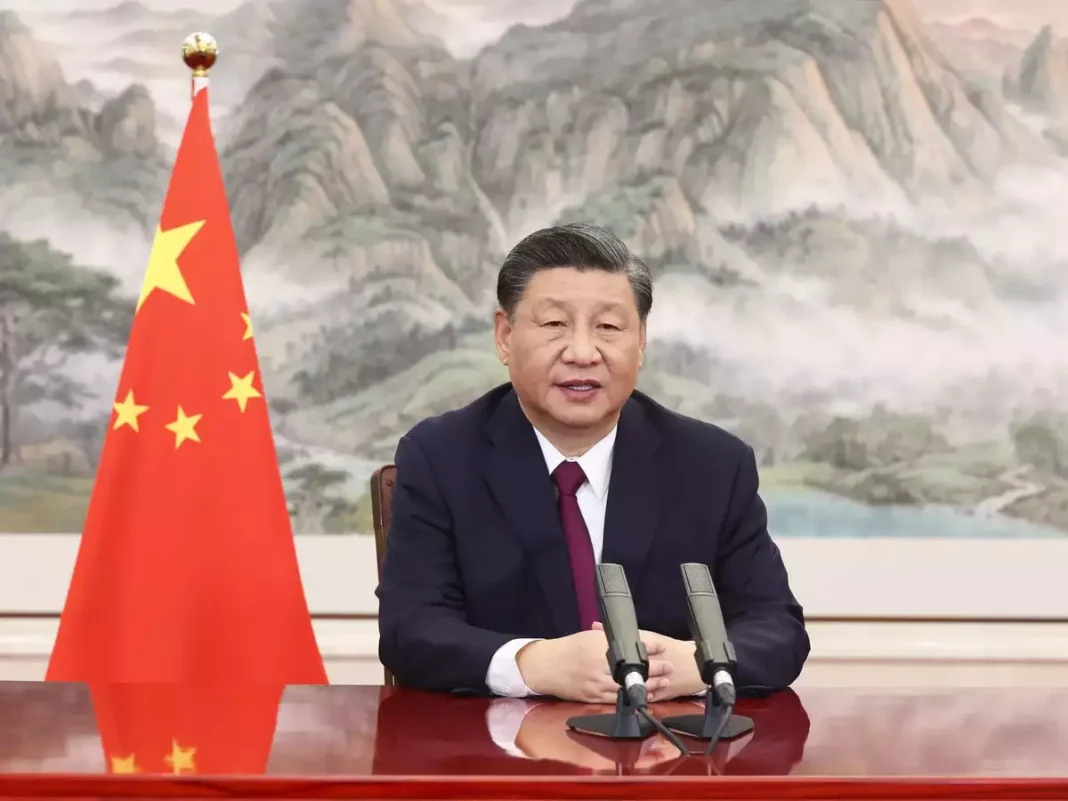
China’s BRI strategy was first introduced in 2013 by Chinese leader Xi Jinping. The strategy is in two parts – on land via the Silk Road Economic Belt which runs through Central Asia, Central and Eastern Europe to Western Europe; and on water via the ‘Maritime Silk Road’, which runs through the South China Sea and the Indian Ocean, westward through Southeast Asia to South Asia, the Middle East, Africa, and Europe.
War-torn Ukraine, at the junction of the Eurasian continent, is an important gateway into Europe from Asia and an important source of energy, food, and military technology for China. Other countries along the BRI delivery route, including Belarus, Poland, and Romania, have also felt the strain caused by the Russian-Ukrainian war. Belarus, for example, has been subjected to several collateral sanctions for its decision to side with Russia.
A Chinese media outlet on March 31 described how the sanctions against Russia and Belarus were forcing trains to route around these countries as well as Ukraine. As a result, shipments into Europe are being delayed while trains returning to China are often empty. It is unknown how long this disruption will last.
China’s participating BRI companies have noted that cargo and transportation delays are not the only problems they face. In addition, the sanctions and resulting turmoil have created logistical hardships, rising labour costs, and difficulties in settling trade agreements since Russian banks are no longer a part of SWIFT, the bloodline of the global financial system.
Meanwhile in Sri Lanka, a key hub of the BRI’s maritime route, citizens are protesting due to the worst economy since 1948. This small island country depends on trade with Russia and Ukraine for its tourism and tea industries. But the war between these countries is contributing to Sri Lanka’s failing economy, and the country’s economic crisis has further shifted to a political crisis.
However, Sri Lanka’s failed economy didn’t begin with Russia’s invasion of Ukraine. It began when China directly used its BRI strategy to ensnare Sri Lanka into a debt trap that has since become a political nightmare.
According to World Bank data, Sri Lanka has USD 35 billion in total debt of which USD 6 billion is owed to China for loans to fund BRI projects managed by Chinese companies. These projects include infrastructures such as ports, airports, and railroads. To help contain its debt with China, Sri Lanka agreed in 2017 to lease its Hambantota Port in the Indian Ocean to China for 99 years at the price of USD 1.1 billion. The lease was extended another 99 years in 2021. Within this year, Sri Lanka is obligated to repay USD 6.9 billion of its foreign debt. But this is unlikely since its foreign reserves total only USD 2.3 billion. To address this deficit, Sri Lanka asked China last January to restructure its debt. However, China is yet to respond.
Whereas Indonesia is feeling the heat as it became the first country to participate in China’s water-based ‘Maritime Silk Road’ initiative.
Indonesia is pressured to comply with China’s growing influence in Southeast Asia and expansion in the South China Sea. According to a survey released on April 5 by Australia’s Lowy Institute, Indonesians are wary of Chinese investments. Nearly half the respondents felt that within the next 10 years, the Chinese communist regime would become the most threatening country. Sixty per cent of Indonesians favoured cooperating with other countries to contain the CCP’s influence.
The BRI juggernaut is designed to integrate China into various spheres of influence along its borders and emerging economies. Like China’s state capitalism, where the Chinese Communist Party (CCP) gives cheap equity and debt to companies, Beijing engages in debt-trap diplomacy. While one can say that the sole ambition of China’s BRI is to gain world control or block Western economies from continued dominance, it is nearly clear that China is buying political influence in many of the world’s emerging economies but success has eluded its efforts.