
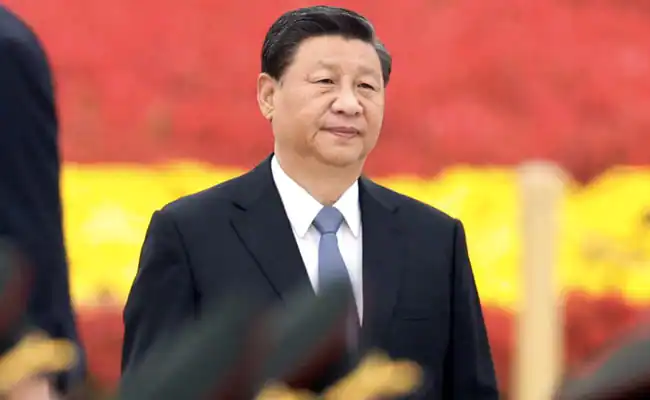

Since Chinese President Xi Jinping assumed his office, he introduced various measures to enforce discipline among the cadres and employed populist measures to destroy any kind of dissent and garnered support for his authoritarian policies.
Xi’s far-reaching anti-corruption campaign had targeted his political rivals as well as retired several leaders of the Chinese Communist Party. The anti-graft campaign became Xi’s hallmark as a tough leader, Brijeshwar Dahiya written in Organisation for Research on China and Asia.
Citing political scientists Brian Lai and Dan Slater, the author said that Xi is characterised by an autocratic dictatorship by a leader as opposed to juntas or oligarchic dictatorships.
Internet censorship has increased considerably in China after Xi became the General Secretary of the Chinese Communist Party. Xi Jinping’s regime has imposed stringent restrictions on the use of the internet, invoking “internet sovereignty”, China has censored the use of international platforms like Google, Facebook, and Wikipedia.
In 2013, the Chinese government passed a law prohibiting bloggers from sharing ‘defamatory’ content on popular Chinese social media platforms like Weibo and WeChat, a violation of which will invite imprisonment for three years.
Under Xi Jinping’s rule, observers noticed that there is an increase in human rights violations, especially in autonomous and ethnic minority regions, including mass surveillance and sending Uyghur Muslims to detention camps in Xinjiang.
Not only, ethnic minorities but Hong Kong is also Xi’s target. His administration is systematically destroying Hong Kong’s autonomy under its principle “One Country Two Systems”.
Under Xi Jinping, the human rights status quo has worsened in China, with increased attacks on activists, lawyers, and journalists. Hundreds of activists have been arrested, including prominent activist Xu Zhiyong of the New Citizens Movement.
According to the author, the CCP sees religion as a threat to its authority. They have tried to suppress the religious freedom of Tibetans and the Uyghurs. One of the methods used by Xi Jinping’s regime is either to destroy the religious monuments or by putting banners of Xi Jinping in Uyghur mosques and in Tibetan monasteries.
CPC had attacked hundreds of Tibetan Buddhist monasteries like the Larung Gar in 2017. Recently, in January, a 99-foot tall statue in Drago county in the Tibetan Autonomous Prefecture was demolished by the Chinese Communist Party along with 45 traditional prayer wheels set up for use by Tibetan pilgrims and other worshippers.
Xi has not only projected himself as a strong leader domestically but on the global stage as well. Under the Chinese President’s rule, the people of republic China had followed assertive foreign policy.
According to Dahiya, China has become more aggressive and sometimes even violent in asserting its territorial claims on its neighbours like India, Japan and Southeast Asian countries.
Recently, the incursion in Taiwanese airspace has been increased especially in 2020-2021 when Taiwan said that there are as many as 969 incursions into its Air Defence Identification Zone (ADIZ).
The PRC government under Xi has been alarmingly vocal about the option of using force to occupy Taiwan if “peaceful efforts” fail.