
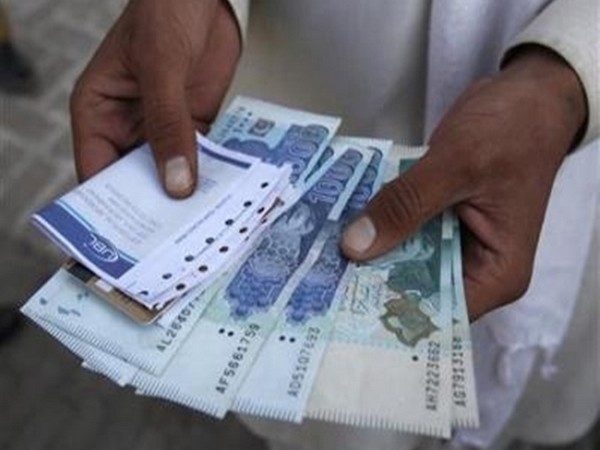

Amid the depleting foreign currency reserves and crashing economy, Pakistan is in dire need of USD 36-37 billion in foreign financing in the next fiscal year.
The country’s international bonds have lost almost one-third of their value and Finance Minister Miftah Ismail has announced that Pakistan is yet to reach an agreement with the International Monetary Fund (IMF) in June, The Express Tribune reported.
The minister revealed that at present the government is not in a position to raise fresh foreign debt from the global capital market and stressed controlling inflation as the top priority.
However, another USD 10-15 billion will be required to finance the current account deficit.“Inflation control will lead to economic growth,” the minister remarked while speaking at a webinar on “National Dialogue on Economy: The Way Forward for Pakistan”, organised by Nutshell Conferences and Corporate Pakistan Group on Saturday.
“Pakistan is to repay USD 21 billion in foreign debt in the next fiscal year, so it is a must to enter the International Monetary Fund (IMF) loan programme (worth USD 6 billion) to arrange the required financing,” Ismail said further.
Emphasizing on looming economic crisis in the country, he also highlighted that the nation will import 3 million tons of wheat, 4 million tons of cooking oil worth USD 6 billion and 5 million bales of cotton during the next fiscal year 2022-23 to deal with country’s economic instability.
The value of Pakistan’s US dollar-denominated international bonds has shrunk by around 30% – like USD 1 bond was trading at 70 cents when the PML-N led coalition government came to power in early April. “Now it is trading at 65 cents,” The Express Tribune said, citing Ismail.
“This means we cannot float Eurobonds in the world market to raise fresh funds, nor can we go to (global) commercial banks (right now),” the minister stressed.
Prime Minister Shehbaz Sharif also went to Saudi Arabia and other friendly countries to acquire financing from them.
They are ready to extend loans, but only after Pakistan enter the IMF programme, however, the IMF has linked the revival of its loan programme to the removal of subsidy on petroleum products, owing to which the government initiated the process of reversing the subsidy with effect from Friday (May 27).
Meanwhile, Pakistan Finance Minister Tarin stressed the need to reduce the gap between import payments and export earnings with a focus on IT exports and blamed the previous government and the ousted leader Imran Khan for Pakistan’s financial meltdown.
Pakistan’s failure in handling its economy is an unpleasant result of its own actions as the country incurred a foreign debt of USD 13.033 billion from multiple financing sources in the first 10 months (July-April 2021-22) including USD 2.623 billion from foreign commercial banks for the entire fiscal year.
High domestic demand pressures and rising global commodity prices have given rise to double-digit inflation in the country, leading to low productivity and a low investment growth cycle in the nation.