

The growing proximity and cooperation at different levels between Turkey, Azerbaijan and Pakistan is leading diplomats and military strategists from Iran, Armenia and India to converge and increase the exchange of thoughts at a deeper level.
Earlier last month, Defence Minister Rajnath Singh and his Armenian counterpart, Suren Papikyan met on the sidelines of the Defence Expo 2022 at Gandhinagar. This came just days after news emerged that India had decided to provide weapons to Armenia, which is engaged in a prolonged armed conflict related to a territorial dispute with Azerbaijan.
While bilateral cooperation between India and Iran has been happening for a long time, Armenia has recently positioned itself as an important strategic partner in this emerging trilateral partnership in the Middle East that affects India’s long-term interests. The fact that Turkey and Pakistan came together to help Azerbaijan in the September 2020 Nagorno-Karabakh war that resulted in the defeat of Armenia, has pushed Armenian strategists to look for a reliable military, economic and diplomatic power, which they believe will be India, a country at a distance of 3,200 km as the crow flies.
During the war, the duo of Pakistan and Turkey openly came out in support of their partner, Azerbaijan, with Turkey even supplying weapons, especially combat drones, to the Azerbaijan troops which experts believe tilted the war in favour of Azerbaijan. These steps are a part of Ankara’s sustained efforts to emerge as a regional power in the region and expand its influence in countries of Central Asia.
As per publicly available figures, Turkey is now among Pakistan’s top three arms-supplying countries. The defence cooperation between the two countries, analysts believe, is taking rapid strides in the field of aerial weapons and aerial vehicles. Similarly, Ankara has recently emerged as a preferred defence partner of Baku, the capital of Azerbaijan, with sales figures reaching $75 million.
Delhi had, in May 2020, agreed to supply four SWATHI weapon locating radars, developed by DRDO, that provide accurate location of enemy assets like mortars, shells, and rockets in a 50-km range to Yerevan for a price of $40 million.
Two years later, India and Armenia signed another $245 million worth of arms deal that includes India sending missiles and other offensive and defensive systems. The exact details of the deals have not been made public so far, given the situation between Armenia and Azerbaijan.
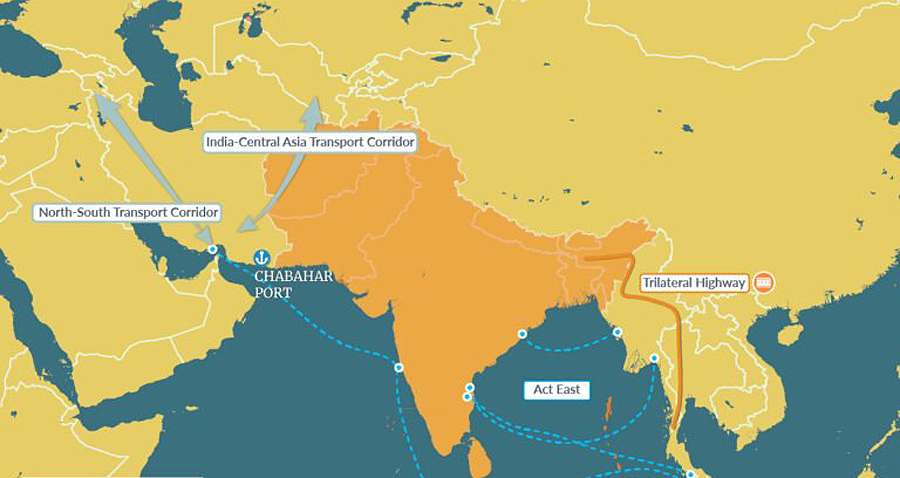
Sources said that Armenian forces have likely sought Pinaka multi-barrel rocket launchers and Konkurs-M anti-tank guided missiles, among other guided assets. India also has an interest in the well-being of Armenia for other reasons. Indian policymakers plan to connect the Chabahar port, which is located in south-east Iran, and the Indian Ocean to Eurasia and Finland through Armenia, extending the International North-South Transport Corridor (INSTC). Once this happens, Chabahar will become one of the region’s most strategic and busiest ports. The INSTC, which is seen by many as a counter to the China-led Belt and Road Initiative (BRI), was envisaged by India-Iran-Russia in 2000. This will also help Indian and other South East Asian exporters to reach Iran and other Central Asian countries while bypassing Pakistan and Afghanistan, where security concerns remain a huge factor.
India will also have another ally in the region, along with Iran, that will give it multiple options to keep an eye on the developments in Pakistan and Afghanistan, where it has invested heavily. Last year in October, India’s External Affairs Minister S. Jaishankar became the first Indian foreign minister to visit Armenia since the two countries established diplomatic relations in 1992.
sundayguardianlive.com