
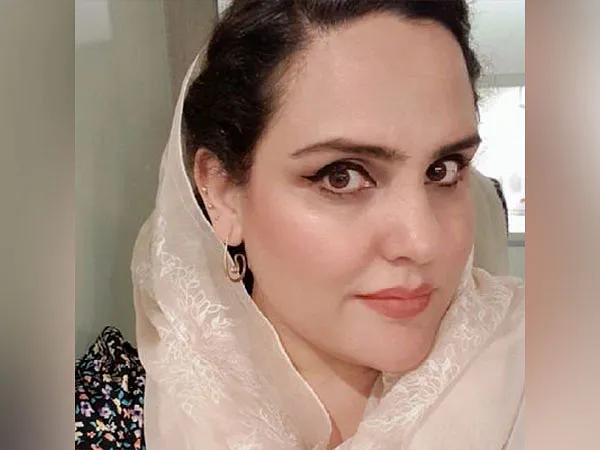

Pakistani human rights activist Sanna Ejaz said that the Pakistan Army has transformed the country into a prison-like system controlled by security authorities, with the Inter-Services Intelligence (ISI) playing a particularly central role in entrenching military rule, according to the European Foundation for South Asian Studies (EFSAS).
Pakistani journalist and human rights activist from Khyber Pakhtunkhwa Sanna Ejaz made these remarks in an interview with Junaid Qureshi, Director EFSAS.
Ejaz is a leading member of the Pashtun Tahafuz Movement (PTM), as well as a founding member of the Waak Movement, which aims to bring political awareness among Pashtun women. She was formerly the vice-president of the youth wing of the Awami National Party (ANP).
Sanna Ejaz was fired in 2018 from her position at Pakistan Television Corporation (PTV), Pakistan’s national broadcasting service, for her activism surrounding human rights and especially minority rights in Pakistan. Since then, she has survived three assassination attempts and now lives in London.
While explaining how her story in sociopolitical activism and journalism began in 2007, she noted that her previous employers were frequently pressured by the Pakistani military establishment because of her activist endeavours.
The military establishment, she contended, has transformed Pakistan. She added that now the country has turned into a prison-like system controlled by security authorities, with the Inter-Services Intelligence (ISI) playing a particularly central role in entrenching military rule.
Repression against human rights activists, Ejaz suggested, constitutes a key component in the military’s domestic governance model. The repression experienced by female activists, she argued, is particularly excessive due to the prevalence of patriarchal structures in Pakistan.
Tactics employed by the authorities include character assassinations of female activists, the threatening of activists’ families, and pushing male family members to commit honour killings. Repressive activities by the state are facilitated and enabled further by the imposition of media curbs in politically and geographically peripheral areas such as Balochistan and large parts of the Pashtun tribal belt.
Pre-existing cultural structures, Ejaz stressed, reinforce gender-based discrimination, repressive actions against activists, and a lack of media coverage.
She further highlighted how the military coups and the de facto imposition of martial law have dominated Pakistani history and society following the partition of British India in 1947, allowing the military establishment to develop a prison-like structure that discriminates against minorities.
Organizations such as the Pashtun Tahafuz Movement, of which Ejaz is part, are focused on demanding the fundamental rights the Pakistani constitution promises to all Pakistani citizens. In contrast with India, Ejaz outlined, Pakistan has been reluctant to introduce democratizing reforms after 1947, instead maintaining major components of the colonial governance approach by continuing colonial-era legislations such as the Frontier Crimes Regulation.
Ejaz suggested that in order to boost democratic governance in Pakistan, human rights bodies must further raise international awareness of the plight Pakistani minorities face today. In the Pashtun-dominated Khyber Pakhtunkhwa (KP) province, anti-State protests have become commonplace and are frequently repressed by security authorities.
Regarding the relations between the Afghan Taliban and Pakistan, Ejaz observed that these tensions were the result of Pakistan’s consistent distinction between ‘good’ and ‘bad’ Taliban (i.e., the pro-Pakistan Afghan Taliban and anti-Pakistan groups such as the Tehreek-i-Taliban Pakistan (TTP)). Ejaz highlighted that the Taliban and the Haqqani Network, continue to operate madrassas in Pakistan’s tribal areas.
Turning towards contemporary political affairs in Pakistan, Ejaz mentioned that it may be a possibility for former Pakistan Prime Minister Imran Khan to return to power despite his recent ousting. Khan, she highlighted, has fulfilled a puppet-like function for the military establishment, which continues to undermine public political participation and encouraged the targeting of politicians critical of the military.
Female empowerment, she emphasized, has been advanced by Pakistani Civil Society Organizations (CSOs), especially CSOs working with ethnic minorities.
Concluding her remarks, Ejaz stated that the Pakistani authorities are once again seeking to assert an Urdu-centric understanding of Pakistani nationhood. This is part of a broader approach that seeks to exploit and deepen intercommunal tensions by blaming Pashtuns for militancy, targeting Hazaras in Pakistan, and generally exacerbating sectarian tensions.
To sustainably improve democratic structures in Pakistan, oppressed minorities must collaborate to create a unified front against state repression and the Pakistani public must foster more political pressure not just on Pakistani politicians but also members of the Pakistan Army, she added.