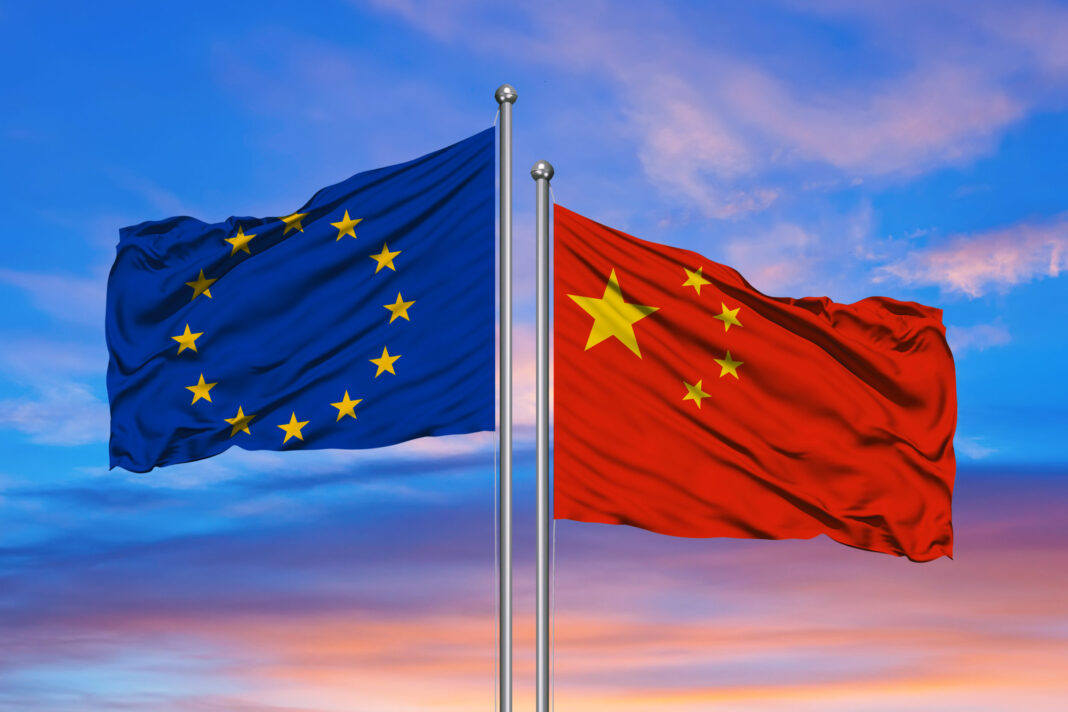

For China it has come as a major diplomatic embarrassment at the global level as European Union lawmakers have agreed to form a new regulation banning products made with forced labour. China has been accused of using forced labour in Xinjiang region by the global community but in absence of any law no action could be taken against it. Meanwhile, deputies to the delegation of the Xinjiang Uygur Autonomous Region of the 14th National People’s Congress have refuted the allegation of the existence of so-called forced labour in the cotton industry.
Akrem Memetmin, Party chief of Sayimaili village in southern Xinjiang’s Luntai County recently stated that the villagers never need to be forced to plant cotton, because they know they can get a handsome return. To paint a rosy picture, Jin Zhizhen, Vice-Chairman of the Xinjiang Regional Committee of the Chinese People’s Political Consultative Conference, maintained that Xinjiang has been the biggest production base for quality commodity cotton in China since the 1990s. And the annual output has been over 5 million metric tons for five consecutive years.
Notwithstanding the Chinese claims, the US and other European countries reported forced labour in Xinjiang. However, the draft law would require member states to investigate products – whether imported or made in the EU – when there is a risk they were made with forced labour. The important deal on the issue was struck between negotiators for the European Parliament and the Belgian government, acting on behalf of all EU member states.
“We need to show political and legislative will now and finish this file before the end of the [legislative] term. At least 28 million victims of forced labour cannot wait any longer,” Dutch lawmaker Samira Rafaela reportedly told POLITICO. Rafaela, of the liberal Renew group, jointly leads work on the file in the European Parliament.
The new rules would empower customs authorities in EU countries to take products off the market if they are found to have been made using forced labour. Largely targeting China, they respond to a growing body of evidence that Beijing is using forced labour and mass internment camps to control the Uyghur ethnic group in Xinjiang.
The development has assumed greater significance in the light of the fact that Volkswagen (VW) -owned brands’ vehicles were impounded in the U.S. due to Uyghur Forced Labour Prevention Act (UFLPA) violations. BASF, another German firm, accelerated Xinjiang Petrochemical Plant sales amid allegations of staff from a government-owned joint venture sharing evidence to Chinese authorities about the Uyghur communities. Similar concerns were raised in 2020 against Apple’s supplier Lens Technology, alleging resort to forced labour. The same year, the Australian Strategic Policy Institute in its report, alleged four instances of Apple’s links to forced labour from supply chains based in Xinjiang. The U.S. State Department and UN Human Rights Commissioner’s reports highlighted Uyghur repression as genocide and potential crimes against humanity.
According to Politico.EU, as many as 1.5 million Uyghurs are believed to have been interned in Xinjiang, where a paramilitary unit — which researchers have referred to as a colonial agency — oversees economic output as well as law and order. A recent report by researcher Adrian Zenz showed that the region continues to subject Uyghurs to forced labour two years after a damning U.N. report detailed the abusive practice.
Experts said that the EU lags behind the US which has imposed a general ban on the import of forced labour goods and has set rules that target Uyghur forced labour in particular. As regard to other countries, the United Kingdom and Canada have been quick to align themselves with the tough U.S. position on trade with Xinjiang, Brussels and most EU member countries have taken their time to follow suit, instead prioritizing a comprehensive investment agreement with China, for which negotiations concluded in 2020. The investment pact has yet to enter force.
Meanwhile, UN Human Rights Chief Volker Turk has called on China to implement recommendations to amend laws that violate fundamental rights including in the Xinjiang and Tibet regions. Human Rights Watch and other civil society organizations have been raising their voices against China on the issue of forced labour in Xinjiang. The US leading bodies have suggested that the proposed EU forced labour regulation could incentivize and facilitate robust prevention, mitigation, and remediation of forced labour in supply chains.
Meanwhile, the top Communist Party official in Xinjiang said that it was “inevitable” for Islam to become more “Sinicised” in the Muslim-majority northwest Chinese region, where Beijing is accused of violating human rights. “Everyone knows that Islam in Xinjiang needs to be Sinicised, this is an inevitable trend,” regional party chief Ma Xingrui stated. Chinese President Xi Jinping has advocated for the “Sinicisation” of religions, including Islam, Buddhism, and Christianity. An Australian think-tank analysis estimated that since 2017, over two-thirds of Xinjiang’s mosques have suffered damage or have been completely destroyed.
However, all eyes are on European Commission as to what will be the form and shape of legislation and how long will it taken to implement? An EU ban on imported goods made using forced labour would be weaker than existing US legislation or equally stringent are top among many questions European Commission officials are mulling over.
thehongkongpost.com