
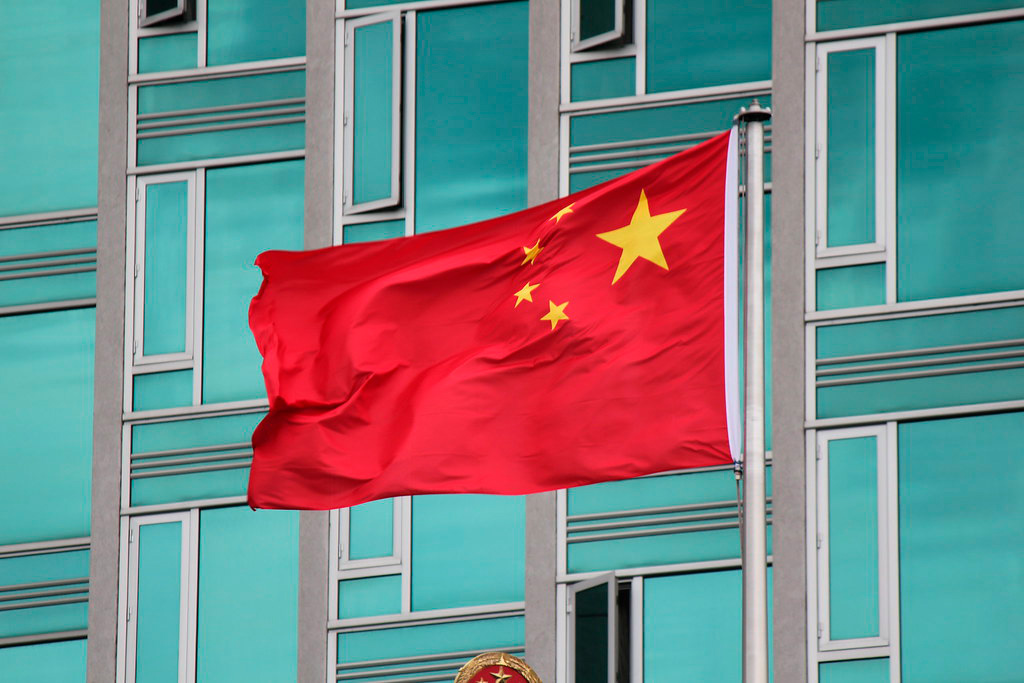

China’s recent joint air exercise with Egypt has sent a warning signal to the world about Beijing’s expanding geopolitical footprint in a region long considered a U.S. sphere of influence. Egypt, once a steadfast ally of the United States, now appears to be leaning increasingly toward China. This shift is raising global concerns, with many experts warning that Egypt may risk becoming a strategic proxy for China in its broader geopolitical competition with the U.S. and Europe.
The joint training marked the first time the People’s Liberation Army (PLA) Air Force deployed a systematic force to Africa for such exercises, according to Global Times, China’s state-run newspaper. As reported by the Jerusalem Post, the drill highlights China’s growing military inroads into the region. Egypt—bordering Israel and traditionally aligned with the U.S.—is fast emerging as a key strategic partner for China. The exercise took place at an Egyptian airbase amid reports that Cairo is acquiring advanced Chinese weaponry and welcoming large-scale Chinese investments.
Military analysts were taken aback by China’s show of force during the joint drills, which featured J-10CE fighter jets, HQ-9 missile systems, and Type 99 tanks. These are not just symbolic displays of military hardware; they represent Egypt’s move toward strategic autonomy. Unlike Western suppliers, China offers advanced systems with fewer political conditions and often includes technology transfer options for local production—although often accompanied by opaque terms and conditions.
Analysts argue that Egypt’s national security demands such capabilities: J-10s to safeguard its airspace amid regional tensions, HQ-9 systems to protect the strategically vital Suez Canal, and modern armored vehicles to combat terrorism in the Sinai Peninsula. Experts concede that these acquisitions by Egypt are not intended as provocations against Israel but rather reflect Cairo’s fundamental security requirements. Still, while analysts acknowledge Egypt’s eastward pivot stems from strategic necessity, others warn that Cairo risks falling under undue Chinese influence.
Egypt currently owes China approximately $5.2 billion, ranking it ninth among China’s international debtors. In exchange, China has secured debt-for-development deals that deepen its strategic foothold in the country. Global analysts are working to decipher the underlying strategic signals behind the so-called “golden decade” of China–Egypt relations. Is this a deliberate challenge to the United States and Europe?
One of the most telling moments came when Chinese Foreign Ministry spokesperson Lin Jian responded to a post by President Donald Trump regarding American naval movements in the Panama and Suez Canals. Jian emphasized Egypt’s sovereign control over the Suez Canal and pledged China’s firm support for Egypt in defending its sovereignty and legitimate interests, denouncing what he described as bullying rhetoric.
China’s sale of advanced electronic warfare systems to Egypt—including four active batteries—alongside other likely undisclosed military technologies has further alarmed security analysts. Yet, China’s influence extends far beyond the battlefield. Since President Abdel Fattah Al-Sisi came to power, China has secured a special status in Egypt’s domestic and foreign policy priorities.
China is building Egypt’s new administrative capital—a $59 billion mega-project seen as Al-Sisi’s flagship initiative. Alongside that, China is also constructing two major ports in Abu Qir, giving it proximity to the Mediterranean and the Red Sea—both critical maritime corridors. China’s lending practices under the Belt and Road Initiative (BRI) are seen by many as efforts to entrap developing nations through massive loans that can be leveraged politically. In Egypt’s case, Beijing has invested over $3 billion into the Suez Canal Economic Zone (SCZone), which now accounts for 40% of Egypt’s foreign direct investment over the past two years.
Chinese companies have signed multi-billion-dollar deals in infrastructure, energy, and high-tech industries, reinforcing Egypt’s role as a gateway to both African and European markets. However, the bilateral trade relationship remains unbalanced, raising concerns that Egypt is being used to absorb China’s industrial overcapacity and high-emission production output.
China’s influence in Egypt is not limited to economics and security—it is actively reshaping Egypt’s media, education, and political landscape. Many Egyptian media outlets, particularly those state-affiliated, have become channels for Chinese Communist Party (CCP) propaganda. These outlets avoid discussing sensitive issues such as Beijing’s human rights abuses against the Uyghur Muslim population. Notably, Egyptian authorities have detained Uyghur students and faced international pressure to prevent their extradition to China.
On matters of international diplomacy, President Abdel Fattah el-Sisi has repeatedly reaffirmed Egypt’s support for the “One China” policy, calling it essential for global peace and stability. Reports also suggest that China is strategically investing in shaping Egypt’s future leadership. The CCP has built ties with Egyptian political parties across the spectrum—not just left-leaning factions. Chinese diplomats frequently host events involving key Egyptian political leaders, and the CCP’s International Liaison Department regularly brings Egyptian officials to China for high-level meetings. Chinese ambassadors also publish op-eds in leading Egyptian newspapers, aiming to sway public opinion and deepen skepticism toward the West, particularly the United States.
One of the most alarming aspects of China’s influence is its dominance in Egypt’s telecommunications and digital infrastructure. Egyptian telecom companies rely heavily on Chinese-made routers and modems, primarily from ZTE and Huawei—companies closely tied to the Chinese Communist Party and implicated in global surveillance operations. Similarly, Chinese surveillance giants Dahua and Hikvision have a significant presence in Egypt’s security networks. Experts warn that this gives Beijing potential access to sensitive data, offering tools for political coercion, surveillance, and intelligence gathering.
The global community must urgently reassess China’s expanding influence in Egypt and take appropriate strategic steps. The joint military exercises and deepening cooperation signal a potential shift in Middle Eastern power dynamics—one that could reshape regional stability and challenge long-standing alliances.