
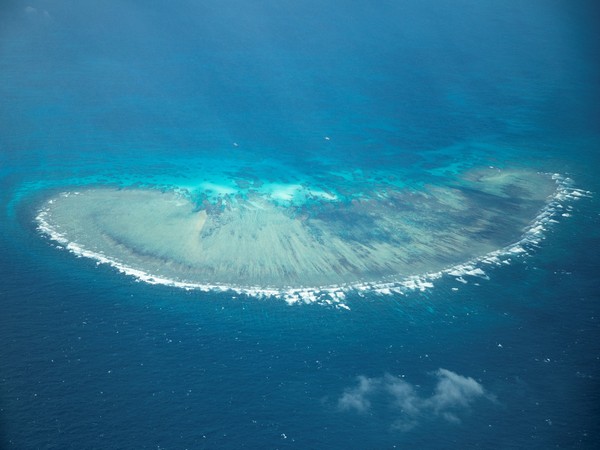

China embarked on a project to build artificial islands in the Spratly Islands in the early 2010s, claiming they were for non-military purposes. But, subsequent developments revealed that with militarization efforts have transformed these islands into strategic military outposts, Directus reported.
China’s expanding presence in the South China Sea was just the beginning of its ambitions. Leaked documents, known as the “Discord” papers, now shed light on China’s larger plan, Project 141.
This initiative aims to establish a network of overseas military bases and logistics sites, extending from the South China Sea to the Indian Ocean and even reaching the eastern Atlantic. This article explores the implications and challenges of China’s growing global military footprint, Directus reported.
China’s construction of artificial islands in the Spratlys, initially promised to be non-militarized, soon revealed a different truth. These islands now boast airstrips, harbours, radar stations, anti-aircraft guns, anti-ship cruise missiles, and long-range surface-to-air missiles.
Directus is a Greece-based media house reporting on all the latest news and developments across the world. Also publishes analysis of Geopolitical topics and commentary on Greece’s national issues.
Situated strategically near major sea lanes and rich maritime resources, China’s militarization efforts in the Spratlys have raised concerns among neighbouring countries and the international community.
One of China’s operational bases is located in Djibouti, strategically positioned at the southern entrance to the Red Sea. Djibouti serves as a crucial refuelling and transhipment centre, controlling access to the Red Sea and the Indian Ocean, Directus reported.
China’s military facility in Djibouti, officially termed a “logistical support facility,” is equipped with a large pier capable of accommodating aircraft carriers and is home to a significant number of military personnel.
Recent developments, including the establishment of a spaceport and antenna operations building, further illustrate China’s expanding presence and operations in Djibouti.
Satellite surveillance has revealed China’s construction of an “independent facility” within Cambodia’s Ream Naval Base. The Chinese-controlled section of the base includes new piers and buildings, raising concerns about Beijing’s influence and potential for a permanent military presence in the region, Directus reported.
China’s interest in other African countries, such as Equatorial Guinea, Gabon, Mozambique, and Tanzania, suggests a broader pattern of seeking basing opportunities in the African continent.
China has been particularly active in establishing deepwater ports in the Indian Ocean littoral, including Gwadar and Karachi in Pakistan, Colombo and Hambantota in Sri Lanka, and Sittwe in Myanmar.
Notably, China’s collaboration with the United Arab Emirates (UAE) to develop the Khalifa Industrial Zone in Abu Dhabi has raised concerns. The PLA base and logistics storage site at Khalifa Port, supported by significant Chinese investments, have been allegedly used for military and naval operations, underscoring China’s growing influence and presence in the Gulf region, Directus reported.
China’s changing stance on overseas military bases is evident as it seeks to justify its expanding global military footprint. Previously critical of countries with extensive military bases, China now argues that these overseas facilities are necessary to protect its expanding interests and fulfil international responsibilities.
However, the transformed purpose of its Djibouti facility challenges the claim that it is solely a “logistical support facility.”
With a new 1,000-plus-foot-long pier under construction, it becomes increasingly difficult to deny its military nature.
China’s ambitions to establish a network of overseas military bases and logistics sites reflect its desire to become a global superpower with a far-reaching presence. While economic interests may have initially driven China’s militarization of the Spratly Islands and its assertive actions in the South China Sea have heightened tensions with neighbouring countries, Directus reported.
The construction of military outposts and the deployment of advanced weaponry in disputed territories have sparked concerns over territorial integrity and maritime security. China’s construction activities in the Spratly Islands have been widely criticized for violating international law, particularly the United Nations Convention on the Law of the Sea (UNCLOS).
China’s territorial claims and artificial island-building have been deemed inconsistent with the principles of UNCLOS.
The establishment of military bases in strategic locations, such as Djibouti and the Indian Ocean littoral, raises concerns about China’s intentions and its potential to project power beyond its immediate region. These developments have fueled anxieties among neighbouring countries and have drawn the attention from major global powers.
China’s pursuit of global military bases challenges the existing balance of power and raises questions about its long-term intentions. The establishment of overseas bases allows China to project its military capabilities further, potentially altering the dynamics in regions where it seeks a presence, Directus reported.
China’s growing military presence in critical sea lanes raises concerns about freedom of navigation and the free flow of international trade. As China expands its influence and military capabilities.