
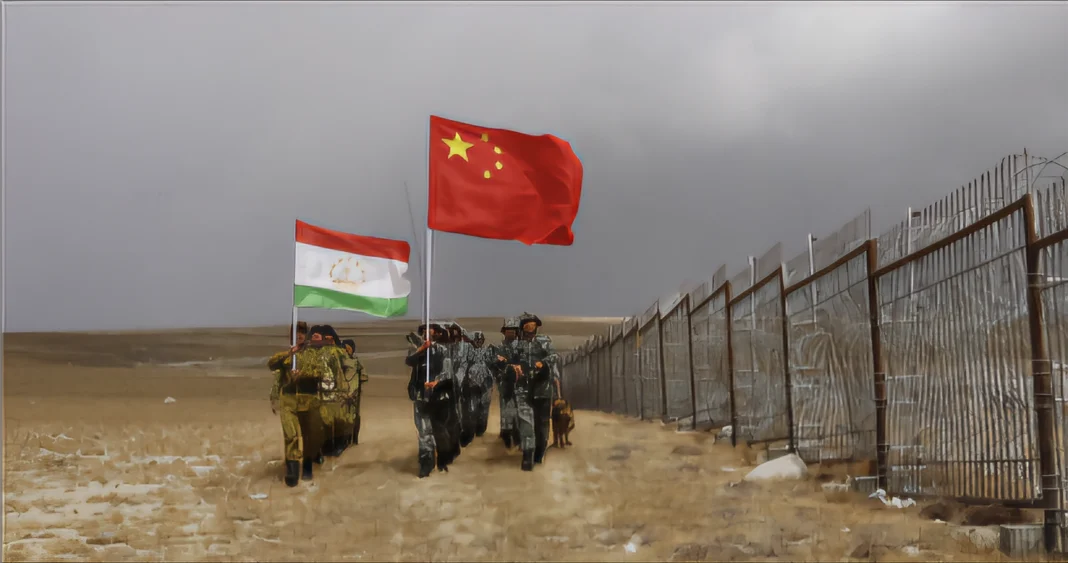

In July 2024, Chinese President Xi Jinping’s state visit to Tajikistan marked a significant milestone in Sino-Tajik relations. Xi and Tajik President Emomali Rahmon elevated their bilateral ties to a comprehensive strategic partnership. Notably, Rahmon was also awarded the Friendship Medal of the People’s Republic of China, a first to be presented outside China. These developments reflect the deepening ties between the two nations, which are among the original members of the Shanghai Cooperation Organisation (SCO).
Historically a Russian and Soviet bastion, Tajikistan has experienced a security and development vacuum due to the Russia-Ukraine conflict and declining U.S./Western interest in Central Asia. Seizing this opportunity, China has been keen to ‘dock’ Tajikistan’s National Development Strategy – 2030 (NDS – 2030) with the Belt and Road Initiative (BRI), Xi’s flagship global infrastructure project. Consequently, Beijing has become one of the largest investors in Dushanbe.
However, with the report of the secret military base, it is the security front in the Sino-Tajik bilateral relations that deserves deeper scrutiny. China’s security relationship with Tajikistan rests on two main pillars: infrastructure development and joint military exercises focused on counter-terrorism. Beijing has invested significantly in border infrastructure at the Tajik-Afghan border, constructing border posts, barracks, and facilities for the Tajik Border Guards Service. Additionally, China has built a facility in the Gorno-Badakhshan Autonomous Oblast for Tajikistan’s Interior Ministry.
During his recent visit, Xi also inaugurated Chinese-funded government buildings, including a presidential palace and a new parliament building modeled after the U.S. Capitol. These projects reportedly cost £300 million, according to AidData. Moreover, China has secured numerous mining rights in Tajikistan and undertaken various rail and road construction projects. The majority of Tajik taxi fleets are now dominated by Chinese electric vehicles (EVs), and Beijing has also established a “climate and environment observation station” in Shahritus.
On the security front, China has also been providing Tajikistan with ammunition and technology as part of its broader plan to establish an advanced line of defense. Joint military drills and counter-terrorism exercises are conducted both bilaterally and under the auspices of the SCO. China and Tajikistan also cooperate to combat the “three evils” as defined by China: terrorism, separatism, and extremism. Tajikistan has long faced security threats from the Taliban at the Afghan-Tajik border, exacerbated by the Taliban’s takeover of Kabul in 2021. Consequently, Dushanbe has implemented measures to curb religious extremism.
Now, China’s argument for its infrastructure push and rising security ties with Tajikistan centers on integrating NDS – 2030 with BRI and addressing joint security threats. However, several correlated issues associated with these developments raise concerns.
Dushanbe’s external debt is heavily influenced by Beijing, with 40% of it owed to China. While Chinese investments have created jobs, management positions are typically reserved for Chinese nationals, leaving Tajiks in lower-ranking roles. Environmental concerns have arisen due to Chinese mining activities, leading to the displacement of entire villages and turning them into “ghost towns”. Chinese influence is evident in the presence of Chinese language signage and propaganda banners in Tajikistan. Additionally, Chinese EVs in Tajik taxi fleets often feature voice recognition systems that Tajik drivers cannot understand. These issues parallel China’s cultural influence tactics in Pakistan, Sri Lanka, and African countries, sparking fears of cultural domination.
This is where the second set of concerns come into play – China’s defence push in Tajikistan. Dushanbe’s security challenges have provided Beijing the perfect opportunity to cement its influence in the country & the region. Recent measures to combat extremism (bans on hijabs and long beards, and restrictions on mosque activities, etc.) in Tajikistan mirror China’s counter-terrorism policies, particularly those targeting Uyghur Muslims. As China continues its human rights violations by locking more than a million Uyghurs in “re-education camps”, it appears to be aligning Tajikistan with its controversial policies.
This brings us to the most important aspect that connects these infrastructure & defence concerns – Beijing’s dual use infrastructure. The “climate and environment observation post” in Shahritus has faced accusations of dual-use capabilities, including surveillance. The secret Chinese military base on the Afghan-Tajik border, ostensibly aimed at countering Taliban extremism and protecting Chinese investments, also serves as a lever for Beijing to exert control over Tajikistan. This military presence could be linked to territorial disputes between the two countries. Although the dispute was ostensibly settled in 2011 with Tajikistan ceding 1,100 square kilometers of land to China (4% of the Tajik land), some Chinese scholars continue to assert claims over the Pamirs region (20% of the Tajik land), which is rich in valuable resources like gold, uranium, nickel, mercury, and significant salt & freshwater reserves. While this is not the official stance of the Chinese government, their state-backed media has continued to push this narrative, giving this theory much weight & credibility. With China adopting a border aggressive approach in dealing with its neighbors (India is the most recent example), its hold over Tajik infrastructure and security machinery provides it with massive leverage to force Dushanbe to give up the Pamirs region.
Moreover, China’s influence extends beyond infrastructure and security. In 2022, Tajikistan, along with other Central Asian states, affirmed its support for China’s “One China” policy, which could eventually translate into diplomatic support for Beijing’s positions on Xinjiang and Tibet. Economic and military dependence on China can lead to political dependence, as seen in other countries where Beijing has a significant presence.
While Chinese aid ostensibly aims to bolster Tajikistan’s infrastructure and security, it also provides Beijing with strategic leverage in the region. China’s dual-use infrastructure projects enable it to establish control over Tajikistan and the larger Central Asian region. India, a long-standing friend of Tajikistan, could play a pivotal role by offering more proactive and consistent support without any strings attached, providing a counterbalance to Chinese influence.
globalorder