
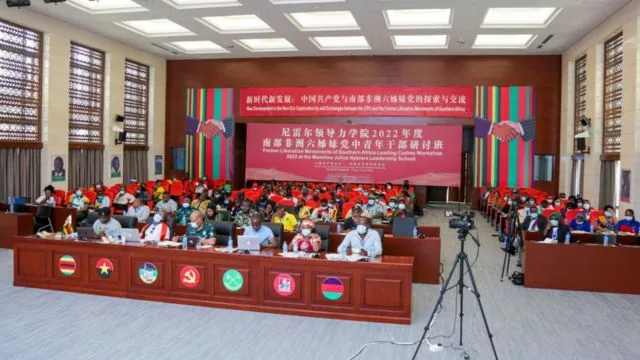

Leaders of African ruling parties are trained to follow the CCP in denying independence to the judiciary and cracking down on civil society, including religion.
by Massimo Introvigne
Forget the idea of controlling Africa through military coups, as Russia is doing in Niger, or economic neo-colonialism only. China is one step ahead. It perfectly understands that economic and military control are not enough without political and ideological hegemony. Hence the idea of training Africa’s ruling classes to reject democracy, embrace authoritarianism, crack down on civil society (including religion), and feel good about it.
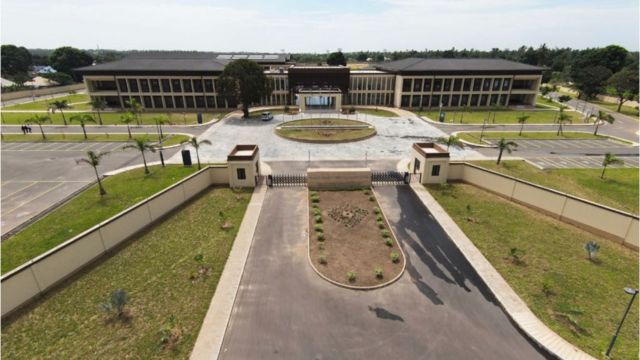
Welcome to the Mwalimu Julius Nyerere Leadership School in Kibah, Pwani Region, Tanzania, where China trains leaders and cadres of six African parties: Tanzania’s Chama Cha Mapinduzi (CCM), South Africa’s African National Congress (ANC), the Mozambican Mozambique Liberation Front (FRELIMO), Angola’s Popular Movement for the Liberation of Angola (MPLA), Namibia’s South West Africa People’s Organisation (SWAPO), and Zimbabwe African National Union–Patriotic Front (ZANU-PF). And thanks to “Axios” and the Danish newspaper “Politiken” who have visited the school and published a report on why and how China uses it.
In theory, the six states whose ruling parties send their cadres to be trained in Kibah have democratic elections. In practice, the ruling parties never lose them. It is to those “differently democratic” countries that China offers the model of the Chinese Communist Party (CCP).

Chinese teachers explain that the fact that a revolutionary party has ruled for decades does not guarantee it will rule forever—look at what happened in Eastern Europe—and measures to make the respective African countries more similar to China should be adopted urgently. Those include firmly rejecting the “Western” theory of the separation of powers and the independence of the judiciary, submitting all institutions to the ruling party, and avoiding any dangerous development of civil society (including religion). That elections should not be “free” in the Western sense of the word is taken for granted.
Where these ideas come from is not hidden. There is even a mandatory course on “Xi Jinping Thought.” All this is part of Xi Jinping’s grand project of exporting the Chinese model of totalitarianism to developing countries, separating them from the West not only economically and politically but also ideologically. Xi Jinping, unlike some Westerners, perfectly understands the importance of ideology, and that ideas generate facts more often than vice versa.

In the eyes of Xi Jinping, including new countries in the BRICS is another tool to be used for the same aim, although countries like India and Saudi Arabia, in addition to a Russia weakened by the war, have their own ideologies that are not the same as Beijing’s.
“Bitter Winter” has a special interest in religious liberty, and initiatives like China’s involvement in the Tanzanian political school have their dangers for freedom of religion or belief too. China surely teaches and promotes internationally its model of control of religion, as part of the broader control of civil society, and eradication of movements perceived as not supporting the regime and blacklisted as “xie jiao.” After the tragedy of Kenya’s Good News International Church, several African countries vowed to control religion more strictly and to fight “cults,” using the few groups that may really have committed crimes as a pretext to restrict religious liberty in general.
Speaking of BRICS, interestingly one of the new countries that have joined the club is Argentina, where anti-cultism is being officially adopted by the government with arguments very similar to the Chinese official propaganda against the xie jiao and its Russian counterpart targeting “extremist” or “undesirable” religious movements. That these arguments are also popular in genuinely democratic countries such as France or Japan shows that the front of the enemies of freedom of religion or belief is more complicated than some may believe. It does not deny, however, that China and Russia use their criticism of “bad” religions and theories that more control is needed on religion as another tool to affirm their hegemony on a large number of countries.
bitterwinter.org