
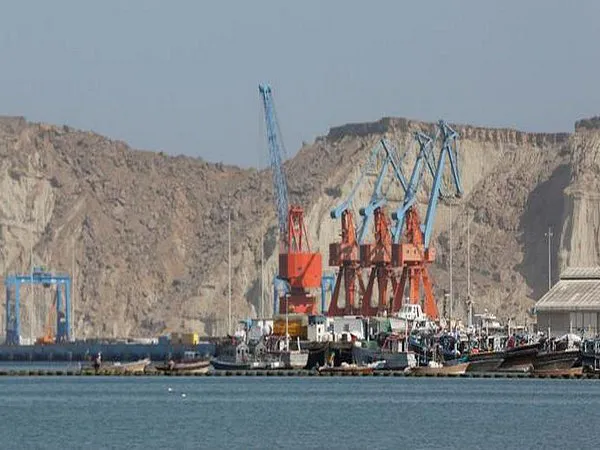

Even while the newly-elected Shehbaz Sharif government in Pakistan has decided to abolish the China-Pakistan Economic Corridor (CPEC) Authority, the move will not save Islamabad from falling into the Chinese debt trap, said a media report.
The decision to scrap CPEC Authority came after the Chinese power producers shut down 1,980 megawatts of production capacity due to non-clearance of their Rs 300 billion dues.
Terming the CPEC Authority “a redundant organization with a huge waste of resources” which has “thwarted speedy implementation of the CPEC”, Pakistan Planning Minister Ahsan Iqbal has passed instructions to the concerned officials to begin the process of abolishing the authority.
However, the decision still does not address the questions concerning the “desirability”, “economic viability” and “debt sustainability” of the CPEC projects as a whole, reported Islam Khabar.
Notably, CPEC has always been driven by Chinese strategic interests rather than Pakistan’s economic development and the benefits for Pakistan emanating from the CPEC could be seen as “incidental”. Moreover, the cost-benefit analysis of the CPEC projects was never re-assuring, however, the Pakistan government continued with the project to please China and use it as bait against India.
According to Pakistani analysts, the contracts for CPEC projects are highly skewed in favour of Chinese companies. Also, these projects face criticism due to the potential debt burden and overdependence on China it would create apart from the use of Chinese human resources for their execution.
Further, the projections that implementation of the CPEC projects would add two per cent to Pakistan’s GDP and a revenue stream would flow from it are far from the reality. In fact, Chinese debts squeezed Pakistan’s already worsened finances and external payments situation.
In 2021, Pakistan owed nearly half of its external payments obligations, amounting to USD 14 billion, to Chinese commercial banks, largely for CPEC projects. Also, the International Monetary Fund (IMF) had warned that policy slippage and mounting contingent liabilities were undermining Pakistan’s public debt sustainability, according to the media outlet.
The CPEC was flawed in its very construct as Chinese loans are commercial in nature and building infrastructure on these loans is dangerous. However, Pakistan failed to understand it because its main purpose was not development but keeping a counter to India.