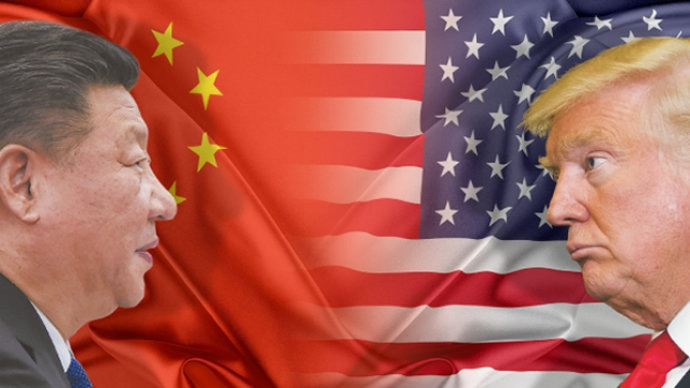

In the shadow of the broader geopolitical rivalry between Washington and Beijing, a quieter but no less consequential battle is unfolding in state legislatures across the United States.
Tensions between the two global powers are no longer confined to diplomatic cables or federal trade policy. Instead, they are manifesting in a patchwork of state-level laws designed to block Chinese technology from entering sensitive sectors, especially public agencies and universities.
Over the past two years, lawmakers from Texas to Virginia have introduced and passed bills seeking to restrict or outright ban the use of Chinese-developed software, apps, hardware, and partnerships.
These measures are often framed as protective efforts to safeguard critical infrastructure, intellectual property, and citizen data from espionage or foreign influence.
But beneath the surface, they also reflect a deeper anxiety: that the lines between academic openness and national security are growing increasingly difficult to navigate in the age of artificial intelligence and digital surveillance.
The rise of state-level activism against Chinese technology represents a significant evolution in America’s confrontation with the Chinese Communist Party (CCP).
It also signals a shift in how U.S. states see their roles—not just as domestic administrators but as participants in a new kind of digital cold war.
Rising wave of legislative pushback
The trend began with relatively narrow actions: executive orders banning TikTok and WeChat from government-issued devices, citing concerns about data harvesting and influence campaigns.
But since 2023, the scope of these efforts has widened significantly.
States are now targeting Chinese AI models, cloud storage providers, biotech firms, and even research collaborations between public universities and Chinese companies.
In May 2025, Kansas became the first state to pass legislation specifically prohibiting the use of DeepSeek, a Chinese-developed large language model, within its state agencies.
The law reflects broader concerns about how foreign-developed AI systems could be exploited by adversarial governments to gather information or subtly shape public discourse.
And Kansas is not alone. Florida, Texas, Idaho, and Arkansas are all considering similar measures that go further—seeking to limit public universities from entering research agreements with Chinese firms or receiving funding from entities tied to Beijing.
These bills often cite national security risks, intellectual property theft, and ideological influence as justifications for action.
The motivation, legislators say, is clear: if Washington is in a prolonged strategic competition with Beijing, states cannot afford to be soft targets.
New front in a long-running rivalry
From Beijing’s perspective, these moves are likely to be seen not just as economic discrimination but as ideological hostility.
China has repeatedly dismissed American accusations of intellectual property theft and data exploitation as politically motivated.
Its foreign ministry has warned that state-level bans on Chinese technology threaten to “further poison” bilateral relations and undermine global cooperation in science and innovation.
Yet American lawmakers are increasingly sceptical of Chinese companies’ independence from the CCP.
Under Chinese law, domestic firms are required to cooperate with state intelligence agencies when asked—raising concerns that any Chinese technology operating in the U.S. could be leveraged for surveillance or influence operations.
The argument from U.S. policymakers is simple: when the developer of an AI tool or digital platform is subject to CCP oversight, there is no meaningful boundary between the private and the political.
This belief is rapidly reshaping the rules of engagement, particularly at the state level.
Universities caught in the crossfire
Perhaps the most complicated aspect of this state-led crackdown is the growing focus on university partnerships.
Many of the proposed bills include clauses that either restrict or increase scrutiny of collaborations between public institutions and Chinese entities.
At the same time, several states—aware of the value and prestige of international research—are attempting to draw a distinction between using Chinese technology in government operations and allowing its study in academic settings.
For instance, the Kansas DeepSeek ban includes an explicit exemption for research institutions, allowing universities to continue studying and testing the AI model for academic purposes.
Lawmakers behind the bill noted that while the risks of operational use are too great for state agencies, cutting off universities entirely would be counterproductive and stifle academic freedom.
Still, universities are feeling the pressure. Many have begun voluntarily reviewing partnerships with Chinese companies, especially in areas like AI, quantum computing, and biotechnology.
Others have quietly severed ties with Confucius Institutes—Beijing-funded cultural centres—after years of scrutiny over their influence on curriculum and campus discourse.
The balancing act is precarious. Universities want to remain open to global talent and ideas, but they are increasingly asked to function as gatekeepers of national interest in an era of scientific militarisation.
The fragmented response
Unlike federal-level policies, which can offer uniform standards and enforcement, state-level bans vary widely in scope, intent, and execution.
Some states target specific companies; others focus on categories of technology or research domains.
This decentralised approach has created confusion for multinational companies, research institutions, and even state agencies, unsure of where the boundaries lie.
There’s also the risk of overreach. Critics warn that some bills cast too wide a net, conflating legitimate academic engagement with security threats.
Civil liberties advocates argue that poorly written bans could lead to racial profiling, curtail freedom of inquiry, or damage America’s position as a global research hub.
At the same time, others argue that the federal government has been too slow and cautious in addressing the national security risks posed by Chinese technology.
In the absence of comprehensive federal legislation, states are stepping in to fill the vacuum—imperfectly, but urgently.
The national implications
The rise of state-led technological decoupling comes at a pivotal moment.
The U.S.-China rivalry is no longer limited to trade wars or diplomatic tit-for-tats. It now plays out through regulatory frameworks, supply chain policy, and yes—through statehouse bills in places like Topeka and Tallahassee.
As states continue to craft laws aimed at “protecting national interests,” they are also shaping the contours of America’s technological future.
The growing web of restrictions on Chinese tools, research funding, and university partnerships is redrawing the lines of acceptable engagement between the two powers.
Whether this emerging state-level strategy ultimately strengthens U.S. security or stifles its academic ecosystem remains to be seen.
But one thing is clear: the fight over Chinese technology is no longer just a matter for Washington and Beijing. It has come home to America’s state capitals, and it shows no sign of slowing down.
In this decentralised chessboard of digital geopolitics, U.S. states are not just pawns—they are now becoming active players.
The choices they make today will influence how America navigates the perilous intersection of openness, innovation, and national security in the decades ahead.