
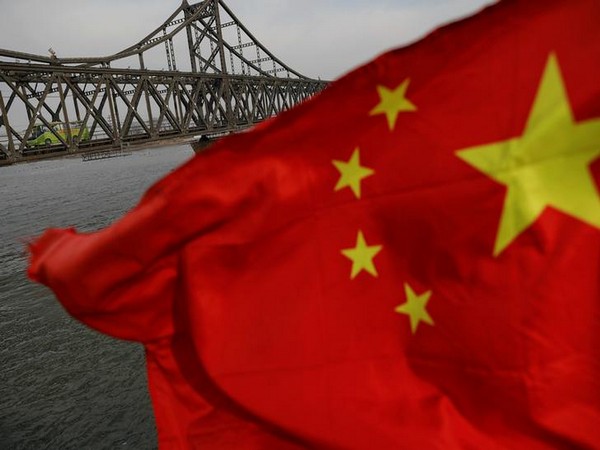

While China is facing criticism for high-handed assertion of maritime claims in the South China Sea, China’s propensity to over-sell and under-deliver on infrastructure projects, low public trust, it is re-casing its Belt and Road Initiative (BRI) to cajole South East Asian countries in the name of enhanced connectivity and trade along with institutional connectivity. China considers participation from countries in Southeast Asia as pivotal to the success or failure of Beijing’s ambitious Belt and Road Initiative.
On the sidelines of the UNGA in New York, the Chinese State Councillor and Foreign Minister Wang Yi met with the Deputy PM and FM of Thailand Don Pramudwinai and called for building a more stable and sustainable bilateral relations. He also vowed to support Thailand as the host country for the 2022 APEC leaders’ meeting and will work towards a FTA in the Asia Region.
Towards enhancing connectivity, the three countries namely Laos, China and Thailand are planning to build a new rail-dedicated bridge parallel to the Lao- Thai Friendship Bridge to facilitate freight flows/cross border transport of containers and close infrastructure gaps.Due to the start of the Laos-China railway, large freight volumes transported by rail between the two countries have been made possible. The Laos-China railway route is also vital for Thailand since it is its gateway to China, with over a million tons of goods transported along the route in less than a year.
The China-Laos Railway is an electrified railway crossing Laos. It connects Kunming in Southern China and Vientiane in Laos, next to the border with Thailand. Due to different track gauge, Thai cargo containers for China are offloaded and shifted to road containers to cross the Friendship Bridge to Vientiane, Laos and then loaded on the Laos-China railway. Thailand is keen to use the railway to ferry more agriculture products of orchid, rubber, cassava, palm oil, fisheries etc.
In a move to target the Chinese market, the State Railway of Thailand aims to increase the frequency of freight train services to and from Laos to handle the increased cargo volumes. In between 2023-2025, the frequency of freight round-trips is expected to increase to 16 per day and to 24 in 2026. In addition, the Thai Railway plans to open a new storage area in Nong Khai and a new container yard at Nathalang Station.
But China assisted projects are not implemented as fast as they are drawn on paper. The Thai-Chinese high-speed train project, from Bangkok to Nong Khai, for instance, has been delayed, with the first phase of the project, from Bangkok to Nakhon Ratchasima, still under construction and expected to begin operations in 2026. However, the interest in the project is still alive as the project has great potential for Pan Asian connectivity. The China-Laos railway line, which runs from Kunming, the capital of China’s Yunnan province to the Lao capital of Vientiane, is the first link in a pan-Asian railway linking Beijing with Singapore, a long envisioned part of China’s “Belt and Road” initiative. The next link in the chain will run from Nong Khai to Bangkok.
China’s supply chain connectivity has risen across BRI regions over the past decade, but some ASEAN economies remain the most laggard in connectivity. ASEAN requires improved infrastructure to drive economic growth through increased trade, investment, competitiveness, and connectivity in the region and with the rest of the world. The ASEAN Development Bank (ADB) estimates that the total infrastructure investment needs in ASEAN from 2016 to 2030 will be between US$2.8 trillion (baseline estimate) and US$3.1trillion (climate-adjusted estimate).
However, China is being increasingly cautions about its BRI projects due to lack of economic feasibility of projects like CPEC in Pakistan and Hambantota in Sri Lanka, apart from creating huge debt liabilities for the host countries. Beijing has already realised that its passion for BRI may be unrequited internationally, partly because the programme includes serious risks and not just rich returns. Recent disputes on the implementation of BRI between China and other Southeast Asia countries show that China should not automatically assume that growth through gigantic infrastructure investments–the model that worked for China–is a panacea applicable everywhere.