
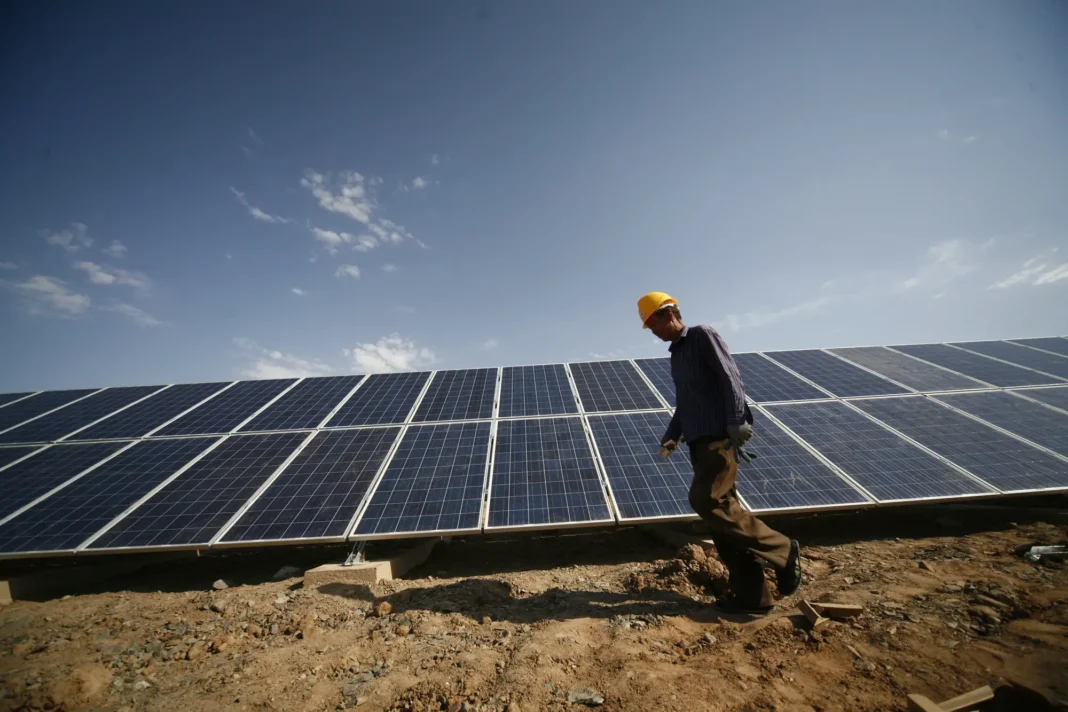

The global solar panel manufacturing industry has a human rights problem, according to new research from the Breakthrough Institute that draws from more than 200 government documents, media reports, and academic papers.
The research report alleges that Uyghurs, a Muslim minority group based in Xinjiang, China, have been forced to produce polysilicon, a key material used to make solar panels, under state-sponsored labor transfer programs over the last two years. These arrangements have coerced minority workers into factory jobs by the “implicit” threat of arrest and even imprisonment, according to researchers.
The Biden Administration called China’s treatment of the Uyghurs “genocide” in its 2021 human rights report.
China’s polysilicon factories are concentrated in the Xinjiang region and were responsible for more than 42% of the world’s total production of raw solar materials last year, according to the research.
GCL Technology Holdings Limited, which researchers estimate produces 8.4% of China’s solar-grade polysilicon, transferred more than 1,800 workers from the city of Hotan and asked that they participate in military-style training, according to the report. Other polysilicon manufacturers like East Hope Group, Daqo New Energy Corporation, and Xinte Energy based in Xinjiang were also found to employ forced labor, according to the research report.
Kevin He, a spokesperson of Daqo New Energy Corporation, told Insider that the Xinjiang-based manufacturer doesn’t employ any Uyghur workers and said China has no need to supply workers through the labor-transfer program.
“Why do people think a government will pay money to sponsor a company to use force labor?” He wrote in an email. “What does the govt get?”
GCL Technology Holdings Limited, East Hope Group, and Xinte Energy didn’t respond to a request for comment.
Uyghur workers are expected to work under potentially dangerous conditions with low pay, researchers say
Manufacturers in Xinjiang specialize in upstream production, which includes the mining, smelting, and the slicing of silicon into wafers that are used in photovoltaics that convert sunlight into energy, according to the research report. The rest of the solar panel parts, like solar cells and solar panels, are assembled in other plants across China, the researchers wrote.
The study said that while there’s not enough data to show how many Uyghurs are part of the solar factory workforce, transferred workers are often relocated hundreds of kilometers away from their hometowns, separated from their families and children.
Workers are expected to work long hours under potentially dangerous conditions with low pay, according to the report, and are forced to undertake a mandatory political indoctrination as part of their re-education process.
The researchers allege Uyghurs also work at coal-powered electricity plants on-site and across the region that power the polysilicon facilities. Researchers also wrote that photos they obtained show that workers do not wear personal protective equipment needed to protect themselves from occupational hazards.
Solar manufacturing companies are “complicit in the Chinese Communist Party’s wider systematic campaign of oppression against Uyghurs, Kazakhs, Kyrgyz, and other minoritized peoples in the Xinjiang region,” the researchers concluded.
China’s dominance of the global solar supply chain could slow down the world’s transition to clean energy
Many countries, including the US, rely on Chinese imports for most of its panels, according to Bloomberg. China is responsible for nearly 80% of global the solar manufacturing market in all stages of production, according to data from the International Energy Agency. China’s solar exports reportedly increased by 60% to $28 billion dollars last year, according to China’s ministry of industry and information technology.
China’s dominance of the global solar market may expose the solar supply chain to a greater risk of disruptions from geopolitical disputes, extreme weather, and shifts in the economy, Seaver Wang, a researcher involved in the study, told Insider.
China’s influence could also stifle the global expansion of the solar industry if domestic manufacturers outside of China are unable to compete with the low-cost labor in Xinjiang in the long-run, Wang said. It could even hurt the reputations of the solar photovoltaic sector, which could sway investors away from funding enterprises they deem unethical and reduce the overall shift from fossil fuels to solar, he said.
The US passed a law in June of 2021 banning some of the imports of solar materials from the Xinjiang region, a move that could make it more expensive for the Americans to switch to solar energy. The U.K and Australia have also considered banning Xinjiang exports, although no moves have been made.
Researchers call for solar companies to stop doing business with Xinjiang manufacturers
Even though solar industry groups have adopted protocols and signed pledges to vet products that violate labor laws, researchers found that these moves haven’t done enough to stop producers at the end of the supply chain from purchasing raw materials from Xinjiang, Wang said.
Researchers urge energy companies to stop doing business with Xinjiang-based manufacturers. They also call for governments to create public programs like Biden’s plan to triple US-based solar manufacturing by 2024.
“We think it is key for the clean tech industry to send a strong signal now that it will not tolerate sourcing from Xinjiang-based manufacturers complicit in the region’s oppressive policies,” Wang said.