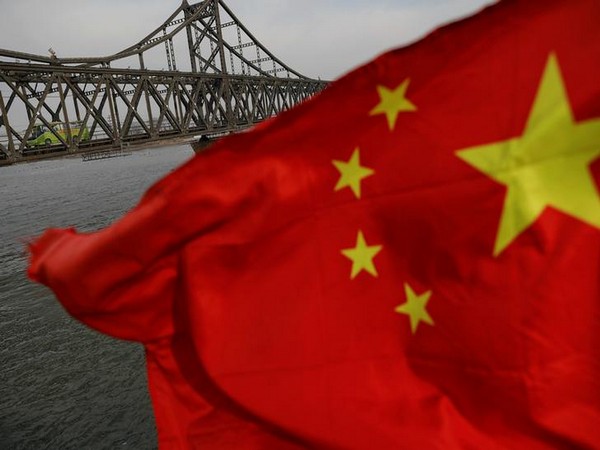

Going forward with Xi Jinping’s goal of making the country a ‘major power with pioneering global influence’ by 2049, China has been leveraging its technological prowess and geopolitical heft to shape the global technological environment and standards to serve its commercial and strategic interests, a media report said.
China has adopted a state-directed strategy to influence international standards-setting, and use them as a foreign policy tool to enhance its global standing, the Times of Israel reported, adding that, the Xi administration has employed a dual-track approach to set the international technological standards.
On the one hand, it seeks to influence both the multilateral (governmental) and the multi-stakeholder technical Standards Setting Organisations (SSOs) by placing Chinese nationals in senior leadership positions and larger representation of Chinese tech companies, and on the other hand, Chinese companies, with guidance from the Party-State, are creating standards utilizing the Belt and Road Initiative (BRI) and Digital Silk Road (DSR).
At the International Telecommunications Union (ITU), the involvement of Chinese commercial entities has increased after the impetus provided by ITU’s current Secretary-General, Zhao Houlin who has served two terms as Director of ITU’s Telecommunication Standardization Bureau (STB), the report said.
In 2021 alone, Chinese entities backed 145 new standards at the ITU, up from 46 in 2015 and six times more than Western entities.
The number of Chinese nationals in secretariat and leadership positions in critical multi-stakeholder SSOs such as the International Organization for Standardization (ISO) and the International Electro-technical Commission (IEC) has also surged in the past decade.Beyond the IEC, ISO, and ITU, Chinese actors are also active in other SSOs including the 3rd Generation Partnership Project (3GPP) that develops 5G technical specifications, as well as Internet Engineering Task Force (IETF), the report said, adding that the companies such as Alibaba, Baidu, Huawei, Tencent and ZTE are advanced members of the Institute of Electrical and Electronics Engineers (IEEE) Standards Association.
Not only do Chinese firms ‘flood’ committees with a huge volume of standards proposals, but they also typically vote as a single bloc. Beijing also has a tendency to use its debt and trade leverage to influence the votes of a number of countries in favour of its proposals. This produces a strikingly high rate of success in the number of Chinese submissions at the ITU, the report said.
Another emerging facet of China’s approach to technology standards-setting is the Digital Silk Road (DSR) which is one of the primary vehicles delivering Chinese technology to BRI partner states. By signing agreements with BRI partner governments, Beijing is propagating its own technology standards in project host states, creating dependencies that lock these countries into using Chinese vendors and standards.
Beijing’s moves are aimed at setting global standards for the next-generation technologies, the report said, adding, that it wants to gain control over key technologies like the Internet of Things, Cloud Computing, Big Data, 5G and artificial intelligence.
International organizations need to be wary of these manoeuvers in order to prevent Beijing from dominating global technology standards and thus gaining a monopoly over the world’s future-shaping technologies, the report concluded.