
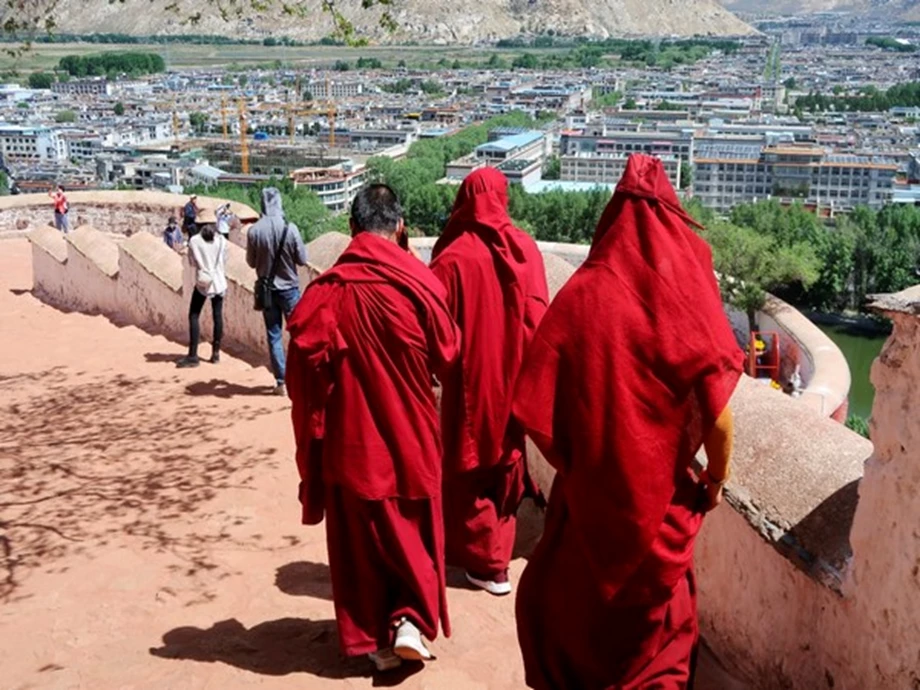

Human rights violation of people in Tibet and their exploitations in the country has been on a surge for years by the Chinese government with the recent one being discrimination against the Tibetans in employment and housing.
Violation of basic rights of humans in Tibet and their exploitations in their own country has been on a surge for years by the Chinese government with the recent one being discrimination against the Tibetans in employment and housing, making the locals feel ‘second-class’ in their own land. Tibetans are not even offered basic unskilled work in any sector and in some instances are offered a wage significantly lower than their Han counterparts, according to a report of the International Campaign for Tibet.
Unlike ethnic Chinese, Tibetans are regularly denied passports and the right to travel abroad, according to Tibetrights Collective. Moreover, repressive policies continue to remain a part of Chinese rule in Tibet as Tibetans are denied freedom of religion and over 6000 monasteries have been destroyed from the year 1951 and 1960.
According to several reports, the Chinese government have taken female prisoners for ”health checkups” where they get abused and have been given an operation with no proper hygiene, sterilising countless Tibetan females without their consent. Earlier on October 8, a Chinese woman named Liu posted a racist video on WeChat, where she talked about wiping out Tibetans from Lhasa and called for the Chinese to take over it. In order to legitimize its claim over Tibet, “Serfs’ Emancipation Day” is celebrated annually by CCP on March 28 in the Tibet Autonomous Region and it is celebrated to basically counter the March 10 Tibetan Uprising Day, which commemorates the 1959 Tibetan peaceful uprising against Communist China’s repression, Tibetrights Collective reported.
The situation in Tibet is frightening. The world is being shown a country like China handling the outbreak in a harmonious way, but the reality apparently is far from that. The measures being taken are too severe and not in the public’s interest. China was the centre of the COVID-19 outbreak in the world, the whole suffered millions of deaths in the past 2 years. But when entire China and many parts of the world were reeling under the coronavirus crisis, Tibet remained untouched except for one case at the beginning of the pandemic. Tibet did not see a COVID-19 case for over 900 days.
While most of the world is free from coronavirus infections, many Chinese provinces are suffering from the viral disease. Now, Tibet has also come under its grip, for which people are blaming Chinese agencies, reported Tibet Press. Tibetans blame they did not get proper medical care or sanitation services from the Chinese authorities despite rising Covid-19 cases. Tibetans also complained of overbearing treatment by government officials, who are forcing people to go into mandatory quarantine without verifying if they are Covid-10 positive or not.
Chinese President Xi Jinping enforced similar stringent conditions in Tibet as they were in other parts of China earlier under the ‘Zero Covid’ policy. Tibetans are taken to quarantine facilities or forced to stay inside their homes. This has caused them to lose their jobs and source of livelihood, besides mental harassment. Amid this, China’s censorship of news and social media posts from Tibet has further raised concerns about the safety of Tibetans.
Several videos of China’s repression of Tibet have circulated on Social media showing Tibetans talking about poor quarantine facilities with harsh quarantine rules and crowded testing sites with no social distancing rules followed Furthermore, self-immolations continue to happen in occupied Tibet in order to divert the world’s attention towards the mistreatment of Tibetans by China with the latest one being on March 27, in which an 81-year male named Taphun from the Amdo region set himself on fire in the police station in the western part of Sichuan and died, Tibetrights Collective reported.