
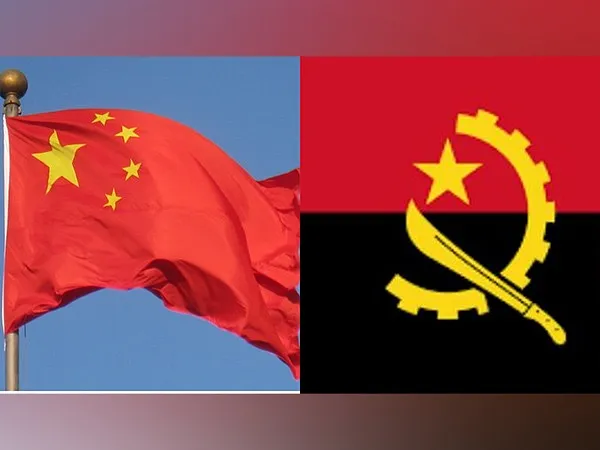

Angola is retreating in terms of its relations with China as the relationship was forged by Beijing for purely serving strategic self-interest in the early 2000s, and has been labelled a ‘marriage of convenience.
Valerio Fabbri, writing in Geopolitica.info said that the China-Angola honeymoon is over and the Angolan model is viewed as an early example of Chinese debt-trap tactics that holds lessons for the rest of Africa.
The so-called “Angola model” was premised on oil-backed loans to access Chinese funding for the building of roads, hydroelectric dams and railways as well as other infrastructures.
Today, the strategic environment in which China first made inroads into Angola has changed quite drastically; most notably in the approach of the post-2017 government to China and the fall in the Angolan economy, due to the drop in global oil prices.
When global oil prices plummeted to below USD 50 a barrel from a high of USD 115 per barrel, the Angolan economy collapsed and by 2016 it fell into recession and contracted for five consecutive years, said Fabbri.
With the COVID-19 pandemic further exacerbated the problem, the country has only narrowly managed to avoid a debt default. As we shall see, Angola’s honeymoon with China seems to be over.
In the early 2000s, Angola received USD 42.6 billion from Chinese lenders, more than a quarter of China’s total lending to African countries between 2000 and 2020, which made it the largest recipient of Chinese loans in all of Africa.
When Angola’s civil war ended in 2002, China encouraged its state-owned and private companies to venture overseas and invest in Angola, reported Geopolitica.info.
The School of Advanced International Studies-China Africa Research Initiative (SAIS-CARI), estimates that Angola was the top recipient of Chinese infrastructure loans, with USD 43 billion worth of loan commitments, between 2000 and 2018.
However, Chinese loans were not devoid of conditionality, and were tied to the use of Chinese labour and contractors and the acceptance of the ‘One-China Policy’. Chinese credit lines also stipulated that 70 per cent of the public tenders for the contracts under Angolan reconstruction would be awarded to Chinese companies.
At the same time, Angola’s oil production more than doubled from 44.6 million tonnes in 2003 to 92.2 million tonnes in 2008. China emerged as the largest importer of Angolan oil, replacing the US as the country’s largest export destination by 2007; its share in Angolan exports grew from 22.5 per cent in 2000 to 45.3 per cent in 2013, geopolitica.info reported.
Joao Manuel Goncalves Lourenco (JLo), a former Defence Minister and freedom fighter and President since 2017, is witness to the exit of Chinese firms from his country. Experts attribute this to the end of employment contracts related to major construction projects.
He says Chinese construction companies had maintained a notable presence in Angola during the past decade, with a particular focus on the construction of housing.
President Joao Lourenco, on assuming office began to recalibrate his country’s relationship with China. JLo promised to reverse the nation’s dwindling fortunes, diversify the oil-dependent economy and reduce its reliance on China, describing economic diversification as “a matter of life or death”.
In 2019, he admitted the concept behind the oil-backed loans the country had signed with China had not worked. The IMF and World Bank advised Angola that practices of taking loans for oil needed to be discontinued because such credit lines had conditions that the debt would be switched out with oil as collateral.
Pertinently, Angola still owes China more than USD 23 billion, mostly from oil-backed loans. With declining production, this means that most of Angola’s output is going to China, preventing Africa’s second-largest oil producer from selling its major source of income on the open market.