
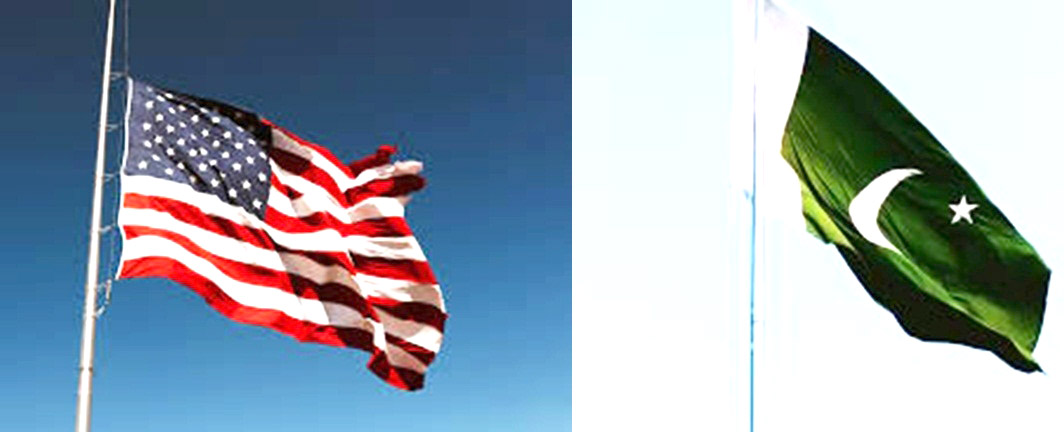

Two former Pakistani diplomats, Sajjad Ashraf and Tauqir Hussain, underscore the ‘challenge’ in US-Pak relations, calling them ‘brittle’ and ‘transactional’.
Ashraf, writing for East Asia Forum, says: “The nature of and the confusion emanating from the American withdrawal from Afghanistan has further exposed the brittleness of this relationship. The Taliban victory is seriously testing Pakistan’s long fraught bilateral relationship with America.”
“As far back as in the 1950s, the interests of the US-Pakistan relationship were only partially served when each side used the other to advance its own agenda that impacted negatively on other’s interests,” writes Tauqir Hussain.
Now, Ashraf says, “the Biden administration has noticeably turned away from Pakistan again. Washington has chosen to remain barely on talking terms with Islamabad since withdrawing from Afghanistan last summer.
“The United States continues to blame Pakistan’s military for supporting non-state actors, including the Taliban. And yet every American dignitary visiting Pakistan makes a beeline to pay a courtesy call on the chief of army staff and only meets the civilian leadership as a formality.”
The US, he says, has often downplayed the role of Pakistan’s civilian leadership vis a vis the “military’s domineering presence in Pakistan.”
With that in mind, Ashraf writes: “A sizeable number of US policy makers are revisiting the United States’ relations with Pakistan. Both Secretary of State Antony Blinken and Chairman of the Joint Chiefs of Staff General Mark Milley assured Congress that the administration is looking at the role Pakistan played during the past years and what role the United States would want it to play in the future.
Twenty-two Republican lawmakers have proposed a bill in Congress that includes an assessment of support by the government of Pakistan for the Taliban between 2001 and 2020.
Wendy Sherman, the deputy secretary of state and the highest placed US official to visit Pakistan since Biden took over, made it all plain in October 2021. Departing from Mumbai for Pakistan, in an answer to a journalist’s question, she said, “we don’t see ourselves building our broad relationship with Pakistan and we have no interest in returning to the days of a hyphenated India, Pakistan”. She added that her trip to Pakistan was aimed at accomplishing a “specific and narrow purpose” – referring to Afghanistan.
Ashraf and Hussain underscore the point that the US is sore with Pakistan for the latter’s role in Afghanistan.
“There is a near unanimous view in Pakistan that instead of owning up to its own flawed policy and botched execution of the Afghan campaign, the United States finds it convenient to scapegoat Pakistan. US policy still looks at Pakistan through an Afghan prism and wants Pakistan for a specific purpose of over the horizon of counter-terrorism operations in Afghanistan.
Meanwhile, Pakistan seeks broad based relations focusing on geo-economics. The United States also seems annoyed that Prime Minister Imran Khan has applauded the Taliban victory and, in his typical candidness, described Pakistan’s service provider relationship to the US as ‘lopsided’.
On the near-future of US-Pak ties, Ashraf says: “Now that the foreign policy priorities of Biden administration are clear, there is little likelihood of a significant shift in its stance towards Pakistan. Similarly, it is now wrong for the United States to expect that Pakistan would remain a service provider state and sacrifice its vital security interests.”
Pakistan moving close to China, Ashraf says casts a shadow over US policy towards Pakistan. The United States has not made its annoyance with Pakistan signing up to China’s Belt and Road Initiative (BRI) a secret.
As the United States courted India, Pakistan, by necessity, got closer to China. In the face of US embargoes, Ashraf notes, Pakistan is now “almost entirely dependent upon China for military supplies.”