

If tensions rise between any two nations, it is public trust, goodwill and people-to-people engagement that immediately fall victim to strains in relations between those countries.
This can be very much seen in the case of ongoing tensions between Beijing and Manila over the South China Sea, triggering fear among ethnic Chinese living in the Philippines that they could be targeted by Filipinos for their roots in mainland China.
Such fear has become more acute among ethnic Chinese in the backdrop of the incendiary situation created by China over the second Thomas Shoal in the South China Sea.
Growing “anti-China sentiment” driven by tensions in the South China Sea has “fuelled an uncurrent of Sinophobia” that now appears to be spilling over into local ethnic Chinese communities in the Philippines, South China Morning Post said.
The Philippines is a home to 1.2 million ethnic Chinese who are often known as Tsinoys. Of the total ethnic Chinese population in the Southeast Asian country, 93% of them trace their roots to China’s Fujian province. Their presence in the country predates more than 300-year and this has contributed to Chinese influence finding its way into mainstream Filipino culture.
Despite this, prevailing atmospherics between China and the Philippines has reinforced negative sentiment among Filipinos against ethnic Chinese who are viewed as politically disloyal and culturally alien, said the Hong Kong-based English newspaper.
However, distinctly noticeable with ethnic Chinese in the Philippines is that they are hardworking, financially successful, and affluent. In 2021, Global Rich List prepared by Hurun Report, a London-based leading research, luxury publishing, and events group, showed that out of 20 billionaires in the Philippines, nine or 45% were ethnic Chinese.
They occupy a central position in commerce and commercial agriculture at provincial and local levels. They also dominate the corporate world. They have helped in setting up schools and charitable foundations, and populating the world’s oldest Chinatown, Binondo, since its founding in 1594.
Yet, their loyalty to the Philippine is being questioned by local Filipinos because of their Chinese ancestry and their silence on Beijing’s aggressive behaviour towards Manila over the Second Thomas Shoal, a reef in the South China Sea.
On June 17, a violent clash took place between members of the Philippines Navy and the Chinese Coast Guard off Second Thomas Shoal, a reef in the South China Sea where Sierra Madre, the World War II-era ship belonging to the Philippines, has been marooned since the 1990s. This clash saw Chinese forces injuring personnel of the Philippines Navy and damaging their boats with axes, machetes, and hammers.
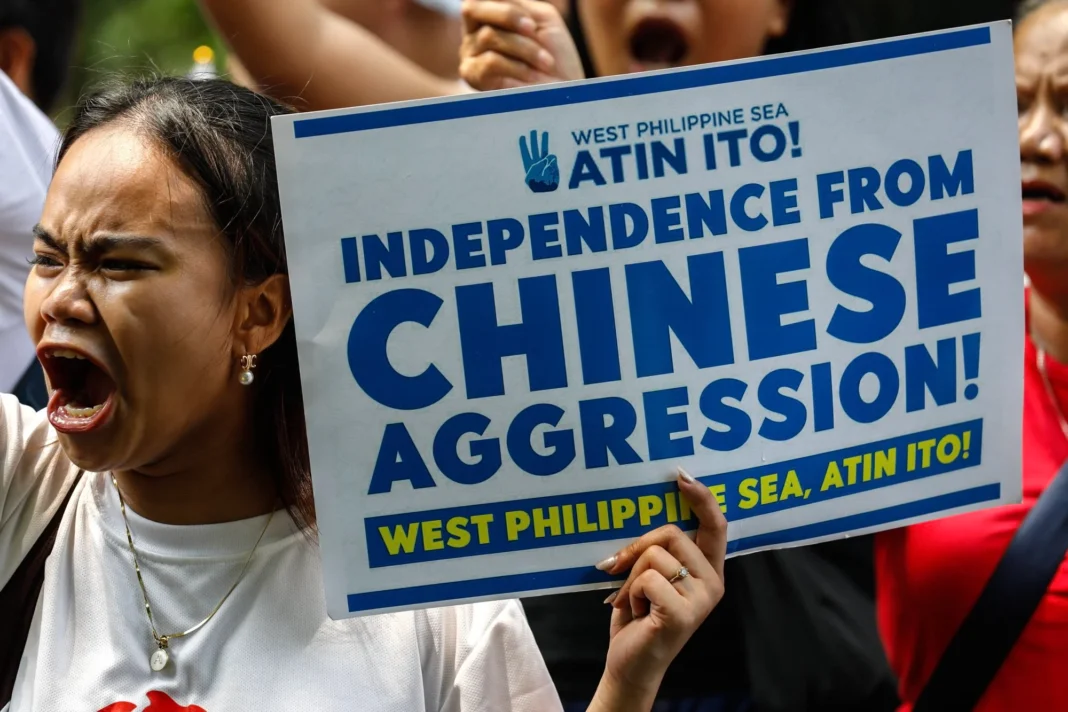
A Filipino Navy sailor also lost a thumb in the clash. While the Philippines accused the Chinese Coast Guard personnel of stealing and damaging their equipment, including guns and inflatable boats. This incident ingrained anti-China sentiment among local Filipinos. It also resulted in Filipinos expressing disdain for ethnic Chinese on social media, indicating widening of the gulf between two communities in the Philippines.
A recent survey of 1,765 Filipinos across urban and rural areas by WRNumero, an independent polling firm, found a high-level of distrust against Chinese nationals compared with members of other communities. As per the survey, 58.3% people said they distrusted Chinese people, while 13.4% said they highly distrusted them.
Some observers say ethnic Chinese, residing in the Philippines for many years, fear that public anger against them over issues involving China may snowball and they could be targeted. In fact, Manila and other cities of the Philippines are already witnessing day in and day out protests and rallies against China for its aggression in the South China Sea.
Moreover, given that the ongoing tension between the two countries is not going to thaw immediately in the face of Beijing’s intransigence over its position in the South China Sea, an atmosphere of antagonism towards Beijing envelops the entire length and breadth of the Philippines.
Its reflection can be seen on the Philippines’ new visa rule for Chinese nationals wanting to visit the Southeast Asian nation. A few days ago, it imposed an additional requirement for Chinese tourists applying for visas. Chinese nationals applying for visitor visas have been asked to submit their Chinese Social Insurance Record Certificates, in addition to proof of financial capacity with employment certificates and bank statements.
The measure has been adopted by the Philippines following the discovery of fraudulent immigration applications, which led to illegal entry and overstaying of Chinese nationals in the country. Filipino officials say the policy aims at weeding out illegitimate tourists from legitimate ones. Several Chinese nationals have been found to be involved in organised crimes such as human trafficking, prostitution, abductions, and fraud.
But there is more to it than meets the eye: Manila aims to show China that it has sufficient handle to deal with Beijing’s bullying on the territorial issue. In such tit-for-tat acts, however, it is common people who suffer the most as they become an easy target of attack because of some outrageous perceptions built against them.
thehongkongpost.com