
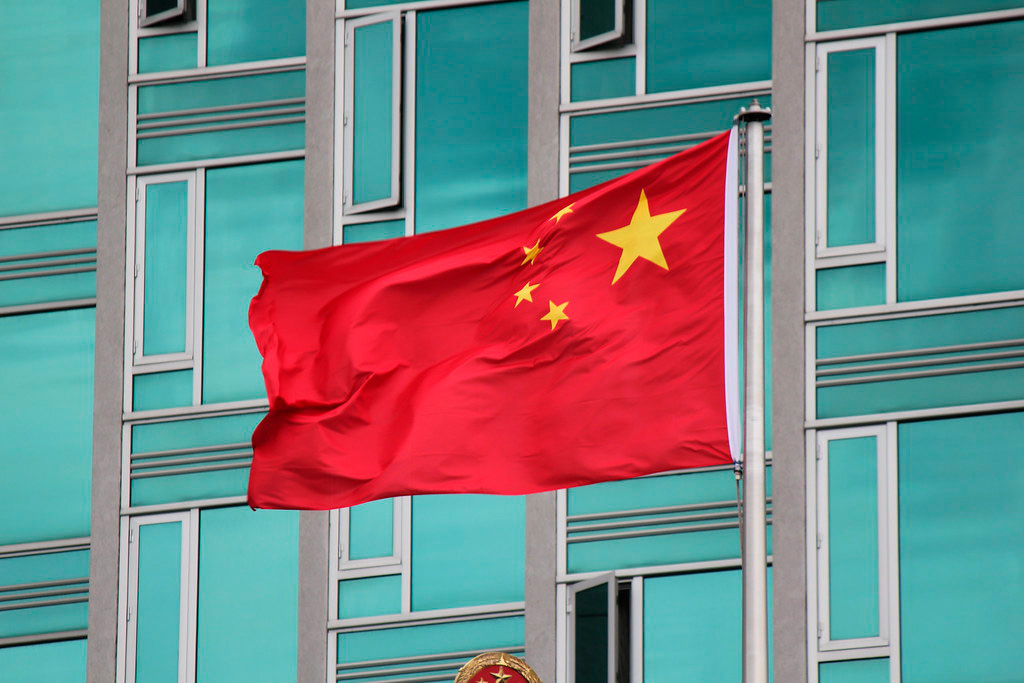

Following China’s crackdown on foreign firms, multinational corporations in the country are facing a dilemma this year as the risks of doing business in China increase, as reported by the Voice of America (VOA).
Beijing’s increased scrutiny of Western firms over the past year has alarmed international investors at a time of growing tensions between the US and China.
Leading to this, “de-risking” became the byword for wary enterprises.
Anna Ashton, Director of the China Corporate Affairs Programme at the Eurasia Group, a global political risk consulting firm, told VOA that national security concerns tied to the changing geopolitical tensions with the US have caused China to change some business rules, which has made the environment less certain for foreign companies.
“National security concerns tied to the changing geopolitical landscape and tensions with the United States have prompted Beijing to change some of the rules for doing business in ways that make the environment a lot less certain for foreign companies,” she said.
“That, plus the slower-than-expected return to normal growth after the end of the zero-COVID policies. So, this and geopolitical tensions with the US–a sort of sluggish Chinese economy… have been key drivers in terms of making the business environment difficult for foreign companies,” she added.
China’s economic weakness may also be putting foreign businesspeople on alert, according to VOA.
On December 14, the World Bank said in its semiannual regional forecast that it now expects China’s growth rate of 5.2 per cent this year to slow to 4.5 per cent in 2024, down from the 4.8 per cent it expected in April and 4.3 per cent in 2025.
“The outlook is subject to considerable downside risks,” the report said.
Moreover, China’s newly revised Counter-Espionage Law went into effect on July 1.
The US National Counterintelligence and Security Centre issued a warning to US companies before the law was enacted, saying that the new law’s vague definition of espionage gave the Chinese government more access to and control over corporate data. What companies consider normal business activities, such as market research, could become criminal activities, VOA reported.
Elisabeth Braw, a columnist at Foreign Policy and a senior associate fellow at the European Leadership Network, while highlighting the law vagueness, said that for Western businesses, China is becoming an increasingly difficult environment and unpredictability is the problem.
“Any Western company can be targeted by various government crackdowns related to the espionage legislation,” she said. “Also, whenever the Chinese government wants to retaliate against the Western government, there is a risk that it will use a Western company operating in China as a proxy target. That’s very easy, because what can the company do? It can do nothing.”
In an article while writing on foreign policy, Braw said that China’s difficult business environment is reflected in the fact that political risk underwriters have virtually stopped writing new policies for companies operating in China, as reported by VOA.
Companies further signalled how they felt about the changing environment with their plans to move.
In May, Forrester Research, a technology consulting company, decided to close its China office.
Moreover, in June, the Gerson Lehrman Group, which had planned to expand its operations in China in 2023, began layoffs, according to VOA.
Later in November 2023, US asset management giant Vanguard Group and management consulting polling firm Gallup announced they would be shutting down their operations and withdrawing from China.
Even companies highly dependent on China’s manufacturing sector, such as Apple, which launched its Chinese manufacturing operations in 2001, are transferring parts of their production lines to countries such as India and Vietnam.
China’s State Administration of Foreign Exchange released data in early November, stating that foreign direct investments were negative USD 11.8 billion in the third quarter, the first negative figure since recordkeeping began in 1998.