

China may be on a spy infrastructure-building spree in Myanmar and Cambodia, deftly leveraging these countries’ security and economic troubles to advance its geopolitical interests.
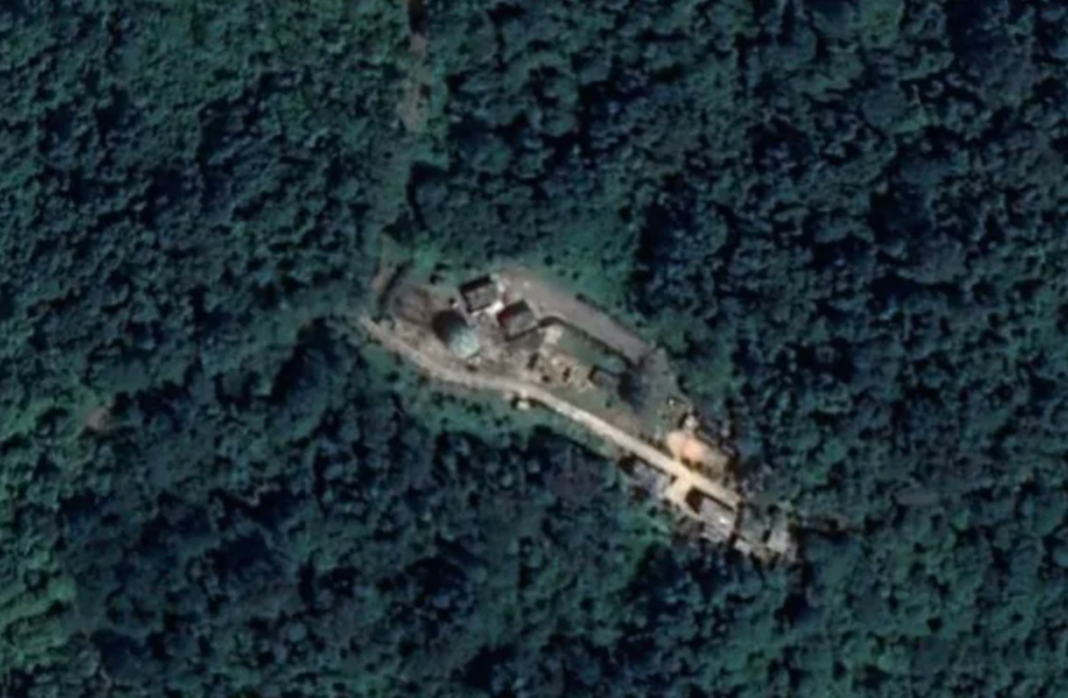
This month, Economic Times reported that satellite imagery from US-based Maxar Technologies showed renewed construction activities on Myanmar’s Great Coco Island, including a freshly-lengthened 2,300-meter runway. The report also mentions other signs of increased military activity in recent months, such as the construction of hangars and a radar station.
It says these activities have led to suspicions that China is behind the infrastructure buildup, turning Coco Island into its listening post in the Indian Ocean, although this has not been proven. Beijing has cultivated good ties with Myanmar’s coup-installed junta at a time Western nations have sanctioned the regime.
At the same time, Cambodia Daily reported that the Cambodian government revealed plans last week to develop an air defense center and expand a radar system near the China-funded Ream Naval Base.
The report mentions that Cambodian Prime Minister Hun Sen allocated 157 hectares to the Ministry of National Defense to develop an air defense command and general headquarters in September 2022. An additional 30 hectares were earmarked for a naval radar system.
According to a defense ministry spokesperson quoted by the Cambodia Daily, there will be no Chinese funding, support or presence in the facilities amid persistent allegations and reports that Ream Naval Base is secretly being developed as China’s surveillance hub for the South China Sea and its first overseas military facility in the Indo-Pacific region. Cambodia has strongly denied the allegations and reports.
Regarding construction activities on Coco Island, Namrata Goswami notes in a 2014 article for the Manohar Parrikar Institute for Defense Studies and Analyses that there have been reports of Chinese signal intelligence (SIGINT) listening stations in the Andaman Sea, including at Manaung, Hainggyi, Zadetkyi and the Coco Islands, while Chinese technicians have worked on radar stations and naval bases near Yangon, Moulmein and Mergui.

Myanmar’s base in the Coco Islands may give China an information and position advantage in the Indian Ocean. In a Chatham House article last month, Damien Symon and John Pollock note that the Tatmadaw may conduct surveillance flights from Coco Island to monitor Indian Navy operations from the Andaman and Nicobar Islands, raising the possibility that China may pressure Myanmar to provide intelligence from those surveillance flights in exchange for badly-needed economic assistance and investment.
The Coco Islands also serve as a forward defensive position for Kyaukpyu Port, the China-Myanmar Economic Corridor (CMEC) maritime terminus which ends in China’s southern Yunnan province.
The rationale behind the CMEC is to allow China to bypass the Malacca Strait, a critical waterway through which 80% of China’s oil imports passed in 2016.
In 2017, 60% of China’s trade and 20% of global trade traveled through the strategic waterway, making it China’s most critical maritime location. In sight of that vulnerability, analysts have long speculated that the US could impose a naval blockade, possibly from Singapore, on the narrow passageway in the event of a conflict with China including over Taiwan.
Asia Times noted in January 2022 that China’s presence in Ream Naval Base could potentially counterbalance, monitor or even pre-empt US naval presence in nearby Singapore, which hosts rotational deployments of US littoral combat ships (LCS) and P-8 Poseidon maritime patrol aircraft.
China could also use Ream Naval Base alongside its southern naval bases to envelop Vietnam in the South China Sea, overstretching the latter’s navy and maritime law enforcement agencies. China and Vietnam are locked in a long conflict over features in the contested waters.
Moreover, Ream Naval Base may support Chinese operations around the Natuna Islands, which belong to Indonesia. While China has acknowledged Indonesia’s sovereignty over the Natuna Islands, it has declared the waters surrounding them part of its “traditional fishing grounds,” sparking confrontation between the two sides.
Cambodia may view China’s presence at Ream Naval Base as insurance against its larger and stronger neighbors, Thailand and Vietnam. Such dynamics could have caused Cambodia to act on behalf of China’s interests in exchange for security guarantees and economic incentives, some analysts have surmised.
But China’s suspected moves in Myanmar and Cambodia to offset its “Malacca dilemma” are far from a done deal. Lucas Myers notes in an article for the Georgetown University of International Affairs last month that a combination of unreliable relationships, unstable host countries and limited near-term naval power in the Indian Ocean has prevented China from establishing a dependable network of naval bases to secure its sea lanes of communication (SLOC) in the event of a military conflict.
Local politics are complicating the equation. Angshuman Choudhury notes in a January 2022 South China Morning Post (SCMP) article that China has been vacillating between supporting the Tatmadaw and publicly communicating with the opposition, ostensibly to ensure that its economic and infrastructure interests in Myanmar remain intact regardless of which side wins.
Moreover, China seeks to prevent neighboring Myanmar from becoming a full-blown failed state and the possibility of a Western-backed government taking power, which may not as enthusiastically support China’s infrastructure projects such as the CMEC.
Despite Cambodia’s substantial economic and security dependence on China, Beijing’s influence over Cambodia might be less than commonly thought.

Sokvy Rim notes in an October 2022 article for Think China that despite the close economic cooperation between Cambodia and China, Beijing’s soft power remains weak compared to the US and Japan.
Rim says that shady real estate deals resulting in internal displacement, lopsided competition from Chinese businesses shuttering Cambodian establishments and crime associated with Chinese immigration have caused many Cambodians to have a negative view of China.
Melinda Martinus and Chhay Lim noted in an article for Channel News Asia (CNA) last month that Cambodia may now strive for an independent foreign policy despite its dependence on China.
The writers mention that Cambodia was able to steer away from China’s direct influence during its 2022 ASEAN chairmanship and disinvited Myanmar from ASEAN meetings. They also note that Cambodia condemned Russia’s invasion of Ukraine, contrary to expectations that it would follow China’s neutral position.