

Following the historic July 2024 uprising and the dramatic fall of the Sheikh Hasina regime, a new chapter of political hope appeared to have dawned in Bangladesh. At the center of this hope was Nobel laureate Dr. Muhammad Yunus, who is now the chief adviser of the interim government. It is widely believed that strong support from the United States played an important role in his appointment.
The Yunus-led interim government presented itself as a progressive alternative, promising reforms, dignity, and international recognition. Yet, more than a year after this so-called “transformation,” there has been no progress on the ground. Neither have reforms been made, nor has the law and order situation improved. Instead, a silent national crisis has begun to emerge — thousands of people are trying to leave the country.
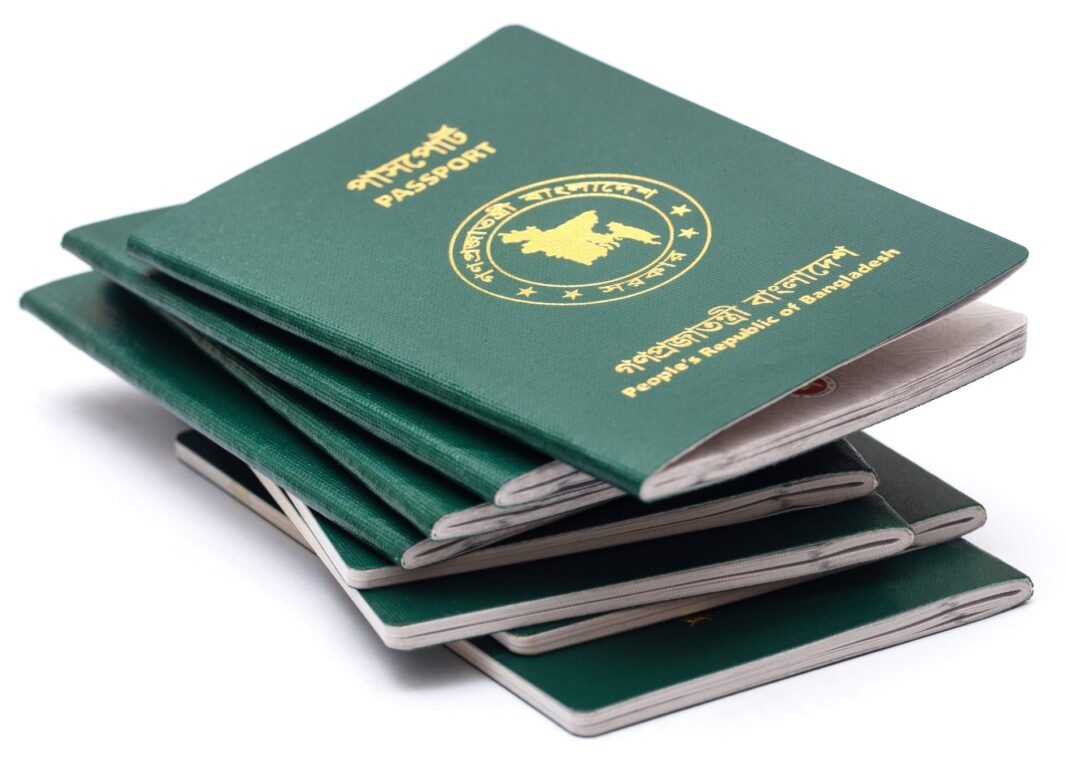
While some are leaving the country legally, many are opting for illegal means. And that has led to the continued devaluation and global rejection of Bangladeshi passports. This has not only damaged Bangladeshi passports but also hurt the pride of Bangladeshi citizens.
From India to Indonesia, Vietnam to Thailand — even Tajikistan, which once offered e-visas within one hour — governments are now making it difficult for Bangladeshis to enter foreign countries. Visa denials, delays, and bans have become the norm. The government blames human trafficking and the failures of the previous government. However, diplomats argue that the real reasons are diplomatic inaction, political instability, and the government’s lack of legitimacy.
On the one hand, the Yunus government talks about “reforms” and “justice,” while on the other hand, there is uncertainty about elections. Although Yunus has called for elections in February, the National Citizen Party (NCP), a party formed by student protesters with whom he is said to be close, would like the elections to be deferred.
In this conflict, Bangladeshi passports have fallen into a terrible crisis, causing suffering to millions of people. The Bangladeshi passport is no longer one that symbolizes opportunity but has now become a reminder of crushed aspirations.
Diplomatic Paralysis and Passport Discrimination
The first major failure of the Yunus-led interim government was in diplomacy. Immediately after the political change in August 2024, India, Bangladesh’s neighbor, stopped issuing tourist visas to Bangladeshis. Even after a year, the ban remains in place. Of the nearly 10 million foreign tourists who visited India from April 2023 to March 2024, more than 2.1 million were Bangladeshis.
Since the fall of the government on August 5, 2024, only student and medical visas have been issued, and that too in small numbers. And the restrictions on travel to India have broader implications for Bangladeshis. For visas to European countries without embassies in Bangladesh, a double-entry Indian visa is often required — but that too is now hard to obtain.
India says this is for security reasons. But also, India’s diplomatic presence in Bangladesh has been downsized since August last year, and it will not be possible for India to restart full visa operations without stability in Bangladesh. Limited medical visas are being issued for humanitarian reasons.
Meanwhile, the Yunus government is not taking effective initiatives to resolve this situation; rather, some officials of the Yunus Cabinet are running anti-India campaigns on social media. The foundation of diplomacy is mutual trust and respect — it has failed to rebuild Dhaka-Delhi relations.
Despite promises of international cooperation, the passport crisis is deepening. Indonesia has also stopped on-arrival visas for Bangladeshis on the pretext of human trafficking. The visit of Indonesia’s deputy foreign minister to Dhaka in June made no progress on the issue.
Thailand, which previously issued e-visas to Bangladeshis within a week, is now taking 40-50 days to process visas for Bangladeshi nationals.
The UAE has reduced the number of visas it issues to Bangladeshis; on average, only 30 to 50 Bangladeshis are getting UAE visas per day.
Vietnam has stopped issuing tourist visas to Bangladeshis. Italy has more than 60,000 Bangladeshi visa applications pending. This reveals the declining respect that the Bangladeshi passport commands.
Human Trafficking: A Convenient Excuse?
Bangladeshi officials blame human trafficking from Bangladesh as the reason for other governments being wary while issuing visas. While human trafficking is indeed a serious problem, and individuals and agencies are abusing visa systems, these are not new problems that have emerged of late. So why is the government suddenly bringing it to the forefront? More importantly, if the causes are known, why is it so inactive?
Foreign Affairs Adviser M. Touhid Hossain told the media, “In many cases, we ourselves are to blame… our people, our businesses.” While self-criticism is necessary, blaming citizens during a national crisis is irresponsible. This unelected government that calls itself “reformist” had the opportunity to fix the migration system, regulate recruiting agencies, and implement document verification mechanisms. But it has done nothing in this regard. Yet reforming these areas was part of its promise. After all, Bangladesh’s core remittances come from migrant workers — who are now suffering at immigration desks because of their Bangladeshi passports.
These complications have existed for years, and nothing has improved in the past year. Corruption has instead skyrocketed. Unsurprisingly, Bangladeshi applicants are increasingly viewed at visa counters as desperate and dishonest. The Yunus government has failed to build strong relationships with destination countries, combat false narratives, or restore trust. This has led to the degradation of the Bangladeshi passport.
A PR-Driven Government, Hollow in Action
When Yunus took over the reins of the interim government last year, political analysts saw him as closely connected with the West. The aura of being a Nobel Prize winner enhanced his image and legitimacy. But fame is no substitute for rule, the Nobel is no guarantee of diplomatic solutions, and smiling press conferences do not bring bilateral agreements.
Under this government, Bangladesh has become a volatile state. The election final date has not yet been announced, though the government says it will be held in February 2025. While some Bangladeshi parties are in favor of early elections, others are not. The result has been a deadlock — no democracy, no trust. No one knows for sure when the elections will actually be held. The Yunus government, which promised to ensure that autocratic rule would not return, is now being labeled as “fascist” by ousted Prime Minister Sheikh Hasina for banning the Awami League’s activities.
The country is overwhelmed by mobocracy now. Consequently, several Western countries like the U.K. and Canada have issued an alert for those traveling to Bangladesh.
Yunus and his NGO-donor class speak the language of Western development rhetoric, but ignore the frustration of the common people. Families, businesses, and those who need medical care in India are stuck without visas. The offices of the foreign affairs adviser and the chief advisor are silent. Businessmen are also facing great losses due to the passport crisis.
Will the Situation Improve?
According to the Passport Index, Bangladesh ranks 89th, tied for the seventh weakest in the world, alongside Palestine and Eritrea. Without elections, stability, or a political resolution, peace seems unlikely in the short term. Even the electoral roadmap remains uncertain.
The government’s greatest flaw is its lack of democratic legitimacy — it was not elected. The interim government is not answerable to parliament. It is only accountable to foreign donors, “development partners,” and a handful of business beneficiaries — those thriving under this silent authoritarianism.
But the ordinary Bangladeshi is paying the price — not just through visa rejections, but through national humiliation. How shameful it is that a government created in the name of “reform” has led to the deepest global mobility crisis Bangladesh has seen in a decade.
Yunus won the Nobel Peace Prize in 2006. But in 2025, he is leading a country that loses international dignity with every rejected visa. As the head of state, it is his duty to restore democratic practices and establish political stability, so that Bangladesh can move forward with its head held high, so that its citizens do not face humiliation at foreign immigration checkpoints, and the credibility of the passport does not continue to decline.