

thehongkongpost.com
In recent years, Hong Kong, once a beacon of political and civil freedoms in Asia, has witnessed a dramatic decline in human rights under Chinese rule.
The city’s transformation from a semi-autonomous region to an increasingly controlled enclave of China has drawn widespread concern and condemnation from international observers, human rights organizations, and governments around the world.
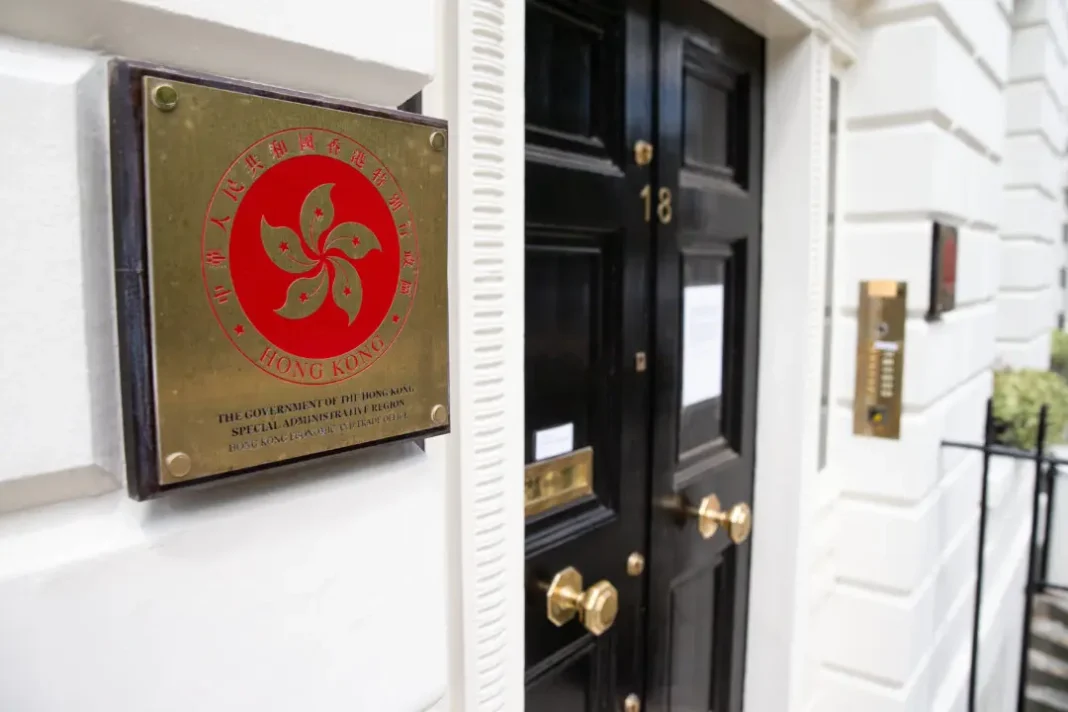
Amid the deteriorating human rights situation in Hong Kong, the U.S. House of Representatives has approved a significant piece of legislation that could lead to the closure of Hong Kong Economic and Trade Offices (HKETOs) in the United States.
This move is expected to impact the Chinese Communist Party’s (CCP) financial interests and influence.
On September 10, the House passed the bipartisan Hong Kong Economic and Trade Office (HKETO) Certification Act with an overwhelming vote of 413 to 3.
The bill stipulates that the U.S. president must revoke certain privileges, exemptions, and immunities currently afforded to the HKETOs in Washington, New York City, and San Francisco if Hong Kong is determined to no longer enjoy a high degree of autonomy from China.
Under the new legislation, if the U.S. government concludes that the HKETOs no longer meet the required standards, their operations must be terminated within 180 days.
Conversely, if they are found to be in compliance, they can continue operating for an additional year before another assessment is made.
The bill was co-sponsored by Rep. Chris Smith (R-N.J.), chairman of the U.S. Congressional-Executive Commission on China, and Rep. Jim McGovern (D-Mass.).
This marks the first time Congress has enacted legislation in response to Hong Kong’s deteriorating situation since the region introduced the National Security Law in March. This law has allowed the CCP to further infringe on human rights and freedoms in Hong Kong.
Rep. Smith emphasized the importance of the legislation during a hearing on September 10, stating, “this is a necessary next step to tangibly demonstrate our solidarity with the persecuted citizens of Hong Kong,” including imprisoned media tycoon Jimmy Lai, activist Joshua Wong, and human rights lawyer Tonyee Chow.
Smith criticized the current state of Hong Kong, noting, “Three years after the CCP imposed the national security law, we must confront this new reality.”
He lamented that “the Hong Kong we once knew and respected is gone,” and criticized the current administration as being “as repressive as their masters in Beijing.”
He further accused the HKETOs of serving as “Beijing’s propaganda arm” in the U.S., alleging they have been used to defend and obscure the truth about the CCP’s actions in Hong Kong.
This legislative action represents a broader U.S. response to the erosion of freedoms in Hong Kong and signals continued scrutiny of Beijing’s influence in global affairs.
Hong Kong’s unique status was guaranteed by the Sino-British Joint Declaration, which promised the preservation of its political and economic systems for 50 years after the 1997 handover.
However, Beijing’s encroachments have significantly eroded this autonomy.
The imposition of the National Security Law in 2020 marked a pivotal moment in this shift.
The law, ostensibly aimed at countering separatism, subversion, and terrorism, has been criticized for its broad and vague definitions, which have been used to stifle dissent and curtail freedoms.
In 2019, millions of Hong Kong residents took to the streets to protest the CCP’s extradition law, aiming to safeguard their human rights and judicial independence.
The movement faced harsh suppression by the CCP-supported Hong Kong Police, and in 2020, Beijing responded by implementing a broad national security law.
The National Security Law has led to a widespread crackdown on pro-democracy activists and opposition figures.
Prominent pro-democracy leaders, such as Joshua Wong and Agnes Chow, have been imprisoned under charges related to their activism.
The law has also been used to shut down organizations and media outlets critical of Beijing’s policies.
Freedom of expression, once a hallmark of Hong Kong’s vibrant civil society, has been severely restricted.
The government has increasingly censored speech and curtailed public demonstrations.
The crackdown extends to academic and cultural spheres, where educators and artists face pressure to conform to pro-Beijing narratives.
School curricula have been altered to emphasize national security and loyalty to the Chinese state, leading to accusations of indoctrination.
The erosion of judicial independence is another major concern.
The legal system, once renowned for its fairness and impartiality, now faces interference from Beijing.
The Chinese government has increasingly asserted its influence over judicial matters in Hong Kong, undermining the city’s rule of law.
High-profile trials, such as those of pro-democracy activists, have raised doubts about the impartiality of the judiciary.
The international community has expressed alarm over the deteriorating human rights situation in Hong Kong.
Governments and human rights organizations have called for sanctions and measures against Beijing’s actions.
The United States, for example, has enacted legislation such as the Hong Kong Autonomy Act and imposed visa restrictions on officials deemed responsible for undermining Hong Kong’s freedoms.
Humanitarian concerns extend to the plight of those who have fled Hong Kong to escape persecution.
Many pro-democracy activists and ordinary citizens have sought asylum in other countries, highlighting the severe personal risks associated with Beijing’s crackdown.
The situation in Hong Kong remains precarious as Beijing continues to tighten its grip on the territory.
Now coming back to the bill.
The bill must be approved by the U.S. Senate before it can be sent to President Joe Biden for signing into law.
Anna Kwok, the executive director of the Hong Kong Democracy Council and a target of a $128,000 bounty for allegedly breaching the national security law, has endorsed the bill as she believes it is a crucial measure to hold the Hong Kong government accountable for its severe human rights violations.
In response to the bill, CCP Foreign Ministry spokeswoman Mao Ning condemned the action during a regular press briefing in Beijing on September 11.
She stated, “We strongly deplore and firmly oppose the U.S.’s egregious move of manipulating Hong Kong-related issues.”
The Hong Kong government also issued a statement on Sept. 11, expressing strong disapproval of the U.S. House’s use of the bill to “disparage Hong Kong’s national security laws and criticize the human rights situation in Hong Kong.”
The statement argued that the bill constitutes “gross interference in Hong Kong’s internal affairs.”
At present, the Hong Kong government operates 14 Hong Kong Economic and Trade Offices (HKETOs) globally, including three in the United States.