
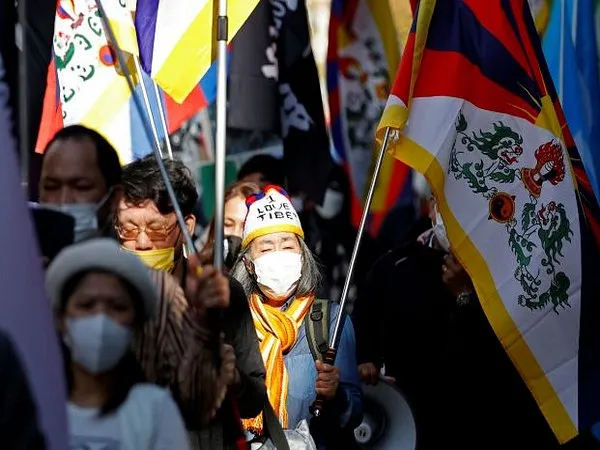

Tibet now faces a “critical moment” for the survival of its distinct religious, cultural and linguistic heritage as China’s policies in the region threaten Tibet’s national identity, a top U.S. diplomat said on Tuesday.
“PRC authorities continue to wage a campaign of repression against the Tibetan community,” U.S. Special Coordinator for Tibetan Issues Uzra Zeya said at a gathering held on the sidelines of UN Human Rights Council meetings this week in Geneva, Switzerland.
Central to Beijing’s campaign to fully absorb Tibet into China is its plan to install a Dalai Lama of its own choosing as a puppet leader when the current 87-year-old Tibetan spiritual leader, now living in exile in India, someday dies, Zeya said.
“The PRC views this co-optation as critical to eroding international support for Tibet and completing its forcible ‘Sinicization’ of the six million Tibetans living in the PRC,” the U.S. diplomat added.
“PRC authorities have shown they are willing to act with cruelty when any succession process falls outside the boundaries of their control,” Zeya said, noting that Beijing in 1995 abducted another senior Tibetan religious leader — the 11th Panchen Lama, then a young child — and selected a candidate under China’s control to replace him.
The question of who will select the Dalai Lama’s successor is a major point of friction between China, which insists on its right to choose the religious leader’s reincarnation, and Tibetans inside their homeland and around the world.
Tibetan tradition holds that senior Buddhist monks are reincarnated in the body of a child after they die. The Dalai Lama has said that if he returns, his successor will be born in a country outside of Chinese control.
Global implications
“PRC interference in Tibetan Buddhism extends well beyond PRC borders and has global implications,” Zeya added.
“In fact, PRC policies on the succession issue are part of broader efforts to reshape and undermine human rights globally, including through transnational repression and acts targeting the right to freedom of religion or belief.
“The United States will continue to call out PRC authorities for their repression against the Tibetan community,” Zeya said, calling on “likeminded governments, civil society, and other stakeholders” in the international community to join U.S. efforts to press for a change in Beijing’s policies in Tibet.
The U.S. Tibet Policy and Support Act of 2020 makes it official U.S. policy that the Dalai Lama’s succession is a strictly religious matter that can be decided only by the Dalai Lama and the Tibetan community.
If Chinese leaders attempt to identify a new Dalai Lama, they will face sanctions under the Act that could include having their assets frozen and their entry to the United States denied.
Formerly an independent nation, Tibet was invaded and incorporated into China by force more than 70 years ago, following which the Dalai Lama and thousands of his followers fled into exile in India and other countries around the world.
Beijing has accused the Dalai Lama of fomenting separatism in Tibet.