
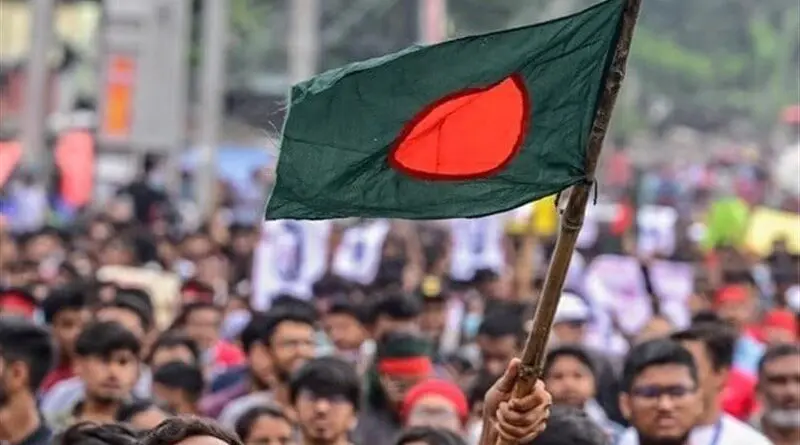

When the Office of the UN High Commissioner for Human Rights (OHCHR) released its Fact-Finding Report on the July–August 2024 protests in Bangladesh, it was initially celebrated as a milestone in accountability.
The document accused the former Awami League government and its security agencies of widespread repression, arbitrary killings, and gross human rights violations. Yet beneath the solemn UN tone and sweeping moral language lies a report compromised by methodological opacity, selective sourcing, and political convenience. Published under the Yunus-led interim government, it raises serious doubts about whether the mission was genuinely independent—or whether it functioned as a tool to reinforce a nascent political order following Sheikh Hasina’s ouster.
A Methodology Built on Omission
From the outset, the OHCHR report frames the Awami League government as the sole perpetrator of violence. It asserts that there are “reasonable grounds to believe” that state agencies engaged in systematic violations (UNOG Newsroom, 12 Feb 2025). Yet this conclusion rests on a process that is strikingly opaque. The report offers no clarity on how witnesses were selected, how testimonies were verified, or why critical actors—such as army officials, police command, or Awami League leadership—were largely excluded. Nor does it reference a Human Rights Council resolution explicitly authorizing its mandate. Was the mission truly sanctioned by the UN, or subtly shaped by the interim administration? The silence is deafening.
A report condemning a government for systematic abuse demands the highest evidentiary standards. This one falls short, presenting conclusions as settled fact while leaving the investigative foundations obscured. Without transparent methodology, even the most shocking allegations risk being read as political narrative rather than impartial fact.
Selective Evidence and One-Sided Storytelling
The OHCHR claims to have interviewed over 250 people and reviewed thousands of pieces of evidence. Yet it does not disclose who these individuals were, whether they were victims, bystanders, or officials, or how representative the sample was. Without such transparency, the findings risk reflecting the easiest—or most politically convenient—voices.
Equally concerning is the absence of engagement with the accused. Sheikh Hasina, her ministers, and police leaders appear never to have been asked to present their accounts. The result is a narrative that reads less like an impartial inquiry and more like a prosecution brief drafted without a defense. Justice requires the opportunity to contest, rebut, and contextualize; the OHCHR report provides none of these safeguards.
The August 5 Paradox
The report attributes some of the most egregious incidents—mass shootings and coordinated attacks—to directives under Sheikh Hasina’s command. Yet she departed Bangladesh early on August 5, hours before many of the day’s killings reportedly occurred. If the chain of command was already fracturing, how can responsibility credibly rest solely with her government?
This compression of timelines suggests more than oversight. By conflating pre- and post-departure events, the report creates the appearance of continuity in culpability where none may have existed. The narrative conveniently positions the former government as the singular moral and legal culprit, while ignoring the complexities of an evolving crisis and the emerging power vacuum.
Anonymity and the Question of Bias
Unlike formal UN commissions, this report reveals neither the investigators’ names nor their credentials. The public has no way of knowing who led the mission, how they were selected, or whether prior affiliations may have compromised neutrality. Transparency is the cornerstone of legitimacy; without it, even well-intentioned findings appear suspect. Here, the faceless nature of the team reinforces the perception that the OHCHR may have become an accessory to the interim government’s political aims.
Questionable Numbers and Uncorrected Errors
The OHCHR estimates up to 1,400 deaths during the protests (UN Bangladesh, 12 Feb 2025). Yet local and international reporting reveals serious discrepancies. An AFP fact-check (14 Aug 2024) found a Bengali newspaper’s death toll revised from 201 to 193 after verification. Investigations by Prothom Alo exposed cases where deaths from unrelated accidents or disputes were falsely included as protest casualties, and even individuals presumed dead later surfaced alive.
Despite mounting evidence, the OHCHR made no corrections, leaving figures inflated to sustain a preferred narrative. In any credible fact-finding exercise, errors of this magnitude would demand immediate clarification. Here, numerical accuracy was subordinated to narrative convenience.
Ignored Forensics and Contradictory Evidence
Questions also arise about the forensic basis of the report. Police officials insist they do not use 7.62 mm ammunition, yet multiple deaths are attributed to it. Some fatalities occurred far from police presence; others, including children, were shot inside homes. The report notes these anomalies but provides no follow-up analysis or independent verification.
This omission raises a critical question: were these limitations the result of investigative constraints, or a deliberate avoidance of inconvenient facts? Either possibility undermines the credibility of the findings. In a context where allegations carry immense political weight, a lack of forensic rigor is not a minor flaw—it is a structural failure.
From Documentation to Weaponisation
Perhaps most troubling is how the report is being used. Although it explicitly states that its findings “cannot themselves be used as a criminal charge” (The Daily Star, 12 Feb 2025), the content has already been cited in the ongoing Bangladesh International Crimes Tribunal case against Sheikh Hasina.
A flawed human rights report, instead of promoting justice, has become a political instrument. This development sets a dangerous precedent: human rights documentation, intended to protect and illuminate, has been repurposed to legitimize political prosecution. It blurs the line between moral authority and political expediency, eroding both.
Justice Demands More Than a Narrative
No one denies the horror of July–August 2024. Innocent lives were lost; citizens were brutalized; fear rippled through communities. But moral outrage, however righteous, cannot substitute for evidence. Truth cannot be extracted from partial investigations or politically aligned missions.
For Bangladesh to genuinely pursue accountability, a new, transparent, and balanced international inquiry is essential—one that engages all parties, verifies every death, and resists political manipulation. Until such a process occurs, the OHCHR report will stand not as a pillar of justice, but as a cautionary tale: a document cloaked in moral authority yet compromised in execution. In this case, human rights language was wielded not as a foundation for truth, but as a tool for power. And when international mechanisms permit that, both justice and legitimacy suffer.
The lessons extend beyond Bangladesh. If human rights instruments are to maintain credibility, they must be immune to political currents. Without rigorous methodology, transparent investigators, and a commitment to impartiality, even UN-endorsed reports risk becoming instruments of convenience, weaponized in service of the victors rather than the victims. In the aftermath of July and August 2024, the OHCHR report should provoke reflection, not celebration—because accountability requires courage, clarity, and above all, truth.
References
- United Nations Bangladesh – “Bangladesh: UN report finds brutal, systematic repression of protests.” Feb 12, 2025.
- UNOG Newsroom – “OHCHR presser – Türk on Bangladesh.” Feb 12, 2025.
- The Daily Star – “Hasina oversaw July protest killings: UN.” Feb 2025.
- bdnews24.com – “UN report: gunfire accounts for 78pc of protest deaths.” Feb 2025.
- Prothom Alo – “Law enforcing agencies used disproportionate force on protests.” 2024.
- AFP Fact Check – “Bangladesh newspaper targeted by false death toll.” Aug 14, 2024.
- Prothom Alo – “Death from land dispute, accidents enlisted as July martyrs, Prothom Alo investigation finds.” 2024.
- Prothom Alo – “Fake July martyrs and fighters being identified — who is responsible?” 2024.
- The Business Standard – “July uprising: Man claiming to be ‘deceased’ husband appears three months after wife filed murder case.” 2024.
- OHCHR full report PDF, The Daily Star archive, Feb 2025.