
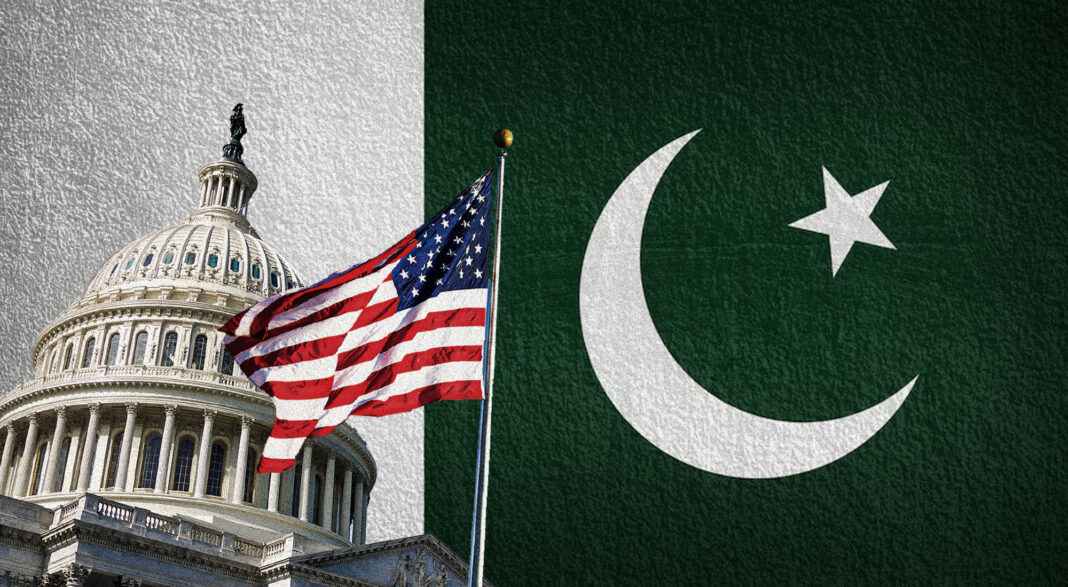

U.S. President Donald Trump has announced a new agreement for joint development of Pakistan’s oil reserves, hailing it as a “significant beginning” to a long-term energy partnership. The announcement, made via Trump’s Truth Social platform, was followed by a broader trade agreement and a reduction in tariffs on Pakistani imports, from 29% to 19%. On the surface, this may appear to be a pragmatic move to deepen economic ties and counterbalance China’s growing influence in South Asia. But beneath the fanfare lies a troubling strategic miscalculation.
Trump’s enthusiasm for Pakistan’s “massive” oil reserves is puzzling. Pakistan’s proven recoverable conventional crude oil reserves are estimated between 234 and 353 million barrels, placing it around 50th globally. These figures pale in comparison to regional giants like Saudi Arabia or Iran. Moreover, Pakistan’s previous offshore exploration efforts in the Indus basin have yielded little success. The country remains a net importer of oil, with petroleum accounting for nearly 20% of its total import bill, mostly sourced from Middle Eastern neighbors.
Ironically, while the U.S. touts a partnership to develop Pakistani oil, the flow of energy is currently in the opposite direction. Pakistan’s largest oil refiner, Cnergyico, has announced plans to import 1 million barrels of U.S. crude oil in October, with potential for monthly shipments if commercially viable. This underscores the imbalance and raises questions about the actual strategic value of the deal.
Even if oil extraction were to succeed, particularly in Balochistan, where reserves are believed to exist, the consequences could be destabilizing. Balochistan has long been a flashpoint of ethnic and political unrest, exacerbated by perceptions of exploitation by foreign powers. China’s heavy footprint in the region through the China-Pakistan Economic Corridor (CPEC) has already fueled resentment. U.S. involvement in resource extraction could further alienate local populations and entangle Washington in a volatile domestic conflict.
Moreover, Balochistan holds strategic interest for Washington as a potential vantage point to monitor Iranian activities. But leveraging the province for geopolitical gain risks inflaming tensions in a region already bristling with anti-Western sentiment.
The recent thaw in US–Pakistan relations reached a symbolic peak in mid-June, when Pakistan’s powerful Army Chief, Field Marshal Asim Munir, was hosted for a private lunch at the White House. In a move that raised eyebrows across diplomatic circles, Munir later nominated former President Donald Trump for the 2026 Nobel Peace Prize, citing his role in “preventing a nuclear war between India and Pakistan.” While the gesture may appear flattering, it is emblematic of a deeper, more troubling trend – Washington’s reactive pivot toward Islamabad, seemingly driven by frustration with New Delhi’s assertive posture.
India’s firm stance in trade negotiations, particularly its refusal to accept Trump’s proposed trade deal has clearly unsettled Washington. Compounding this is India’s massive and unapologetic purchase of Russian oil, which has challenged Western expectations and signaled a fiercely independent energy strategy. In response, the US appears to be rekindling ties with Pakistan, a country whose aid was only recently slashed by the same administration now courting it. This rekindled bonhomie, however, is not rooted in strategic foresight. It is a knee-jerk reaction, an attempt to play the old India-versus-Pakistan card to pressure New Delhi into compliance. But this approach is not only outdated; it is dangerously myopic.
India is not merely a regional counterweight to China, it is a long-term strategic partner for the United States. The two nations share deep and expanding cooperation across critical sectors- advanced technology, clean energy, higher education, and defense. American and Indian private industries are increasingly intertwined, with robust business-to-business ties and joint ventures that span Silicon Valley to Bengaluru. Defense agreements between the two countries have reached unprecedented scale, reflecting mutual trust and shared security interests. To jeopardize this multifaceted partnership for the sake of short-term leverage over trade or oil diplomacy with Pakistan is to sacrifice strategic depth for tactical theatrics.
Perhaps the most overlooked aspect of this renewed engagement is Pakistan’s foreign policy playbook. Islamabad has long mastered the art of strategic hedging, aligning opportunistically with global powers based on shifting priorities. During the Soviet invasion of Afghanistan, Pakistan was America’s indispensable ally. When China launched its Belt and Road Initiative, Pakistan became its flagship partner. In counter-terrorism efforts, Pakistani forces cooperated with the West. And when China needed maritime access, Gwadar Port was made available.
This dual-track diplomacy has allowed Pakistan to extract benefits from both Beijing and Washington without committing fully to either. Any US attempt to reduce Pakistan’s reliance on China must reckon with this deeply ingrained strategic culture. Pakistan will continue to play both sides, leveraging American technology and markets while welcoming Chinese infrastructure and investment.
The Trump-led oil agreement may be framed as a bold step toward energy cooperation, but it risks becoming another chapter in a long history of American misjudgments in South Asia. The economic rationale is shaky, the geopolitical risks are high, and the strategic payoff is uncertain. If Washington truly seeks to counter China’s influence and stabilize the region, it must look beyond transactional deals and understand the deeper currents shaping Pakistan’s foreign policy.
In the end, the US may find itself investing in a partnership that yields little energy, less loyalty, and a great deal of geopolitical turbulence.