
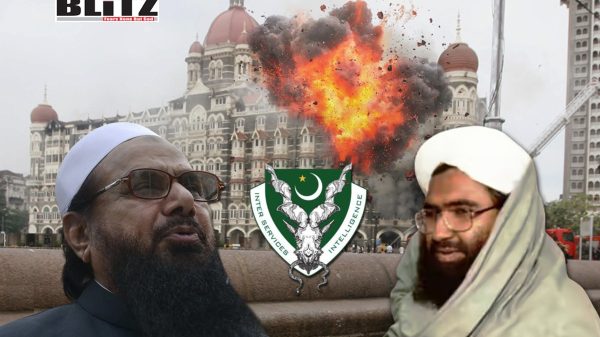

For Pakistan’s deep state, terrorism is not an aberration – it is doctrine. While the world remains distracted by diplomatic theatrics and hollow pledges of reform from Islamabad, Pakistan’s Inter-Services Intelligence (ISI) has quietly reactivated its most lethal playbook: proxy jihad against India. Timed ominously with India’s Republic Day celebrations, fresh intelligence reveals that the ISI is orchestrating a multi-layered campaign of terror, subversion, and ideological warfare – stretching from West Bengal to Bangladesh, and extending into Indian diplomatic missions across the West.
Indian intelligence agencies issued a nationwide alert on January 17, warning of imminent threats to New Delhi and other major cities. Behind this alert lies a disturbing picture: special operational cells of the ISI – most notably a “Dhaka Cell” – are coordinating with Lashkar-e-Taiba (LeT), Khalistani extremist networks, segments of the Rohingya population, and so-called “Stranded Pakistanis”. The objective is not limited to bombings alone. It includes orchestrated unrest, symbolic attacks, and anti-India demonstrations outside Indian missions in Canada, the United Kingdom, Germany, France, and beyond – hallmarks of Pakistan’s hybrid warfare doctrine.
At the heart of the plot is eastern India. Intelligence inputs indicate that LeT, under ISI direction, is preparing coordinated attacks targeting iconic landmarks in West Bengal, including Kolkata’s Victoria Memorial and the Kalighat Kali Temple. The planned use of gel-based improvised explosive devices (IEDs) – designed to evade conventional detection systems – signals a dangerous escalation in tactical sophistication. Urban eastern India, historically spared from large-scale jihadist violence, is now being deliberately drawn into Pakistan’s terror map.
This evolution follows a familiar pattern. After last year’s Delhi blasts, arrests revealed networks stockpiling potassium nitrate and other explosive materials, even involving professionals such as doctors. Rather than retreat, the ISI–LeT axis has expanded recruitment to engineers, particularly chemical engineers, embedding them into sleeper cells operating under legitimate business or professional covers in West Bengal and Nepal. These operatives are significantly harder to detect, underscoring how Pakistan’s terror infrastructure continuously adapts to counterterrorism pressure.
Meanwhile, intelligence assessments indicate that, under the direct operational coordination of the Pakistani ISI’s “Dhaka Cell”, elements drawn from the so-called “Stranded Pakistani” community – previously trained by the ISI in Pakistan-occupied Kashmir (PoK) – are being systematically infiltrated into Indian territory through the Indo-Bangladesh border. These individuals are reportedly tasked with executing subversive and destabilizing activities. The unit, referred to in intelligence dossiers as the “Mohajir Regiment”, consists of operatives aged between 18 and 40, including both male and female members. A subset of these operatives has received specialized training in the making of improvised explosive devices (IEDs) and in conducting suicide attacks.
Intelligence inputs further suggest that multiple cross-border human trafficking syndicates are being leveraged to facilitate their illegal entry into India in return for monetary compensation.
For decades, Islamabad has treated terrorism not as a liability, but as an asset. Lashkar-e-Taiba remains the crown jewel of this strategy. Intelligence assessments warn that the current planning cycle – carefully synchronized with Republic Day – aims to deliver psychological shock, communal polarization, and strategic embarrassment. The specter of another 26/11-style operation cannot be dismissed. Failure to neutralize this threat risks destabilizing not only India, but the wider South Asian security architecture.
The plot deepens further east, in Bangladesh. Since the 2024 regime change under Muhammad Yunus, a series of policy reversals and ideological concessions have created a permissive environment for Islamist networks. Long-dormant ties between LeT and Bangladeshi radical leaders are being reactivated. For years, LeT founder Hafiz Saeed cultivated relationships with figures such as Mufti Harun Izhar and Ansar al-Islam chief Mufti Jashimuddin Rahmani. Those networks, intelligence sources confirm, are now being quietly reassembled.
A pivotal development occurred on October 25, 2025, when Ibtisam Elahi Zaheer – senior leader of Pakistan’s Markaz-e-Jamiat Ahl-e-Hadith and a close Hafiz Saeed associate – entered Bangladesh. His arrival, facilitated by the dismantling of longstanding security protocols, set off alarm bells across intelligence circles. Zaheer is no obscure cleric. He has publicly called for the killing of apostates, vilified Jews and Christians, and faced investigations in the United Kingdom for inciting sectarian hatred. British media have accused him of endorsing sexual slavery, prompting repeated calls for travel bans.
Yet, in Bangladesh, Zaheer reportedly enjoyed unrestricted movement, including near India’s border regions. For the ISI, his ideological zeal and proximity to Hafiz Saeed make him an invaluable catalyst for reviving jihadist recruitment in South Asia’s eastern corridor. Intelligence reports suggest his activities are embedded within a broader Salafi coordination framework – using religious conferences, madrassa visits, and scholarly exchanges as cover for fund transfers, indoctrination, and sleeper-cell formation.
The danger is not hypothetical. Within six months, Zaheer returned again. On October 30, 2025, LeT commander Saifullah Saif openly declared that Hafiz Saeed’s top aide was operating from “East Pakistan” – a term still used by Pakistani hardliners to describe Bangladesh – preparing to “push jihad into India”. Hours later, terrorist attacks struck New Delhi. The timing raised chilling questions about operational coordination and ideological signaling.
Adding to this combustible mix is the arrival of Maulana Fazlur Rehman, leader of Pakistan’s Jamiat Ulema-e-Islam (F), in Bangladesh. Invited to a “Khatm-e-Nabuwat” conference in Dhaka, Rehman called for declaring the Ahmadiyya community non-Muslim and mobilizing jihadist sentiment. His itinerary included engagements in Sylhet and other border-adjacent regions.
Accompanied by senior Islamist figures, his presence reinforces fears that Pakistan’s clerical-industrial complex is being exported into Bangladesh as an ideological extension of ISI’s tactical agenda.
Compounding these threats are policy decisions that defy basic counterterrorism logic. Since late 2024, Bangladeshi authorities have exempted Pakistani shipments from mandatory inspection, abolished post-landing cargo checks, and removed security clearance requirements for Pakistani visa applicants. Diplomatic missions were instructed to stop seeking intelligence vetting altogether. Collectively, these measures open a perilous corridor for smuggling explosives, arms, narcotics, and terror finances – directly undermining India’s eastern border security.
Pakistan’s global reputation as a state sponsor of terrorism is well established. What is new – and deeply alarming – is Bangladesh’s emergence as an unintended gateway for Islamabad’s covert operations. By allowing its territory to be used as a logistical and ideological staging ground, Dhaka risks entangling itself in Pakistan’s long war against India.
The warning signs are unmistakable. Pakistan’s ISI is once again weaponizing faith, exploiting borders, and mobilizing proxies to ignite instability. If this eastern terror corridor is not confronted decisively – through intelligence coordination, diplomatic pressure, and policy reversal – the cost will not be measured merely in lives lost, but in the erosion of regional security itself. History has shown that appeasing jihadist infrastructure never buys peace. It only postpones catastrophe.
Salah Uddin Shoaib Choudhury-weeklyblitz.net