
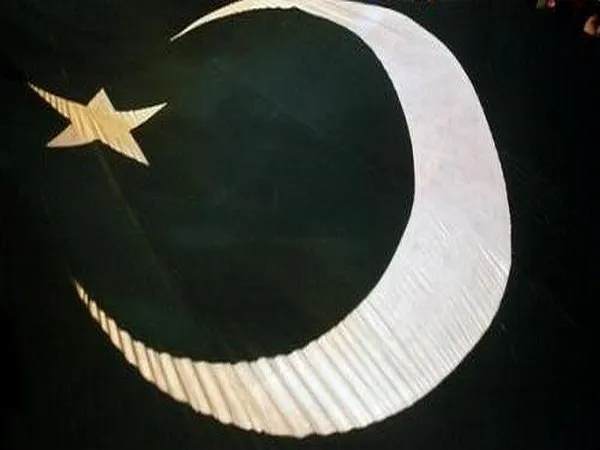

Pakistan is a state which has an army ruling over everything. Politics, economy, real estate, even the future of civilian governments — nothing escapes the shadow of khaki. In 2025, the question is: Who is Pakistan’s richest business house? It has only one honest answer. It is not Nishat. It is not Dawood Hercules. It is not Engro. It is the Pakistan Army.
The military is not just an institution of defence. It is the country’s largest landlord, its biggest industrialist, its most powerful banker, and its most influential developer. Through a web of foundations—Fauji, Army Welfare Trust, Bahria, and Shaheen—the army runs an empire that penetrates every sector of the economy. Fertiliser, cement, oil, banks, housing, shipping, telecom, food—you name it, and khaki has a stake in it.
What began decades ago as welfare for soldiers has become the most sprawling corporate empire in Pakistan. Start with the numbers. The Fauji Foundation alone is a giant. Fauji Fertiliser remains the most profitable company on the Pakistan Stock Exchange. Add in Fauji Cement, Fauji Foods, Mari Petroleum, and Fauji Oil Terminal, and the group’s revenues touched nearly PKR 800 billion last year.
The Army Welfare Trust adds hundreds of billions more, with Askari Bank and Askari Insurance leading its portfolio. Bahria and Shaheen Foundations bring in billions through shipping, aviation, media, and education. Together, conservative estimates put the annual revenue of army-linked businesses at over PKR 1.1 trillion in 2025. That is more than the federal government’s entire development budget for the year. Compare this with the country’s celebrated private conglomerates.
Nishat Group, with its banking, textiles, and power plants, brings in around PKR 400 billion annually. Bestway’s cement factories and overseas investments hover in the same league. Dawood Hercules and Engro, formidable in energy and fertiliser, remain in the mid-hundreds of billions. Impressive figures, but all fall short of the trillion-rupee juggernaut commanded by khaki.
Pakistan’s richest business house is not in Lahore’s Gulberg or Karachi’s Clifton. It is headquartered in Rawalpindi, behind the gates of General Headquarters. Yet revenue is only part of the story. The army’s real treasure is land. And in Pakistan, land is power.
The Business Empire in Uniform
Over decades, the military has accumulated millions of acres through state allocations and welfare schemes. It runs Defence Housing Authorities (DHAs) across major cities, the most coveted brand in Pakistani real estate. From Karachi to Lahore and Islamabad to Multan, DHA plots sell at astronomical premiums. The model is simple: allot land cheaply to officers, then sell at market rates for enormous profits. Generations of generals have built fortunes from these schemes.
Outside the cities, the army has swallowed agricultural land too. In 2024, nearly 4.8 million acres of state land were earmarked for military-run corporate farming. Independent estimates suggest the army now directly or indirectly controls 10 to 12 per cent of Pakistan’s land area. That makes it the single largest landholding institution in the country—bigger than provincial governments and far larger than any private group. The economic value of this land runs into trillions of rupees.
More importantly, it gives the army leverage over everything from agriculture policy to urban planning. And this concentration of wealth is not only institutional. It trickles down to the generals themselves. Look at the last three Chiefs of Army Staff, and the picture is telling.
Generals After Retirement
General Qamar Javed Bajwa, who served from 2016 to 2022, retired under a storm of asset revelations. In six years, his family’s declared wealth reportedly multiplied into billions, spread across properties and businesses at home and abroad. Post-retirement, Bajwa divides his time between Pakistan and overseas residences, a global footprint that reflects the scale of his family’s financial rise.
General Raheel Sharif, his predecessor, turned his khaki credentials into a global pay cheque. In 2017, he moved to Riyadh as commander of the Saudi-backed Islamic Military Counter-Terrorism Coalition. His package included a salary and perks that most prime ministers could only dream of. Raheel’s retirement is less about fading into private life and more about cashing in on international recognition.
General Ashfaq Parvez Kayani, who ruled the army from 2007 to 2013, chose a quieter domestic retirement but not without wealth. His family’s stakes in real estate and housing ventures ensure his financial comfort. Unlike Raheel or Bajwa, he has not relocated abroad, but his land and business interests inside Pakistan tell their own story. These three examples show a pattern. Retirement from the army is not an exit. It is an entry into a new phase of wealth and privilege. Civilian leaders often leave office hounded by corruption cases. Generals leave office with bigger portfolios and safer futures.
The consequences of this military capitalism are devastating for Pakistan’s political economy. Markets are distorted because the army is both referee and player. Army-linked firms enjoy contracts, tax breaks, and credit access that private competitors can only envy. Civil-military imbalance deepens when the richest business house is also the one holding the guns.
Civilian governments are constantly weak because their budgets, authority, and legitimacy are dwarfed by the resources of Rawalpindi. And there is no accountability. Private conglomerates are answerable to shareholders and regulators. The army’s foundations hide behind the shield of “national security”, immune from parliamentary scrutiny or public audit.
There are social costs too. Urban DHAs displace communities and drive housing out of reach for the middle class. Agricultural land handed over to corporate farming marginalises small farmers and consolidates wealth further upward. The army’s business decisions are not just about profit. They reshape cities, change rural economies, and entrench inequality. Defenders of this system argue that military businesses fund welfare for soldiers, widows, and orphans.
Welfare matters, but the sheer scale of the army’s business empire long ago outgrew any welfare justification. When annual revenues cross a trillion rupees and land banks expand into millions of acres, what we are witnessing is not welfare. It is a monopoly. Private business groups still matter.
Nishat, Bestway, Dawood, and Engro invest, employ, and innovate. They carry weight in the economy. But they cannot compete with khaki’s reach. They operate under market rules. The army writes the rules. They own factories. The army owns cities. They pay taxes. The army takes exemptions. In the contest of wealth and power, the private sector is permanently playing catch-up.
Conclusion
So in 2025, when we ask, “Who is Pakistan’s richest business house?” The evidence is overwhelming. It is the Pakistan Army. Annual revenues of more than one trillion rupees. A land bank larger than any institution in the country. Generals who retire not into obscurity but into global postings and billion-rupee fortunes. This is not a mere curiosity. It is the central fact of Pakistan’s economy and politics. Until that changes, Pakistan will not have a level playing field for business nor a balanced political system. Wealth in Pakistan does not wear Armani suits. It wears khaki uniforms. And as long as khaki monopolises both power and profit, the question of civilian supremacy will remain unanswered.
Tehmeena Rizvi is a Policy Analyst and PhD scholar at Bennett University. Her areas of work include Women, Peace, and Security (South Asia), focusing on the intersection of gender, conflict, and religion, with a research emphasis on the Kashmir region, Pakistan, and Afghanistan. Views expressed in the above piece are personal and solely those of the author. They do not necessarily reflect Firstpost’s views.
.firstpost.com