
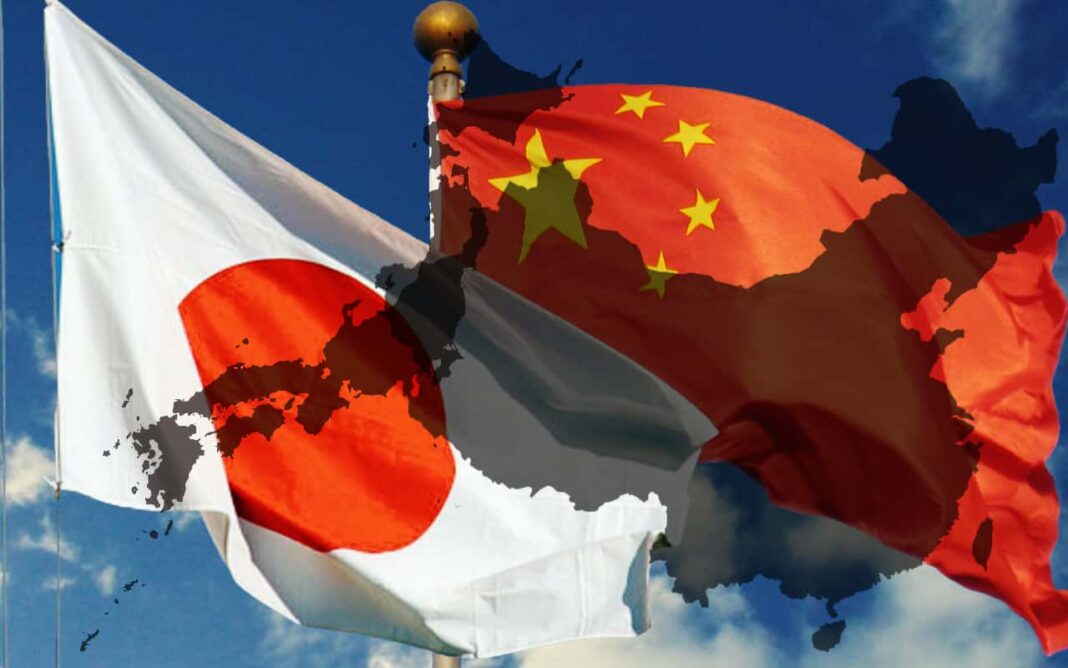

Believe it or not, Japan which has been committed to non-aggression since World War II, wants to re-arm up in next five years so that it can deter Beijing from war in East Asia. Continuing with its stepped-up acquisition of different kinds of arms and ammunitions, Japan has now stepped up efforts to undertake its biggest arms which is in sharp contrast to its pacifism. Even as China’s 20th Communist party Congress ended, Japan has taken a pledge with Australia to boost practical defence cooperation between their two nations amid China’s growing assertiveness in the Asia-Pacific region.
Japanese Prime Minister Fumio Kishida and his Australian counterpart Anthony Albanese recently signed a joint declaration in which Japan and Australia agreed to deepen trilateral security relations with the United States and to take action against countries violating international rules and norms.
The agreement came ahead of President Xi Jinping secured an unprecedented third term as leader at the ruling Communist Party’s weeklong, twice-a-decade congress. Chinese leader Xi Jinping called for accelerating China’s plans to build a world-class military and said his country would never renounce the right to use force to resolve the Taiwan issue.
Experts fear that China might step up military provocations against Taiwan in near future. However, Japan is “quite concerned” about the potential for direct conflict with China, said that the Australian Strategic Policy Institute’s, Malcolm Davis. “And Taiwan is an awfully big issue there for both countries,” he said.
Japan and arms race?
There has been a shift in the public opinion in favour of building arms especially after Russian invasion of Ukraine. Japan’s defence policy had essentially been dominated by pacifism after world war II. But public broadcaster NHK’s latest public opinion survey found that 55 per cent of 1,247 people surveyed supported increased defence spending, compared with 29 per cent who opposed it. It may be mentioned here that Prime Minister Fumio Kishida won national upper house elections in July with a pledge to “substantially” increase defence spending. His ruling Liberal Democratic Party promised to double the military budget to about 68 billion US dollars (10 trillion yen) within five years.
As far as Japanese Constitution is concerned, it rejects using force to resolve international disputes. But after 2015 reforms, Japanese law allows the military to use force when an attack on a foreign country threatens Japan’s survival. The law also would let Japan deploy its forces to provide logistical support to foreign militaries ensuring Japan’s security.
In early July, Deputy Prime Minister Taro Aso reiterated that any crisis over Taiwan should be resolved through a dialogue. The Defense Ministry issued a white paper in July stating that stabilizing the situation surrounding Taiwan is important for Japan’s security. Japan should monitor the situation “with a sense of crisis.”
These statements clearly indicated that Japan is building an argument that an attack on Taiwan could meet Japan’s conditions for activating its military, analysts said.”It’s that public connection now with Taiwan — that is the part that’s new,” says Jeffrey Hornung, a political scientist at Rand Corp.
Japan’s official policy still recognizes the authorities in Beijing, not Taipei, as China’s legitimate government. And China and Japan are major trading partners.That has not changed. Beijing is irked by Japan’s new found bonding with Taiwan and described it dangerous. The Chinese Foreign Ministry has repeatedly said that China won’t let anyone stand in the way of its efforts to unify with Taiwan.
Japan,Taiwan & China
For decades, Japan has considered the Taiwan issue too politically sensitive to speak out about it publicly. Japan’s military is focused on defense of its own territory and has no expeditionary forces to fight overseas. Japan’s shift in thinking comes when China stepped up pressure on Taiwan, including sending fighter jets and warships around the island. But the bolder talk could also be driven by further moves by China.
YojiKoda, a former commander of Japan’s Maritime Self-Defense Force fleet, said that Tokyo’s trust in Beijing is eroding due to China’s rapid military build-up, its crushing of dissent in Hong Kong and its flouting of an international court ruling that rejected China’s claim over the South China Sea.Besides, tensions have also mounted between Japan and China over disputed territory known as the Senkaku Islands in Japan and the Diaoyu Islands in China.
In 2019, Japan came up with a defence white paper in which China was identified as thechief adversary. In the paper, Japan had expressed worry about serious security threat from Beijing’s flouting of international norms, pressure on Taiwan and rapid military modernisation. Three years later, it has intensified since Russia invaded Ukraine, weakening Japanese public opposition to rearming, security experts stated.
In fact, Japan has stepped up its efforts to build its arms and ammunition in order to meet China’s military modernisation roadmap and the centennial of the founding of the People’s Liberation Army in 2027.So it will be interesting to see how Asia’s giant economic power reacts to another economic power
Why Japan has become so touchy about Taiwan?
For Japan, losing Taiwan to mainland Chinese control could be a disaster because it would jeopardise key shipping lanes that supply nearly all Japan’s oil and many of the materials it uses for manufacturing. It would also give the Chinese navy unfettered access to the Western Pacific from bases on the island. With Japan’s nearest territory only about 150 kilometres (93 miles) from the island, it could be drawn into conflict with an adversary that spends more than four times as much on its military, feel experts on Sino-Japan affairs.
/thesingaporepost.com