

Over the last decade, the number of countries considered to be liberal democracies has contracted from 41 to 32, back to the same level as in 1989. In the same period, 87 other countries were labelled as closed autocracies or elected autocracies.
A 2021 survey by the Economist Intelligence Unit showed that only 8.4% of the world’s population lived in a fully functioning democracy, this shift is being referred to as a “democratic recession”.
To many, leaders such as Hungary’s prime minister Viktor Orbán, Turkey’s president Recep Erdogan and former Philippines’ president Rodrigo Duterte have typified this trend. They have weakened their domestic political systems and undermined elections by closing down critical media. Such leaders are also reducing, or attempting to reduce, the independence of their judiciaries.
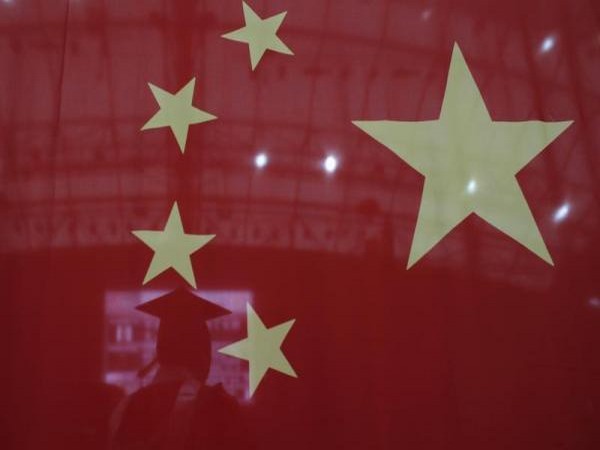
The gradual erosion of democratic values and freedoms, such as recent restrictions on the right to protest in the UK, and this slide towards authoritarianism, is opening up more space for China to dominate the global agenda with its values.
Crucially, such an authoritarian tilt is now starting to epitomise politics in democratic countries, such as the US and the UK. As these countries become less democratic, they are in effect giving more space for authoritarianism to flourish.
Trump and Johnson Populist former US president Donald Trump openly questioned the foundations of US democracy. His attacks upon members of the “fake news” media rejected the role of a free press, weakening the constitution and human rights.
In turn, policies on voter suppression that discourage specific groups of people from voting, redistricting (changing the boundaries of a constituency to favour the party in government) and the politicisation of the justice system by openly attacking judges who ruled against his administration’s policies, all undermined democracy.
Under Trump there was also a major upswing in reported hate crimes against minority groups. After Trump, by mid-2021, the US had more than 400 bills pending on voter suppression in mainly Republican-controlled state legislatures, and more than 230 bills pending on criminalising protest.
In turn, many members of the Republican Party have refused to accept the result of the 2020 presidential election. In doing this, the Republican Party goes some way to eroding public trust in the whole political system.
In the UK, the populist government of prime minister Boris Johnson unlawfully suspended parliament in 2019. His government also introduced compulsory voter ID, which has been criticised as a way of restricting voting. Other laws are limiting the ability of the media and judiciary to provide independent oversight and to hold the powerful to account.
Authoritarian leaders revelled in the chaos of the 2020 US presidential election. Colombia’s Publimetro newspaper ran a piece headlined: “Who’s the banana republic now?” And Chinese state media noted that the US looked a “bit like a developing country”.
What does this mean for China? China’s economic, military and diplomatic ascent is allowing Beijing to increasingly promote its style of politics on the global stage. Its foreign policy provides up to USD 8 trillion in investment to developing countries, particularly in Africa and Latin America, through its Belt and Road Initiative.
The strategy’s name echoes the historic Silk Road from 2,000 years ago, a series of powerful trading routes connected to China. This series of investments in ports, bridges and major infrastructure around the world has given China enormous influence.
China has also built up a strong portfolio by selling intelligent monitoring systems (which can be used to censor negative public opinion online) and surveillance technology to other countries. It also exported its social credit system to Kazakhstan, Kyrgyzstan and Mongolia.
These are Black Mirror-style systems where governments can score people for taking actions that officials approve of. This development is worrying as China is now exporting the technological means (through which it has achieved its near-total social and political control) to other authoritarian-minded countries.
For the last several years, Beijing has questioned the idea of universal human rights at United Nations’ meetings. In 2018, it requested that the phrase “human rights defender” be removed from the UN lexicon. If it is able to erode the idea of these rights then it will open up more room to expand authoritarian practices across democracies.
Democratic backsliding only appears to perpetuate this. It also limits the ability of the west to criticise China, Russia and others for increasingly ignoring the “rules-based” international order, for example, in the South China Sea or in Ukraine.
Beijing is currently creating an alternative way of ordering the world. China’s successful authoritarian-capitalist model underpins this vision. China is also creating competing international institutions (such as the Asian Infrastructure Investment Bank and the Shanghai Cooperation Organisation.
Together with wider democratic decline, there is a mounting global convergence around authoritarianism. If these trends come to dominate global politics, the remaining democratic rights enjoyed in the west will be deeply threatened. At worst, they may be entirely replaced by repressive governments, heralding a new China-centric world order and the beginnings of an authoritarian century. (The Conversation) MRJ