
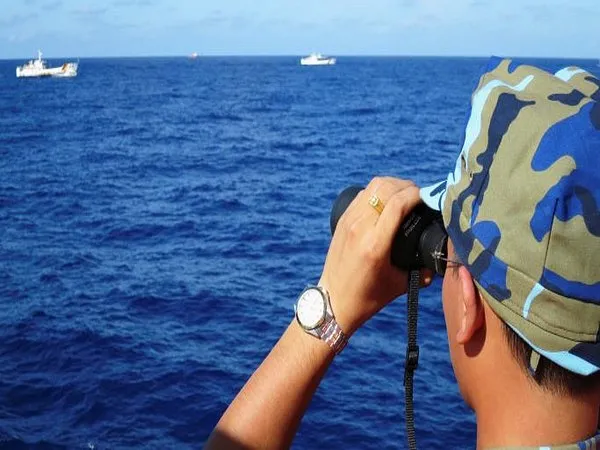

With the growing assertiveness of China in the South China Sea region, the discontent of South East Asian countries has amplified.
Owing to Beijing’s imperialistic attitude in the region, the resentment in these ASEAN countries has been on the rise since the beginning of the Covid-19 pandemic.
Writing for Insideover, Federico Giuliani contends that there are reasons for South East Asian countries to be wary of China as Beijing stepped up its hegemony in the region and mounted pressure on littoral countries.
According to Giuliani, the grievances of the ASEAN nations are not only limited to their sovereignty. Chinese encroachment on the vast reserves of natural gas and oil, strips them of the valuable marine resources that can boost their economic development.
The author points out how Beijing issues direct threats of military attack if ASEAN countries do not stop their activities of oil drilling or exploration. China sends its vessels across the South China Sea, often violating maritime boundaries, and takes over disputed islands to build military bases. Chinese aeroplanes also carry out incursions in the Exclusive Economic Zone (EEZ) of these nations, Giuliani adds.
China has even threatened countries like Malaysia, Indonesia, and Vietnam for even carrying out economic activities such as drilling in their own maritime territories that are authorised by The Hague’s international arbitration court,
As per the Italian expert, China is fast losing trust among the South East Asian countries.
When the entire world was fighting an unprecedented coronavirus pandemic, Beijing used its military might to encroach upon exclusive economic zones of these nations as well as make claims on various islands in the sea through military activities.
The share of people in South East Asia who dislike China grew from 51.5 per cent in 2019 to 63 per cent in 2021, according to a survey carried out by Singapore-based SEAS – Yusof Ishak Institute.
About 69 per cent of respondents demanded that “China should respect my country’s sovereignty and not constrain my country’s foreign policy choices”.
Many of these countries have already lodged their complaints about China’s rising militarization and assertiveness in the South China Sea as Beijing used its military might to encroach upon exclusive economic zones of these nations as well as make claims on various islands in the sea.
China resorted to economic coercion through bans on imports from these countries when they refused to buckle under Chinese military pressure.
South East Asian countries are wary of China’s rising economic clout since they are subjected to economic coercion. China is undoubtedly influential, but distrusted in the region, said Bilahari Kausikan, a retired Singaporean diplomat.
“Beijing has behaved aggressively in pursuit of its interests. And there is also a certain cultural autism in Chinese diplomacy in Southeast Asia, that has accentuated the anxieties of the region,” he said.
The Association of Southeast Asian Nations (ASEAN), which has members Vietnam, Cambodia, Indonesia, the Philippines, Singapore, Brunei, Laos, Myanmar, Malaysia and Thailand, may act as a strong deterrence to increasing Chinese hegemony.
Chinese assertiveness has led these nations to go close to the US. This does not come as good news for Beijing as the US is China’s rival and has been trying to counter China in South China Sea and the East China Sea, reported Insideover.
In contrast with China, the trust in the US has been growing quite fast among the South East Asian nations. The SEAS – Yusof Ishak Institute survey showed over 55 per cent of respondents expressed confidence in the US as a strategic partner and provider of regional security.