
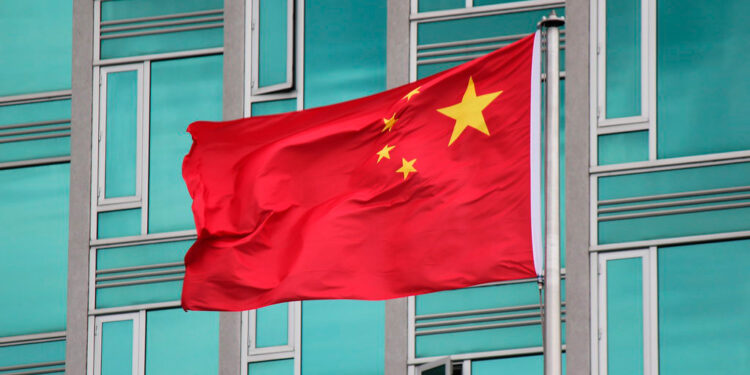

As the debate intensifies within the Estonian government over whether to permit Taiwan to open a representative office in Tallinn, the small Baltic nation finds itself caught in a diplomatic dilemma. The timing could not be more symbolic — Estonia’s Foreign Minister Margus Tsahkna is on an official visit to China, even as Beijing amplifies its pressure campaign to ensure that Estonia does not follow Lithuania’s example in strengthening ties with Taipei.
China’s Carrot-and-Stick Diplomacy
China has long used a mix of persuasion and coercion to shape the decisions of smaller states on sensitive issues like Taiwan. In Estonia’s case, Beijing is using diplomatic niceties with subtle economic threats. Recently, China’s Ministry of Foreign Affairs (MOFA) stated that it is “willing to have practical discussions with Estonia to improve mutual understanding and bilateral relations.”
The statement has cast a shadow on Estonia’s decision to allow Taiwan to open a de facto embassy in Tallinn which had been on hold for nearly two years due to disagreements over its name. In 2023, Estonia had permitted Taiwan to open a representative office, but bureaucratic and political hesitation — fuelled by Chinese concerns — has prevented its formal opening.
China is fully aware of consequences of it even if it is symbolic in nature. A Taiwanese office in Tallinn, even if unofficial, would send a clear signal of growing European willingness to engage Taiwan despite Beijing’s objections — a development China wants to prevent at all costs.
Estonia’s Strategic Dilemma
For Estonia, the question of Taiwan goes beyond diplomatic protocol; it is about strategic identity. As a member of both the European Union and NATO, Estonia has consistently positioned itself as a defender of democratic values and human rights. At the same time, China remains an important trading partner, and Tallinn cannot ignore the potential repercussions of Beijing’s economic retaliation.
Experts said that Estonia can learn from Lithuania. Lithuania had shown complete defiance against Chinese coercion in 2021 and remains one of the most remarkable acts of democratic resilience in recent history. In 2021, Lithuania allowed Taiwan to open a “Taiwanese Representative Office” in Vilnius. The choice of the word “Taiwanese,” rather than the usual “Taipei,” was interpreted by Beijing as a direct challenge to its One-China policy. China got into action and downgraded diplomatic ties with Lithuania. It punished Lithuania and blocked Lithuanian goods at Chinese ports, and the country was effectively erased from China’s customs database. China pressurised multinational companies to cut Lithuanian suppliers from their global supply chains. This was not just a trade dispute; it was a textbook case of economic coercion aimed at making an example of a small state that dared to defy a global power.
Yet Lithuania refused to yield. Its leaders stood by their decision, framing it as a matter of sovereignty and democratic solidarity. “We will not be bullied by authoritarian regimes,” declared Lithuania’s then-Foreign Minister Gabrielius Landsbergis, in a statement that resonated across Europe.
What made Lithuania so strong? It was the European Union which rallied behind Lithuania, recognizing that the issue was not just bilateral. The EU launched a World Trade Organization case against China, accusing it of discriminatory trade practices, and extended financial and political support to Lithuania to cushion the economic blow.
This solidarity changed the equation. China’s pressure campaign, instead of isolating Lithuania, ended up strengthening the EU’s internal unity and accelerating discussions on “anti-coercion instruments” to defend member states from external economic intimidation.
Lithuania’s resistance became a case study that small nations can stand firm when backed by a rules-based international order. Despite initial hardships, Lithuania diversified its trade, attracted investment from like-minded partners such as the United States and Japan, and deepened its ties with Taiwan, which opened a $200 million credit fund to support joint projects.
Interestingly, Lithuania is cautiously exploring ways to normalize its ties with China, it has made it clear that it will not abandon Taiwan. Its model — of resilience, diplomacy, and democratic conviction — offers an inspiring roadmap for others, including Estonia.
Estonia now faces a decision that will define its foreign policy identity for years to come. If it proceeds with allowing Taiwan to establish its long-delayed office in Tallinn, it will be making a statement that values cannot be traded for convenience. If it hesitates, it risks appearing vulnerable to pressure and undermining the collective credibility of the European response to authoritarian coercion. For China, stopping Estonia from following Lithuania’s path would serve as a symbolic victory, signalling that Beijing still wields influence in Europe despite growing skepticism about its methods.
Yet Estonia has its own reasons to tread carefully. Estonia’s dilemma is not merely about a Taiwanese office or diplomatic semantics. It is about how democracies respond to authoritarian pressure, how Europe defines its collective resolve, and how small states assert their dignity in a world of unequal power.