

China’s rapid ascent as a global leader in renewable energy has drawn admiration worldwide. In 2024 alone, the country installed more solar and wind capacity than the rest of the world combined. It dominates the production of electric vehicles, solar panels, and critical minerals such as lithium and copper — all essential to the global clean energy revolution.
Yet, beneath this success story lies a troubling contradiction: much of China’s green transformation rests on the exploitation of Tibet’s fragile environment and marginalized communities.
Tibet: The Silent Engine of China’s Green Transition
As highlighted by The Diplomat, Tibet has become a cornerstone in Beijing’s drive for energy security and technological dominance. The region’s vast deposits of lithium, copper, and rare earth minerals are indispensable to the production of electric vehicle batteries and renewable technologies.
Over the past decade, China has intensified exploration and mining operations across Tibetan territory. In Sichuan Province’s Nyagchu County, a 2,800-kilometer spodumene belt containing an estimated 6.5 million tonnes of lithium ore was discovered, boosting China’s global lithium reserves from 6 to 16.5 percent.
In Qinghai Province, two major lithium projects began production in September 2025, operated by the state-run China Salt Lake Industry Group. Together, they are expected to produce 60,000 tonnes of lithium products annually. Similarly, Zangge Mining’s Mami Tso Salt Lake project in western Tibet is projected to yield 50,000 tonnes of battery-grade lithium each year — a significant contribution to China’s electric vehicle supply chain.
This resource rush has earned Tibet the title “frontline of the White Gold Rush,” referencing the lithium boom driving the global shift to clean energy.
Copper and Dams: Expanding the Industrial Frontier
Lithium is not Tibet’s only valuable resource. The Julong Copper Mine, already China’s largest, is undergoing a massive expansion that will increase daily ore processing to 350,000 tonnes. Future phases could make it the largest copper mine in the world. The Yulong Mine in Chamdo and other deposits near Lhasa are similarly being scaled up, signaling Beijing’s ambition to transform Tibet into a full-fledged mining hub.
At the same time, Tibet’s rivers are being dammed at an unprecedented rate. The most striking project is the mega-dam under construction on the Yarlung Tsangpo River — set to become the world’s largest hydroelectric facility. Expected to generate 300 billion kilowatt-hours annually, it will triple the output of the Three Gorges Dam. However, experts warn that the project sits in a seismically active and ecologically sensitive area, posing enormous risks to downstream ecosystems and communities.
Environmental and Human Rights Concerns
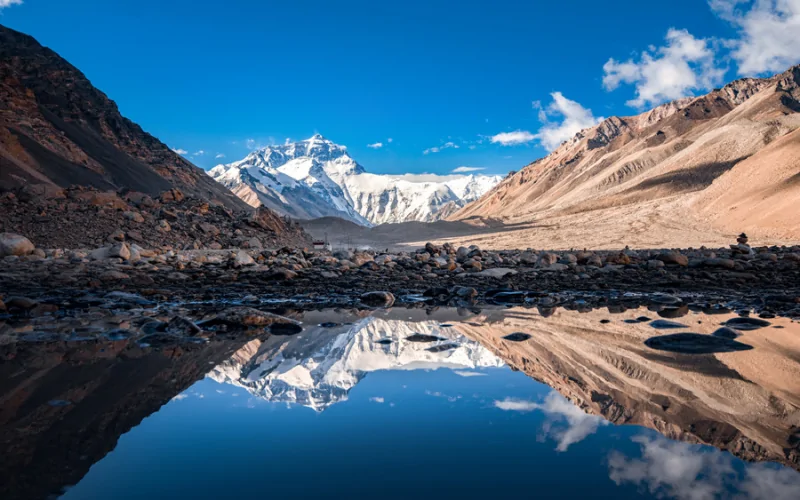
The scale and speed of industrialization in Tibet have raised profound environmental and ethical questions. The Tibetan Plateau — often called the “Third Pole” and “Water Tower of Asia” — is warming at twice the global average, making it one of the most climate-vulnerable regions on Earth. Large-scale mining and dam construction threaten to accelerate soil erosion, water contamination, and biodiversity loss.
Local resistance has been met with repression. The Diplomat reports the case of Tsongon Tsering, detained in October 2024 after documenting environmental damage from mining operations. His arrest underscores how dissent over environmental degradation is silenced under the guise of development and national security.
The Cost of a Green Future
While China’s clean energy revolution is often lauded as a global model, Tibet’s experience reveals a darker side of this transition. The drive to decarbonize has, paradoxically, fueled extractive practices that mirror the very exploitation the green movement seeks to overcome.
As the world races toward net-zero goals, the story of Tibet forces a crucial reckoning: sustainability cannot be achieved through environmental destruction or the suppression of indigenous voices. For a truly green transition, ecological protection, transparency, and community participation must be at its core.
The international community must remain vigilant. As The Diplomat’s report makes clear, China’s dominance in the green energy race comes at a steep price — one paid by Tibet’s people, its rivers, and its mountains.