
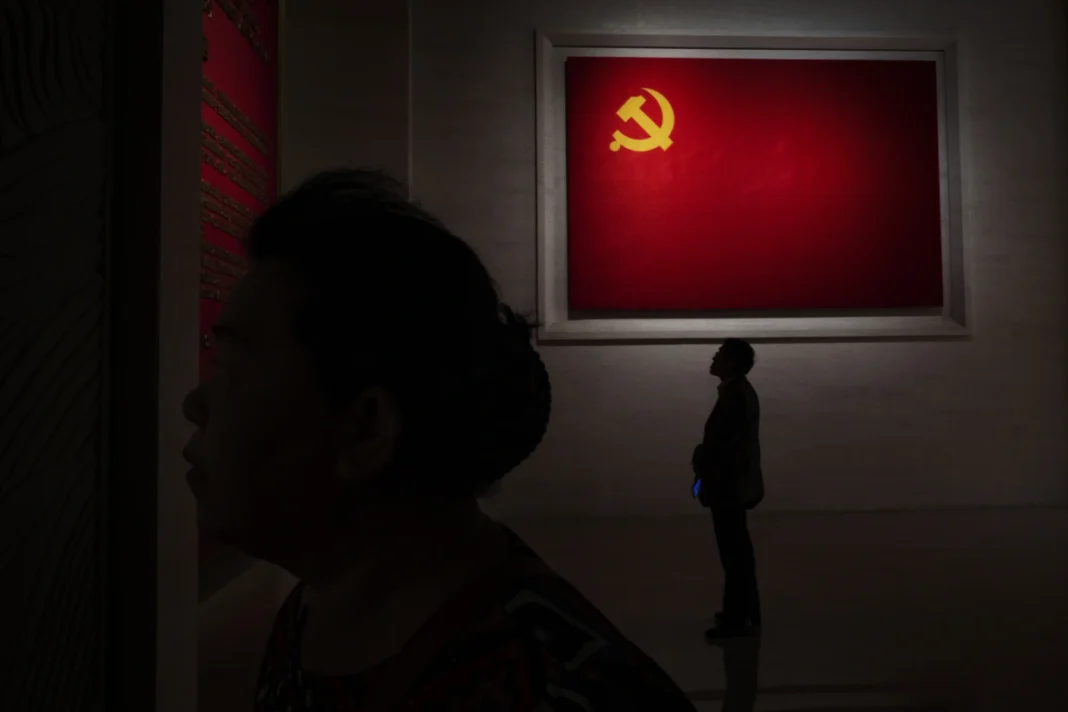

The Chinese Communist Party (CCP) has long been accused of using extreme measures to maintain control over its officials and citizens.
Recent reports suggest that among these tactics, the use of psychiatric drugs to persecute internal dissidents and wayward officials has emerged as a disturbing strategy.
The allegations highlight a growing concern about the CCP’s internal mechanisms for enforcing loyalty and suppressing dissent within its own ranks.
According to whistleblowers and investigative reports, Chinese authorities have allegedly subjected some officials to involuntary psychiatric treatment, using powerful drugs to alter their behaviour, extract confessions, or render them incapable of political resistance.
These reports suggest that officials who fall out of favour or are suspected of disloyalty may be labelled as mentally unstable and forcibly committed to psychiatric institutions.
While similar accusations have been made regarding the CCP’s treatment of political dissidents and human rights activists, the revelation that even party officials are being targeted indicates a widening of the CCP’s internal security measures.
This strategy, known in Chinese as ‘an wei’ (stability maintenance), appears to go beyond conventional disciplinary actions, utilising psychological and medical coercion as tools of control.
The alleged use of psychiatric drugs against officials is not without precedent.
China has a documented history of using psychiatric institutions for political repression.
During the Mao era, political enemies were often declared mentally ill and confined to psychiatric hospitals, a practice known as ‘political psychiatry’.
Even after the Cultural Revolution, psychiatric hospitals continued to be used as places of punishment for political and ideological nonconformity.
Reports from human rights organisations indicate that China’s abuse of psychiatry extends beyond party officials to journalists, activists, and ethnic minorities.
For instance, Falun Gong practitioners and Uyghur detainees have reported being forcibly medicated with psychotropic drugs that cause severe mental and physical distress.
These past cases provide context for the current allegations involving CCP officials.
The use of psychiatric drugs as a means of persecution within the party serves multiple purposes.
The CCP operates under strict discipline, and any deviation from party lines is met with swift punishment.
Officials suspected of ideological disloyalty, corruption, or factionalism are targeted to ensure absolute control.
Some reports suggest that psychiatric drugs are used to break down resistance and forced confessions in high-profile corruption cases or internal purges.
The effects of these drugs can induce compliance and impair cognitive function, making individuals more susceptible to interrogation tactics.
Declaring a political opponent mentally unstable effectively removes them from power while discrediting any allegations they might have made against higher-ranking officials.
Once an official has been branded as mentally ill, their career and reputation are effectively ruined.
By instilling fear among party members that even high-ranking officials can be subjected to psychiatric persecution, the CCP reinforces strict adherence to party discipline and ideology.
The alleged psychiatric abuse of officials has raised concerns among international human rights organisations.
Groups such as Amnesty International and Human Rights Watch have previously documented China’s use of forced psychiatric treatment against dissidents.
If these new allegations are substantiated, they would indicate that the CCP is willing to apply the same brutal tactics even to its own members.
International observers have called for transparency and independent investigations into these claims.
However, due to the secretive nature of the CCP’s internal disciplinary mechanisms, obtaining concrete evidence remains challenging.
Former officials who have defected or been expelled from the party may provide crucial testimonies, but many fear retaliation against themselves or their families.
The use of psychiatric drugs against officials may have unintended consequences for the CCP’s internal stability.
While the strategy may instil fear and compliance in the short term, it could also breed resentment and paranoia among party members.
Officials who witness their colleagues being subjected to psychiatric persecution may grow distrustful of the leadership, potentially weakening the party’s internal unity.
Additionally, such practices could deter talented individuals from joining or remaining in the CCP’s bureaucracy, fearing that they too could fall victim to internal purges. This could erode the party’s long-term governance capacity.
The CCP’s reported use of psychiatric drugs to persecute its own officials highlights the extreme lengths to which the Chinese government may go to maintain internal control.
While these allegations remain difficult to verify due to the CCP’s tight information control, they align with longstanding patterns of political repression in China.
If true, these tactics not only violate human rights but also expose deep-seated insecurities within the CCP leadership.
As international pressure mounts, the question remains whether the party will be forced to reform its disciplinary methods or continue down an increasingly repressive path.