

Chinese Buddhist temples and monasteries are told they should “Sinicize,” meaning “implement the spirit of the 20th Congress of CCP and Xi Jinping Thought.”
by Zhao Zhangyong

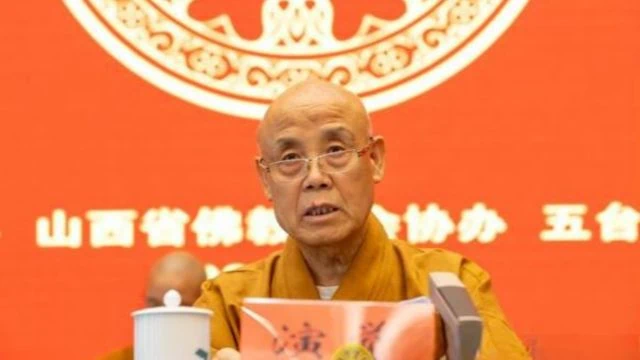
On September 5, 2023, a special “Buddhist Educational Affairs and Teaching Style Work Training Course of the China Buddhist Association” opened at Mount Wutai, Shanxi province. The location was highly significant, as Mount Wutai is regarded by Chinese Buddhists as the first among their four Sacred Mountains, and hosts more than fifty monasteries. The oldest parts of some of them date back to the 8th and 9th century CE and were built under the Tang dynasty.
A visit to this marvelous set of temples would persuade even a casual visitor that Buddhism had been truly “Sinicized” more than one thousand years ago, if by “Sinicization” one means adapting the spirit, the language, the architecture, the sculptures, the paintings, and the music of a religion born in India to the traditional Chinese culture.

However, the “Training Course” was about launching yet another campaign for the “Sinicization” of Chinese Buddhism—which had been Sinicized many centuries ago. As usual, “Sinicization” does not mean adapting a religion to the Chinese culture, which would be absurd for Chinese Buddhism, but making it a channel of transmission of the ideology and slogans of the Chinese Communist Party.
Those who attended the course were in fact told that “Sinicizing” Buddhism means “comprehensively and thoroughly study and implement the spirit of the 20th National Congress of CCP and Xi Jinping Thought on Socialism with Chinese Characteristics for a New Era, and thoroughly study and implement General Secretary Xi Jinping’s important expositions on religious work.”
Master Yanjue, President of the China Buddhist Association, based his introductory lecture on “President Xi Jinping’s important speech at the National Conference on Work Related to Religious Affairs” of 2021, from which he derived four sets of instructions to be implemented in all Buddhist communities.

First, “improve ideological understanding and consolidate the responsibility for a strict management of education,” which means that Marxism and Xi Jinping thought should be taught to monks and devotees. Second, “carry out in-depth Socialist legal education,” centered on “Xi Jinping’s thought on the rule of law,” specifically teaching and enforcing all the new (restrictive) laws and directives on religion.
Third, “strengthen system management” and build a bureaucracy from the top down supervising even the most remote temples and their teachings and activities in accordance with the new “Administrative Measures for Religious Activity Venues,” which came into force on September 1 and are aimed at converting all churches, mosques, and temples into centers of CCP propaganda.
Fourth, “Sinicize academic courses on Buddhism,” by making sure that they apply the principles of the 2021 speech of Xi Jinping, which in fact advocated a stricter control of religion and the use of Marxism as an interpretive tool for religious history and doctrine.
More than 100 local Buddhist leaders from the entire country attended the course, together with the always-present leaders of the United Front. The CCP surely expects to see results quickly, in the shape of more “Sinicized” Buddhist temples and communities. Course participants surely understood what this meant.
bitterwinter.org