
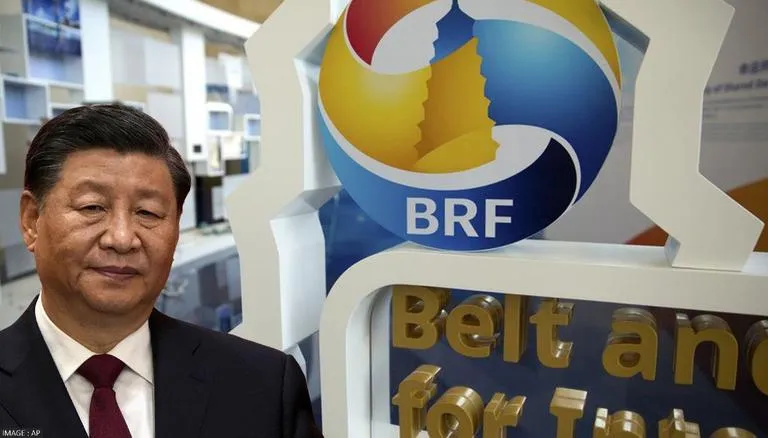

China has spent $240bn (£195bn) between 2008 and 2021 to bail out countries that are facing debt issues related to their Belt and Road Initiative projects, reveals accessed data by UK’s The Guardian. The research showed that state-backed Chinese lenders provided rescue funds to 22 countries, including Argentina, Pakistan, Sri Lanka, and Ukraine. The data shows that nearly 80% of the emergency lending occurred after 2016, with over $40bn being released in 2021 alone.
According to data analysed by Boston University, the increase in emergency financing provided by China since 2016 corresponds to a decline in Chinese lending for infrastructure projects associated with the Belt and Road Initiative. The study found that commitments from China’s two primary institutional lenders, China Development Bank and the Export-Import Bank of China (China Exim), decreased from a peak of $87bn in 2016 to $3.7bn in 2021.
The failure of some infrastructure projects and the debt problems experienced by recipient countries due to the increasing costs of servicing their loans, have led to a re-evaluation of China’s overseas development program.
However, factors such as the COVID-19 pandemic, the war in Ukraine, rising interest rates, and supply chain disruptions have resulted in a global economic crisis, creating challenges for all types of lenders. The provision of emergency financing by China may thus reflect an acknowledgment that the Belt and Road Initiative is as much about relationship-building as it is about infrastructure, according to Cobus van Staden, the managing editor of the China-Global South Project website.
Researchers at AidData, the World Bank, the Harvard Kennedy School, and the Kiel Institute for the World Economy have found that the share of China’s overseas lending directed to borrowers facing financial difficulties rose from 5% in 2010 to 60% in 2022. This lending is expected to strengthen relationships and make China more important to the future economic paths of developing countries.
The Guardian quoted Bradley Parks, one of the report’s authors, who said: “Emergency rescue lending is a very risky business. If you bail out borrowers that are in default or teetering on the edge of default, the challenge is knowing whether your borrower faces a short-term liquidity problem or a long-term solvency problem.”
Chinese banks have a strong motivation to ensure that middle-income countries, which constitute 80% of China’s total overseas lending, maintain enough liquidity to continue servicing debts related to belt and road infrastructure projects. On the other hand, since low-income countries make up a smaller portion of Chinese banks’ overall risk, they are more likely to be provided with debt restructuring.
What is China’s Belt & Road Initiative?
China’s Belt and Road Initiative (BRI), also known as the One Belt, One Road (OBOR) initiative, is a massive development project launched in 2013 to promote economic cooperation among countries across Asia, Europe, Africa, and the Middle East.
It aims to create a vast network of infrastructure, including railways, highways, ports, pipelines, and telecommunications systems, to connect China with other countries, improve trade relations, and promote economic development. The project encompasses over 60 countries and has been touted as the most extensive infrastructure project in history, with an estimated cost of over $1 trillion.